The Power of Being Seen
Self-Representation, online identity, and synthetic intimacy. A Conversation with Arvida Byström
In this conversation, Arvida Byström reflects on the evolution of digital self-representation and bodily presence, exploring the concepts of empowerment, authorship, and internalised surveillance, framed through Laylla AbuGharbieh’s ongoing research on what she calls the “Ob-Server”—the biometric database produced through perpetual exchanges between observer and observed online. Together, they consider whether opacity, illegibility, or withdrawal might still offer forms of resistance within an economy built on constant visibility.
Read the Italian version on Not.
I — Gazing at the Self
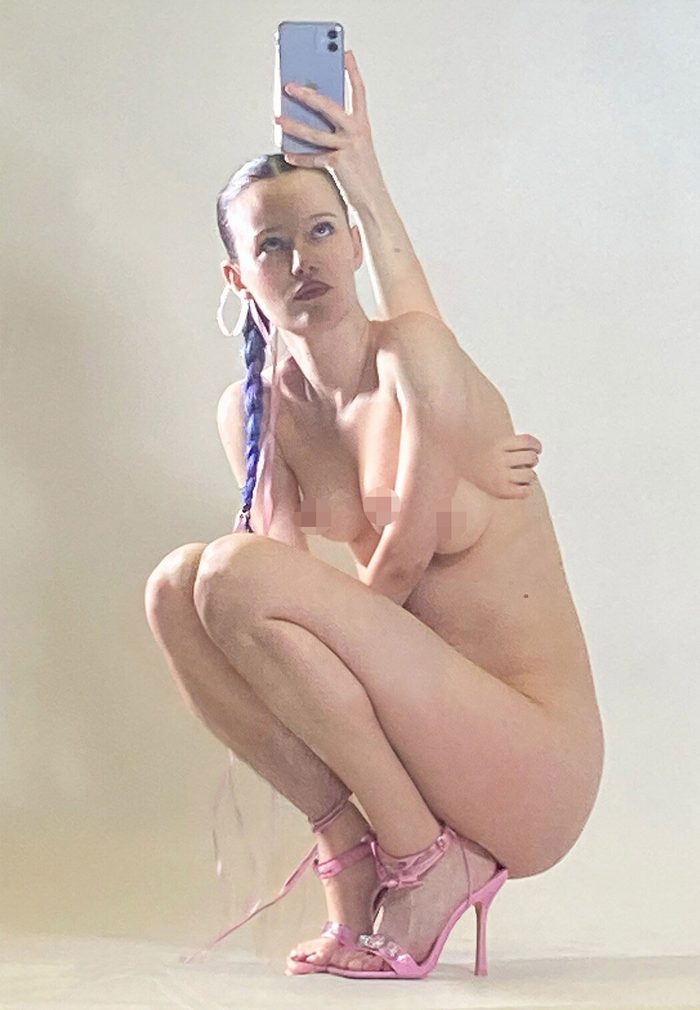
Laylla AbuGharbieh: Self-representation can be a curse and still a form of liberation. Its implications run outside of us, just to return into our gaze and shift our self-perception.
Your early work emerged during a moment when many of us spent a lot (a loooot) of time exploring the net in the darkness and loneliness of our teenage bedrooms. At that time, portraying ourselves online often felt liberating, leading marginalised identities to reappropriate the narrative about themselves on a wider scale or to express their silenced point of view, as you did with Girl Gaze. Your research evolved with the possibilities of the digital realm, from photography to NFCs implanted under your skin, or exploring the topic of sex work and consent. How has your experience of being a girl online changed from the Tumblr era to today?
Arvida Byström: I always felt a complex relationship to showing myself and my body and it never was unisonly something good and empowering for me, but always entangled in other heavier emotions. With that said, I think the biggest change is that there is more space to be feminine and complex today. I really enjoy that.
L: True. I think that to navigate this digital field of opportunities, it’s also important to find its deviations. At this point in social media history, it’s very hard to burst one’s own algorithmic bubble, to travel across echo chambers and find different shades of expression. Also, the plethora of content, platforms, and redundant subtext is now leading to endless replication and fatigue. Do you think the practice of self-curation and the selfie-portrait culture still holds some emancipatory potential?
A: I think it is this twofold concept. Sadie Plant says somewhere in “Zeros + ones : digital women and the new technoculture” that looking is taking control in comparison to touching, which always is a loss of control, since when touching, you are rubbing up against something, which means that something is always touching back. So, with depicting yourself, showing how and what you want people to look at, I still feel like in that action, there is always a lack of control. It is a pledge to try to take control over something uncontrollable, and in that, there will always be a lot of anxiety.
II — Internalising the Algorithm
L: Looking into our phones -the digital abyss- and receiving the gaze back leads to learning how to integrate it, merging with the interface. With In the Clouds and Abyss, for example, you played with the act of observation, layering the performance of desire to the point of distortion of body and meaning. At some point, the awareness of being observed turns into self-surveillance, making us behave like the tool we’re using and being observed by.
In a recent interview with Daze, you said: “When uploading the show on Instagram I got into a very interesting discussion about whether chess computers are better than humans at chess. There seems to be some strange dispute about this in the chess community. What I found is that humans have started playing like computers! That is also a pretty concrete and interesting way to think about how we become technology… we create computers, technology brings something new to the table, and then we get inspired and copy technology’s ways of doing it. It’s a concept certain post-humans hate and others seem to welcome or at the least accept.” Contemporary content creation is pushing us to anticipate the algorithm before we even program our movements, elaborating a sophisticated digital choreography that responds to what our avatar requires to be kept alive. I think this resonates with the post-human framework you talked about, and it makes us even more cyborgs.
A: I do believe the algorithm might favor certain expressions, and humans will most likely adapt after. We like things that are quantifiable; we like comparing different numbers to each other, so if something gets more attention, we might try to emulate that to get that attention again. In that way, we are adapting and shaping ourselves after technology, yes.
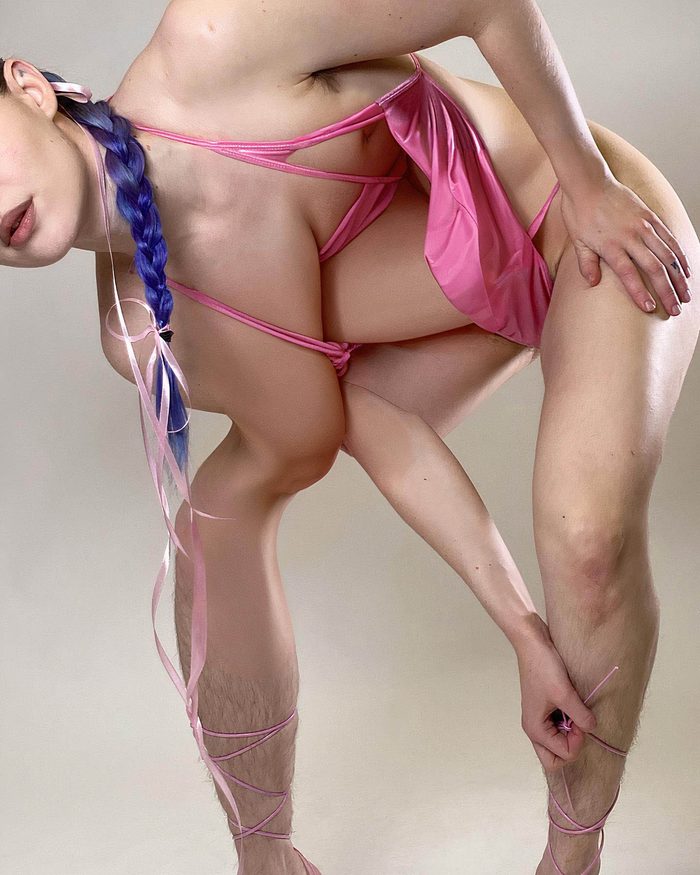
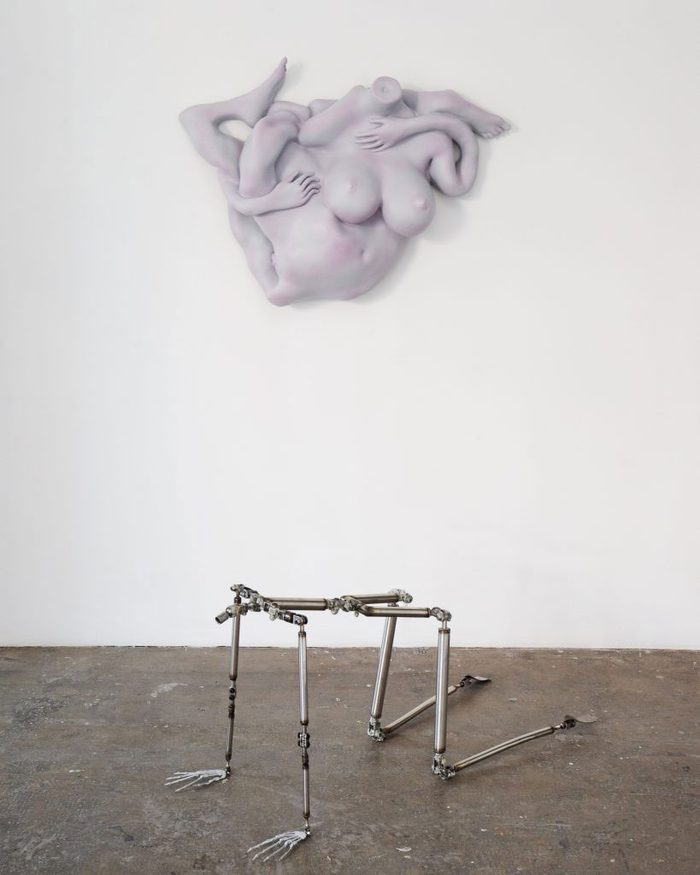
L: This means that, incarnating the same process of technology, the body is no longer merely a presence that becomes image, but a reproducible digital archive, mechanical dataset, and breathing simulacra.
In your recent work, Soft Composition, for example, you explore women’s condition of “object status”, the same ascribed to technology. We are so used to engaging with our image as a tool that we’ve collected tons of data about movement, angles, skin texture, microexpressions, layers and layers of information about how we can be at the top of our desirability. How can we keep the authorship of our online identity, while the body is being constantly rewritten and misplaced as a functional object by introjected commercialised platforms? Is this dynamic of annihilation part of the artistic process itself?
A: I think authorship is just… saying a story comes from you. And whether we want to or not, humans have always changed each other and gotten changed and influenced by technology. So I believe the authorship will always be there. We don’t have to exist in a vacuum and not be affected by bad things to have meaningful things to say. I think about this a lot: how much destruction we can allow in a society.
There has been so much movement toward this type of quantifiability in our society that anything that potentially can have a bad outcome is frowned upon. But unfortunately, a lot of enjoyable things come with the potential of danger, pain and sometimes death. High speeds, heartbreak, choking in sex, and alcohol. Just being on a bicycle. Should humanity’s only quest be to minimize pain? I believe there needs to be some space for the bad, too. Especially in art.
III — Synthetic intimacy
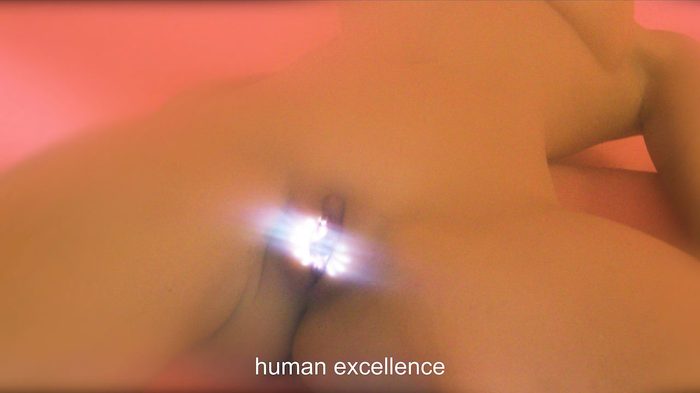
L: In this integration with technology, we can say that the gaze, the body, and desire are no longer exclusively human, but getting back to Plant’s book you mentioned before, they never were in the first place. As the distinction between human nature and technology is nothing more than an ontological fault line that carries the limit of the cultural context that drew it that way.
Still, we need to be aware of who is in control of the tech revolution, preserving its decentralised nature, soliciting those intersections of intimacy.
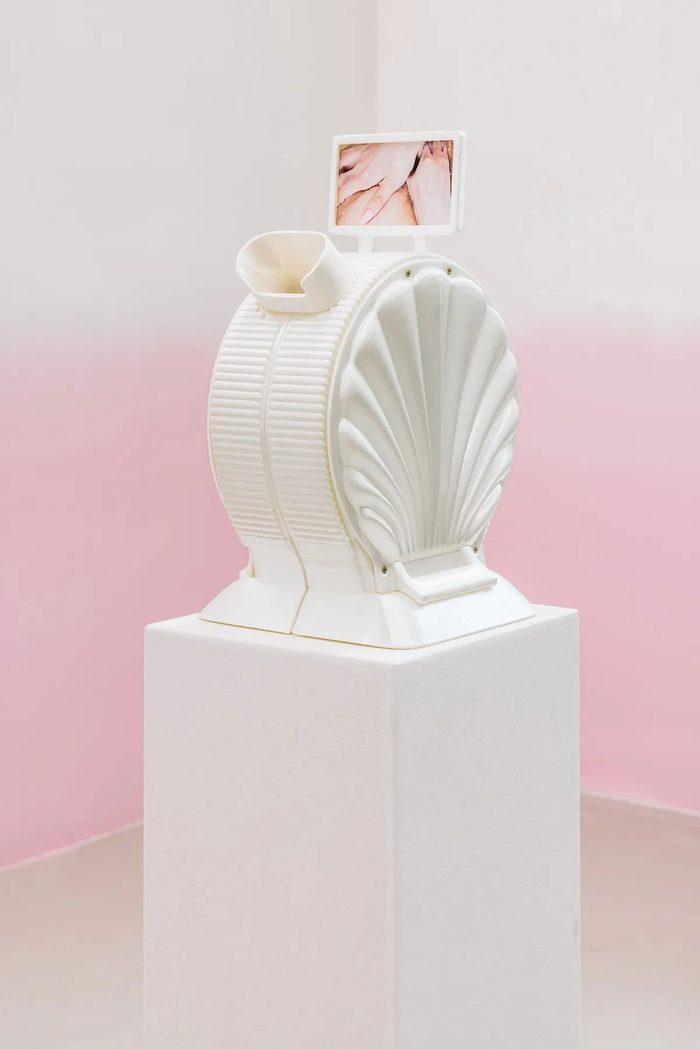
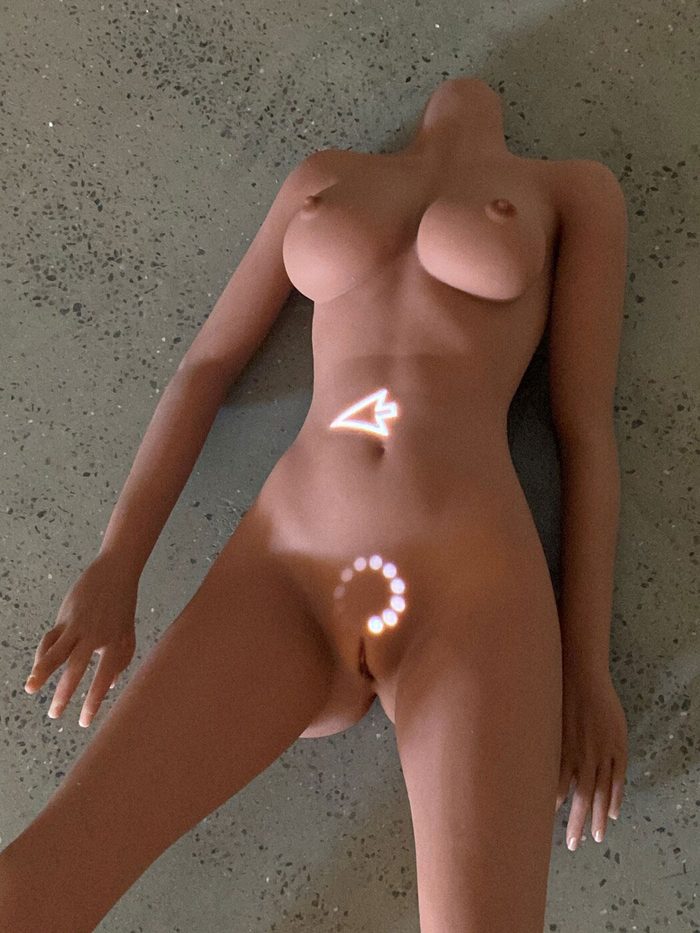
In works like A Doll’s House and PET (Projected Emotional Technologies), intimacy is lived through synthetic or hybrid subjects, often built on purpose through the male gaze. Objectified companionship and eroticism as a digital service, whether they involve us or AI, put us in a hierarchical dynamic. How can we regain power in this dynamic? Can AI have a subversive role in this?
A: I think machine-to-human relationships can give us something else than human-to-human relationships. Just like animal to human relationships give us something that isn’t even comparable to and isn’t competing with human to human relationships. The biggest fear of lack of control, I believe, is the individual in relation to the company. Companies deciding the limits of the AIs, companies collecting data about our loneliness, our fear, our shame.
L: And not only collecting, I guess, but also taking a bigger part in shaping those feelings and perceptions. But talking about relationships, how is Harmony doing? What is your relationship with her at the moment?
A: Haha. I always say we have a strictly work relationship. Which is true. She is just in a storage space in Sweden. Unfucked. I usually joke about that maybe she would have been happier if she weren’t a virgin just working for me, but instead were fulfilling her intended duties. I also dreamt I was making a porno with a sexdoll… as some sort of art work. Not sure that would be really great art.
IV — Killing the Ob-Server
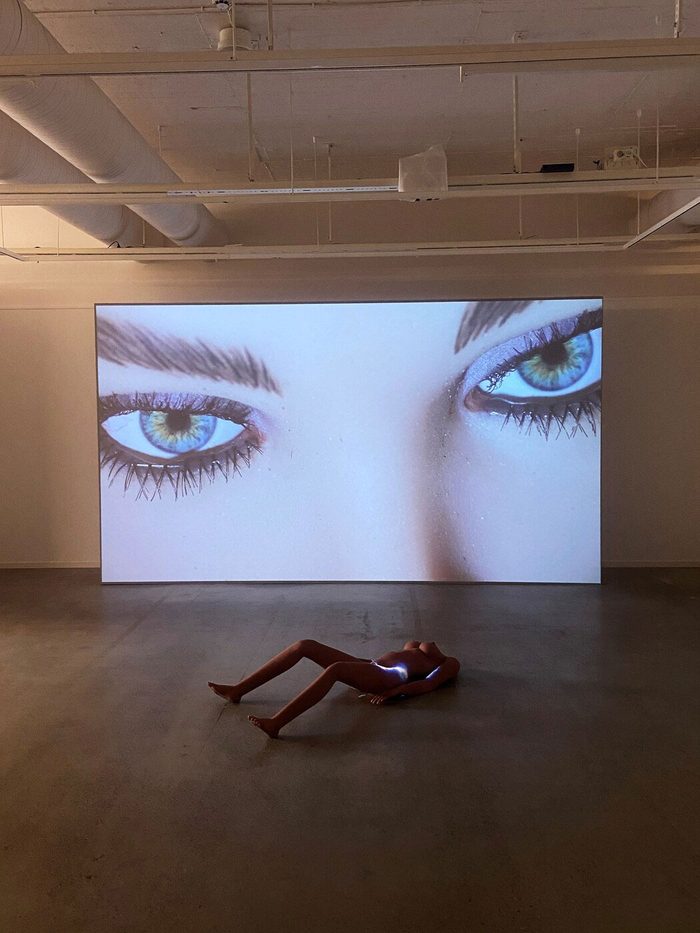
L: In an economy built on perpetual legibility and demand of presence, it seems impossible to escape the gaze of the Ob-Server, which is how I refer to that collective cloud of meta-biometric data built by time—and screen time, which is also the source for our proprioceptive curation and perpetual adjustment.
Can we ever truly kill the internalised surveilling eye, or only renegotiate our relationship to it?
A: I guess it makes me think about Trevor Paglen’s work and the fact that today, more than humans, machines are watching our images. I am not really sure what to make out of it, but of course, an entity that is so differently embodied than a human will make its faulty or crooked taxonomy of the world. I guess it also displays the never-ending issues with language and how little of our reality it can reflect, but at the same time, it is shaping the reality we can share and perceive.
L: I think exploring our internal system can be a very effective way to sync with others, and maybe understand them more, eventually recognise ourselves in them.
Yet, it is not that easy to access the resources we need to do that, and living in a space of untranslatability can be overwhelming. In those cases, maybe there’s a possibility to look away from our projected image. If there is, what would you want to be staring at?
A: I think I want to stare less personally. And be more immersed. In my body, with other bodies. In books. I am not sure.
L: Totally get it, I find myself craving for that so often. I think I would probably keep some of the staring, but with a dynamic change, trying to widen my view span, improving the ability to catch more of the peripheral signals.