The Common as a Social Organization
On the entrance of the “commons” into our radical imagination
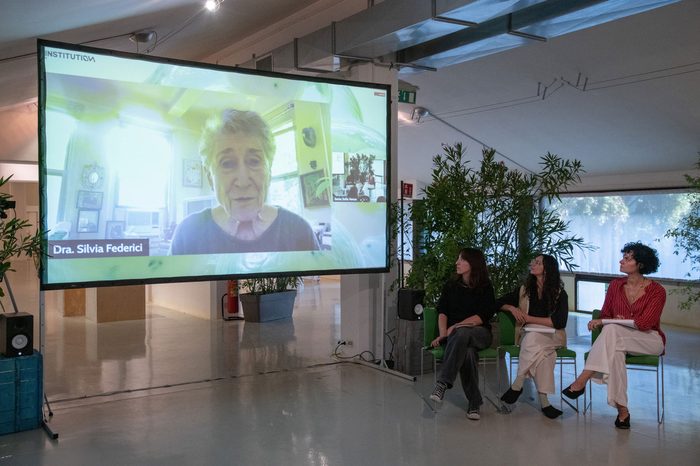
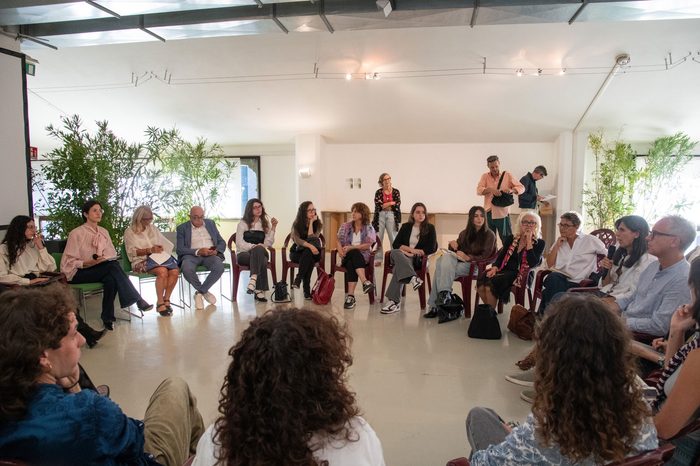
On 25 and 26 September 2026, Institution held the second edition of the International Forum on the Sustainability of Culture, dedicated this year to Culture Commons. Founded by curator and art critic Fabio Cavallucci, Institution is an international organisation working at the intersection of art, technology and the environment. It is based in Santa Sofia, inside the Foreste Casentinesi National Park, with branches in China and New York. From the Vero Stoppioni Gallery in Santa Sofia, the Forum, coordinated by Lucilla Grossi, connected in relay with New York, Tokyo, Shenzhen, Natitingou, and Jakarta.
The starting question concerns every cultural institution today: can it last over time amid shrinking funding, the concentration of power in a few large players and growing social polarisation? Institution’s proposal is to imagine cultural institutions as commons, an intermediate space between market, State and community, able to share resources, skills and risk. Speakers including Michel Bauwens, Stavros Stavrides, Clara Mattei, Massimo De Angelis, and Laura Pando discussed this model from different perspectives, alongside concrete experiences presented by the hubs across four continents.
Silvia Federici’s lecture, published here, follows Stavrides’ intervention and traces the commons from medieval users’ rights to today’s collective kitchens, urban gardens and mutual aid networks for migrants, as a living form of social organisation.
I would like to begin my presentation with a reflection on the entrance of the “commons”—as a social ideal and practice—into the radical imagination and the politics of the radical movements of our times. This has certainly been a novelty, if we consider that until not long ago the concept of a revolutionary alternative to the present social order was shaped by socialist movements and it is centered on the struggles of waged industrial workers. Thus, the entrance of the “commons” into the discourse of social/protest movements across the world represents a break with the past, and the first question, then, is why? What have been the main factors promoting this development?
It has often been suggested that the new interest in the commons was stimulated by the work of Elinor Ostrom, who in 1989, founded the International Association for the Study of the Commons, and, one year later, published Governing the Commons, after she had done a number of studies on the forms of collective management of water systems in California. I would argue, however, that the main reason for this development—and here I refer to what Professor Stavridis has already touched upon—has been the growing expansion of capitalist relations across the world, which has driven a new process of enclosures: enclosures of land, of cultures, and of areas of life that until recently had escaped the process of privatization and marketization.
So, the answer to my first question is that the vital importance of the “commons” has been realized at the very moment when they have come under threat, generating wide protest movements that continue to this day. More and more people have come to realize that the privatization and destruction of our common wealth is an existential issue, indeed an issue of survival. The ecological disasters that deforestation, the contamination of air and waters, the warming of the oceans, and the displacement of millions of people, forced by the advance of agribusiness to leave their ancestral lands, are frightening reminders that, for most of the people on this planet, the earth is becoming a paradise lost and even its capacity to sustain life is now in question.
“Commons”—whether material or cultural, whether ecological or social—are more than a possible alternative. They are a path to another world, another society, and to the possibility that this planet will not rush towards an ecological and a social catastrophe, in the way we now see developing. Equally important have been the movements that have responded to this new “enclosure.” Fundamental has been the struggle of the Zapatistas, who on December 31st, 1993, took over the city of San Cristóbal de las Casas in Chiapas to dramatize their protest against the abolition, by the Mexican government, of the ejido system, which was one of the remaining forms of communal land property in the region.
This is the background that has stimulated a broad conversation on “commoning,” with Professor Stavridis being one of its protagonists. I want, however, also mention other thinkers and activists who have contributed to this discourse: Massimo De Angelis, Peter Linebaugh, and David Bollier, or among feminists, Maria Mies, and Vandana Shiva. I also want to show this catalog that Bollier has produced, which looks at the different types of commons that have been created in the United States, demonstrating that “commoning” is not a thing of the past. Here I want to stress that this awakening to the dangers of the market economy, with its drive to privatize every area of life and submit it to the laws of profit, has stimulated a conversation that has moved in different directions.
One has been a rethinking the past, of what the commons have been, reminding us that for most of human history human beings have organized their lives in a communal way. Commons are deeply rooted in the history of humanity. Enclosures of lands, of cultures and social relations are a relatively recent phenomenon. Until the 19th century, much of the natural wealth of the world was still held communally. We know now, for instance, that in Medieval Europe, which has often been portrayed as an era of obscurantism, although the land was owned by a military class, the peasantry, still had access to it. The “serfs” had users’ rights, and the main one was access not only arable land that would be cultivated communally, but to grazing grounds, woods and fishing ponds, fields to glean after the harvest. This world of users’ rights and commoning produced a culture built on cooperation, such that it enabled an exploited peasantry to launch the great social movements that by the14th century put an end to servitude in most of Western Europe and, later, enabled them to organize one of the most important rebellions in European history. This was the famous “German Peasants’ War” of 1525, which extended to parts of Austria, Italy, Switzerland, in which peasants confronted the armies of the lords and princes, being only defeated through the employment of mercenaries. Recovering this history is extremely important. But the new concern and struggle for the commons is not a nostalgic recuperation of earlier historical forms. It is motivated by the desire to understand what the commons mean today and to create new forms of communal wealth and life.
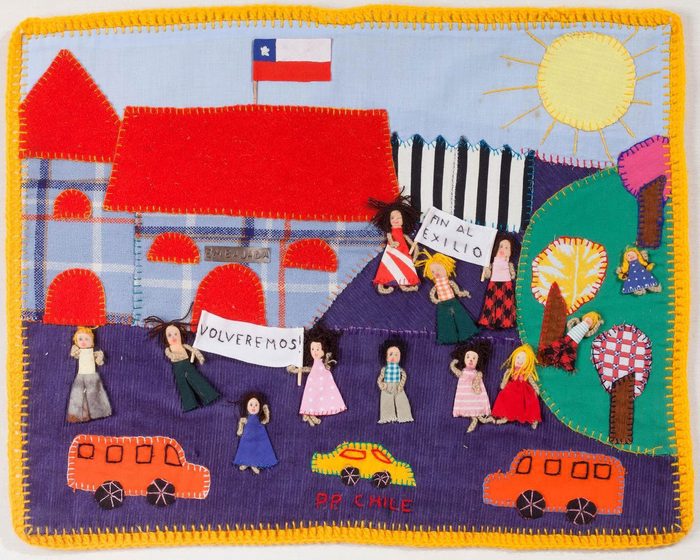
When we speak of commons, we speak of a broad reality. We do not speak only of material commons like lands, woods, seas. We also speak of social relations, collective forms of labor, cultural forms. For example, we think of history as a common. I have been inspired, through my encounters with feminists in Latin America, to also think of collective memory as a common, understanding that it can be a crucial instrument of resistance. Memory, of course, intended not as a formal celebration of the past, but as a commitment to make the past alive in the present, to establish a vital connection with those who came before us, and in particularly with those who struggled to leave us a better world. It is also important to differentiate this understanding of the “commons” from forms of organizations that appear to be communal but are actually built on the opposite principle. I refer to the proliferation, in recent times, in cities across the world, of gated communities. By “gated communities” I mean communities that are not only physically gated, because they often surround themselves with walls, but gated because they are organized on a principle of exclusion, on a principle of identity politics, identity on the basis of religion, income, class.
These are islands within a world they see as antagonistic to them. As such they are antithetical to the idea of the commons that is presently discussed by many movements and authors across the world, which are founded on the principle that “the land belongs to all.” I’m quoting here the words of the famous revolutionary Gracchus Babeuf who, in 1796, engineered a coup against Napoleon, but failed and was executed. He was part of a group that launched the “Manifesto of the Equals,” which stated that the first principle of social life, “as nature proclaims,” is that the land belongs to all its inhabitants. This is a fundamental principle, the very foundation of the idea of the commons, even though we now think of commons as having many different forms… As already noted, we can speak of material, social and cultural commons, urban and rural, and even digital commons. We can think of social space as a common. Today the streets are organized mostly according to the discipline of work and the market—we are expected to use them to go to work or to shop. But there are movements organizing to reclaim social space and pressuring urban architects to rethink housing in ways that favor communal relations and cooperation.
Another important theme in the contemporary discourse on the commons is the refusal of the idea of the “global commons.” This is an important questions because organizations like the World Bank, recognizing that the commons are a vital issue for people across the world, have appointed themselves as defenders of the air, the waters the forests and the lands, but have done so by extending the laws of the market precisely to the areas they claim to defend. Everybody has seen the disasters caused by this development. Exemplary is the institution of Kyoto Protocol, whereby countries can buy themselves the right to produce a certain amount of pollution provided they compensate for it by planting an equivalent number of trees presumably countering its effects. This has led to a continuum of destruction and the plantation of monocultures which are known to be extremely vulnerable to pest, being deprived of the protection offered by the variety of species usually present in a healthy ecological environment.
So, the main principle, as Maria Mies has often reminded us, is that: there can be no commons without a community, because only a community can make knowingly decisions concerning the shared wealth and social relations. This means that as a form of social organization, “commons” embody the ideal of a truly democratic forms of social power, i.e. the ideal of a society without hierarchies, and other forms of discrimination. If democracy means government by the people, then people must have the possibility to make decisions about every aspect of their lives. To build commons, then, is to build community self-government, as the fundamental principle of social life.
In this context, Ugo Mattei has argued that the formation of the state, and the nation-state in particular, has consisted in a massive process of expropriation, depriving us of access to the means of our reproduction, and of our decision-making power which are our common patrimony on this earth. The idea of “global commons” is consistent with it, as it reinstitutes a process of privatization, placing all wealth and power under the exclusive decision-making of a few institutions deeply compromised with the market system.
Summing up, it is hardly disputable that from an ecological and social viewpoint “communing” makes for a better, more sustainable and more just society. The question that remains, however, is how not to lose hope in a world in which the expansion of capitalist relations seems unstoppable, and in which ecological devastation and the destruction of the commons are reaching unprecedented levels in history. Here I want to continue what Professor Stavridis has told us, so eloquently, today and with his writing and activism. Against the fear that communing may be a utopia, we must first realize that large areas of the world still have not been privatized.
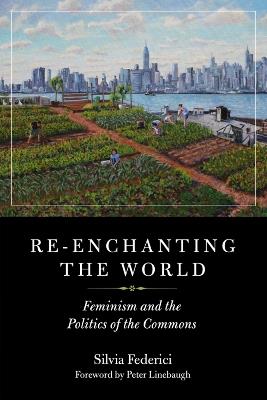
Despite the World Bank’s IMF’s efforts to fragment commons and turn them into individual properties, and despite the ongoing marketization of every form of wealth and life, in many parts of the world, communal forms of reproduction still live on. And new forms of communal reproduction have been and are being created. As mentioned, we can now (for instance) speak of “digital commons” like Wikipedia, and Open Source, that some praise arguing that their use expands the wealth involved rather than subtracting from it. Most important, all over the world, people are now struggling to defend what remains of communal wealth and to create new forms of it, thus planting the seeds of a new society. In my own work, particularly in Re-enchanting the World, I have spoken of the many forms of commoning I have seen promoted by women in Latin America, that are restructuring reproductive work on a more communal basis.

Movements have emerged that not only resist the ongoing attack on the remaining commons, but have transformed the conditions of day-to-day reproduction. This has been the theme in the struggle of popular feminist movements in Latin America, which realize that we cannot resist the onslaught of capitalist relations unless we restructure our day to day reproduction in ways that end the isolation in which our reproductive work has been forced to operate. It is an isolation that has especially penalized women, who have had to confront all the work of reproducing their families and communities alone, and are now under attack, because the very conditions necessary for the reproduction of our communities are being destroyed.
In response to the war on the commons, in many parts of Latin America there have emerged what I call “reproductive commons,” like the popular collective kitchen (comedores populares). In them, women do not cook alone but collectively, providing every day hundreds of meals, in this process transforming the kitchen into a more interesting place, where ideas are exchanged, opinions are formed, news are circulated, friendships are made. There is also the spread, especially in the “global south” of collective urban gardening, which has spilled over into Europe and the United States through migration and through the work of many ecology activists.
Urban gardening has re-established a contact with the land and generated forms of self-sustenance that escape dependence on the market. In the same way, we have seen the formation of seed banks, that protect the genetic material of the plants necessary for our life, as they prevent the genetic modification of the ingredients of our food and our medicines. We also have the emergence of new forms of decision-making, like the neighborhood assembly, made possible by the recognition of our interdependence and need for cooperation. Part of the destruction of the commons is the constantly broadcast idea that other people are a danger to us, that our posture in society must be defensive, that if others gain certain rights we are deprived of them. The principle of the commons takes in the opposite direction: the recognition that solidarity with others enriches our lives.
One of the most inspiring things I have seen in Latin America is what people who had been displaced from their land have created in the peripheries of urban centers through their collective work and willingness to cooperate. This is the history of the villas miseria in Argentina, on the periphery of Buenos Aires. Here people displaced from the land and forced to urbanize have built an entire community with their own hands. Often, when I tell their story to audiences in the United States, the response is, “Oh, this is letting the state off the hook.” But my answer is, “No, it’s the contrary.” These people are developing a collective strength enabling them to establish a different relationship with the state—a relations not of subjection and victimization, but one in which they can negotiate the reappropriation of land and decision-making.
These activities are not unique to Latin America, or to parts of Africa where the spirit of the commons is still alive. In the United States as well, we have seen not only the politicization of urban gardens but the development of many forms of mutual aid especially during the Covid epidemic. Now too, mutual aid is organized in many cities to protect immigrants endangered by ICE. Neighbors bring food and other forms of aid to immigrants who are sequestered in their homes, afraid to go out because of fear of being deported. Networks of resistance are enabling them to survive, protecting them, organizing alarm systems. These may appear as minor developments compared to the immensity of the destruction we are facing, but they are significant because, as Professor Stavridis was saying, social relations are never totally calcified; the possibility of change is always immanent.
We have also seen the development of care collectives and time banks—exchanges of services among people that are not based on the market. These practices are now becoming more common, as was mutual aid during the COVID crisis. I here suggest that people take a look at the catalog that David Bollier has published, which illustrates the different ways in which in many communities, throughout the U.S., people are not only defending the remaining commons but creating new ones, aware that this is the path to a world in which our life and the life of the planet will be preserved (as the Indigenous peoples of the Americas would say) for at least another seven generations.
References
David Bollier, The Commoner’s Catalogue for Changemaking. Tools for the Transition Ahead, Schumacher Center for a New Economics, Great Barrington, Massachussetts, 2021.
David Bollier, Think like a Commoner. A Short Introduction to the Life of the Commons, New Society Publishers, 2014.
Massimo de Angelis, Omnia Sunt Communia: On the Commons and the Transformation to Post-capitalism, Bloomsbury Publishing, 2017.
Silvia Federici, Re-enchanting the World. Feminism and the Politics of the Commons, PM Press, 2019.
Peter Linebaugh, Stop, Thief! The Commons, Enclosures and Resistance, PM Press, 2014.
Ugo Mattei, Beni Comuni. Un Manifesto, Editori Laterza, 2011.
Elinor Ostrom, Governing the Commons, Cambridge University Press, 1990.