
Commoning the Archive
On The Peripatetic Film & Video Archive
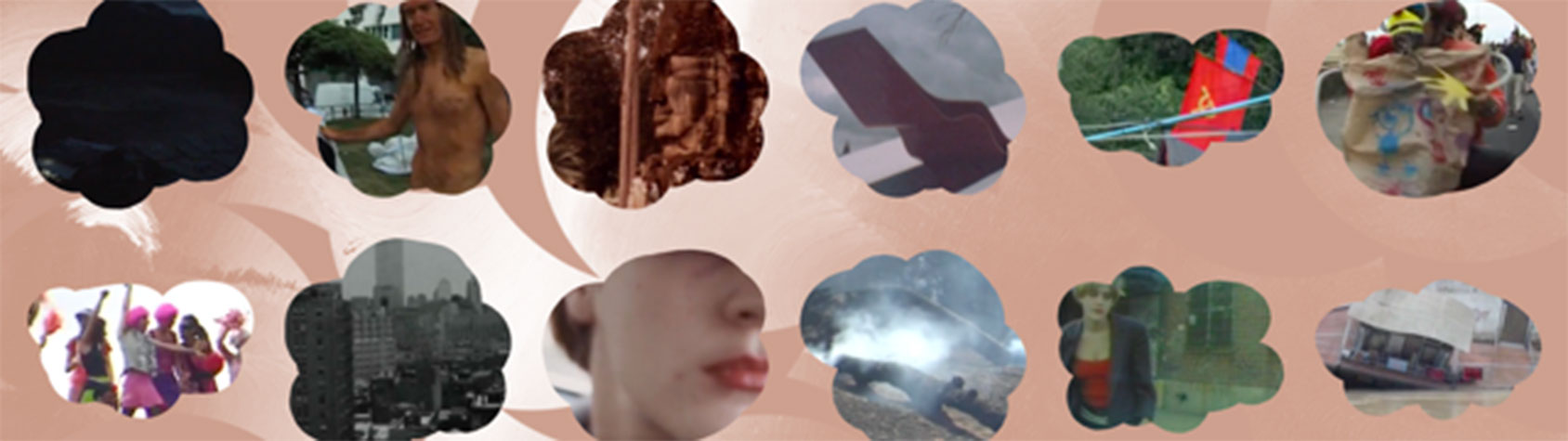
The Peripatetic Film & Video Archive is an independent archive of moving images based on footage shot since the end of the 1980s by artist and filmmaker Carola Spadoni. Shooting was done as a commitment based on chance, observation, relation, desire, trust, contemplation, context. TPF&VA website is the base of the archive. It expands through the ongoing commoning of the collection uploading footage, texts, cartographies. TPF&VA manifests into installations, lectures, workshops, collaborations, publications, film & video works, gatherings.
Giulia Crispiani: How was the archive born and why peripatetic?
Carola Spadoni: Peripatetic is the closest definition I found regarding the nature of the involvement that a few decades later led to the need to organise it. Around 2013, while living in Berlin, I started to wonder about all these cassettes and reels that I had staked away in boxes. They sort of looked back sending smoke signals, or at least that was my feeling. I had to figure out how to organise these materials not only for me or to make a movie or two out of it, but they had to become accessible. At that time I didn’t have enough energy and resources to pitch the project around to institutions, the only time I did propose it, as an all day mise en scene with various guests alternating to lateral activities, was to the occupying collective of Teatro Valle but the occupation was evicted a few months later.
The more I thought about it, it was clear that footage that spanned the cusp of two millennia belonged to a public realm and not only to some personal authorship setting. Somehow I went through many historical contexts and bumped into few leading figures and significant people.
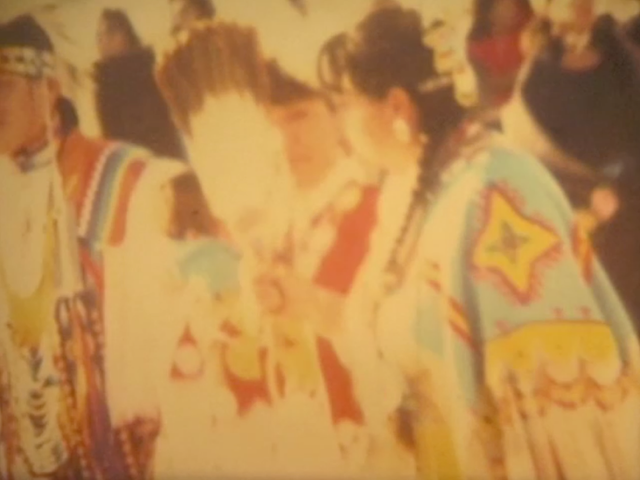
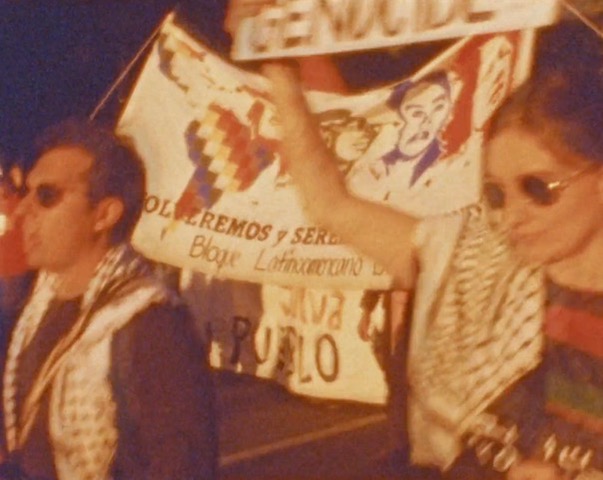
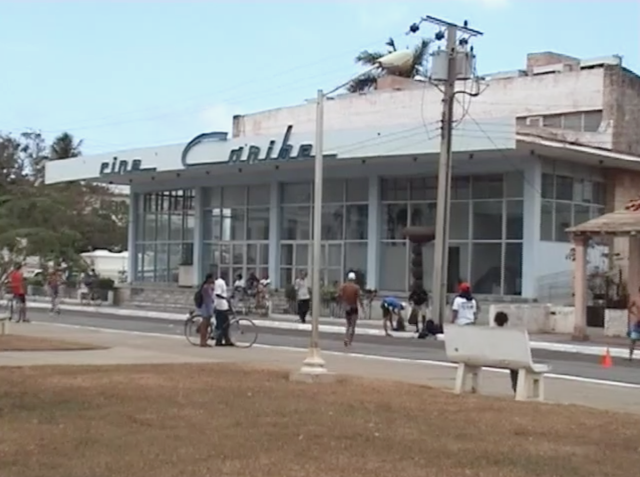
Fidel Castro on his official speech on a Primero de Mayo in Havana, The EZLN national meeting with subcomandante Marcos and the Zapatistas in 1996 in San Cristóbal de las Casas, director Arthur Penn in Roma, photographer Malick Sidibè in Bamako, actress Chlöe Sevigny in NYC, dozens of demos and parades, activists meetings, few riots, people performing in the streets, happenings, occupations, urban and rural landscape. All around four continents since 1988.
Later on, around 2018, when I had more time from my full time single parent life in Berlin, I started writing grants applications within Germany, taking for granted that I could submit a process more than a “work” in itself. Back then I envisioned a path of archiving while having guests performing over projections while organising a screening series of the footage in public, a sort of collective trip into these materials circling around few main themes to develop theoretical frames and formats, while having fun doing it.
There was a lot of talking around archives and unarchiving at the time, especially in Berlin, and I wanted to be part of it. I had not realised that most of it was conceived within and aimed at academia recognition, to which stiff rules apply to keep the callous game afloat. Most of the people involved were trying to casually drop their ultra expert knowledge while giving thanks for the unbothered credits. I was trying it out my way without speaking the academic language, nor attending to the untold rules of proper academic research. It didn’t work.
I guess the personal as political situated and embodied experience as tool and guiding light for the archiving process and the framing of it wasn’t enough then. Or I wasn’t too shamanic about it. I had to figure it out otherwise, and it took me a while to do that in the midst of my everyday hassle. I understood I had to built the ground for it so that its framing could be grasped and defined widely, which meant it could be funded and supported. Just like writing a script before shooting a movie. Which I always despised and managed to overcome instead with shooting lists and dialogues.
I started gathering thoughts to develop the theoretical base for the shapes and forms I was ready to work on. It was painful to squeeze the visual magma into a semi academic orderly lingo but once I conceived the “Archiving the peripatetic film and video collection” and won the Italian Council 9 research grant for a year long studio residency at Kuntslerhaus Bethanien. The gained freedom to dedicate time and organise it independently turned out to be very rewarding.
The archive is an attempt to organize a very long-standing relationship with the camera, what kind of relationship? Was it always your eye behind the lens and what were the criteria to reorganize it?
All the footage in the peripatetic archive is shot by me. In this sense it is found footage in reverse operation, it is more of a situated footage ongoing project. I grew up in an extended family of cinephiles and of Roman “cinematografari”—people that worked in cinema, on film set crews. My grandfather started working as a sound man in Luciano Serra pilota and Ladri di Biciclette at the very beginning of sound films. My uncle was a boom man for a while at the end of the 60s, and my mom briefly worked as a script supervisor before she had me, and then switched to a more steady full time job in tv. Cinema bread and politics was the steady diet for breakfast lunch and dinner throughout my upbringing. The eccentric unapologetic realm of confusing real life with fiction, actors with aunties, black and white landscapes with technicolor daydreams. It couldn’t escape me to fall for it with all my teenager tomboy punk rock self.
Also before moving to NYC right after high school I attempted to apply to the film school in Roma to study cinematography, I was eager to become a D.P., but that year they suddenly cancelled the class and since it was a biennial course I decided not to wait around and moved on. Forever glad to the ups and downs of the Roman bureaucracy!
How have you worked with Giuliana Bruno, Silvia Federici, and Simone Osthoff?
As I said I had to figure out how to archive half a lifetime of unplanned shooting. The first text that came to mind while applying to the Italian council grant was the seminal book Atlas of Emotions by Giuliana Bruno. It’s a fabulous bible of and for moving images from an outstanding scholar with a sharp and down to earth anti-colonial feminist point of view that I had read at the beginning of the 2000s in Italian, and just purchased again in English for a second round of study and underlining for citations. This one book was the humus for the formalisation of the archiving process.
During the beginning of the residency, while watching and logging the footage, I saw that many contexts and situations were actual witness to politics, attitudes, values and questions of an era, or times, that were about to fade away. I understood that in the footage there was a lot to learn from and eventually could be used in various ways. I had the confirmation for the need of accessibility beyond the inventory.
This desire became a sort of double gaze that led me to look at the material as a tool for re enchanting the world. It could be accessible, it could be organised around its footage as documents to the experience of possible worlds, and happenings, and gatherings, like the so-called no global movement, and later on the Genova/G8 times. It was a diffraction that once mapped could be viewed and screened, and used to expand the politics of the commons. That which I lived by and kept sharp in my endeavours. Silvia Federici’s Re-enchanting the World: Feminism and the Politics of the Commons was an organic step forward. Performing the Archive: The Transformation of the Archive in Contemporary Art from Repository of Documents to Art Medium by Simone Osthoff popped up in my crowded bookshelves while I was diving into it and going over which books could help me in the process. It ended up showing me much more than I had envisioned already, especially diving into Vilém Flusser and his somehow mystic approach to images. I contacted all three thinkers introduced the project and asked for permission to publish fragments and extracts of the books in the theoretical notes section, and they all agreed.
This wandering eye moving through geography and time with a very specific positionality of a body being in history—could you expand a bit on that? Did you happen to attend a certain event or you went intentionally to collect footage? Did you know the archive was making itself before you decided to index it?
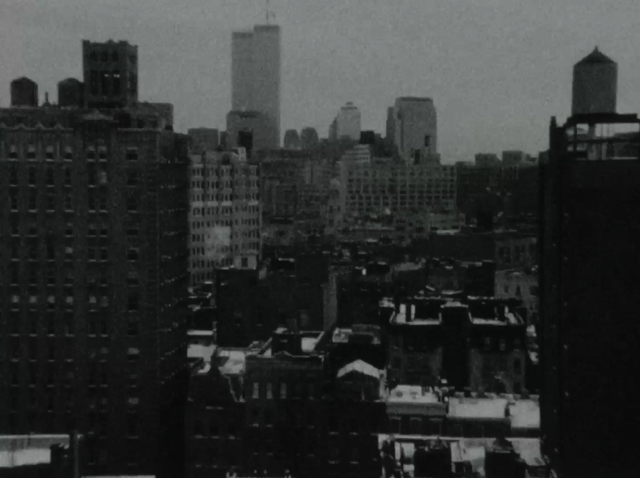
For years at the end of the ’80s and into the ’90s I used to go out with my camera with no particular plan or agenda, just walking around, hanging out and eventually getting into something. Sometimes I would go to demos or parades or what-have-you, and bring the camera on purpose. Going out and shoot was an ongoing vice that I also kept going wherever I was traveling to, or in my vacation times, and mostly at home in New York City where I lived from 1988 to 1998. I think a big part of it came from the city itself. In the way it was blunt and accessible, flowing in and out of neighbourhoods and situations, whether public or semi private, safe or semi legal, known or just discovered. My friends and the people I hanged out with were musicians, club kids, college drop outs, djs, skaters, film and art school students, go-go dancers, occasional weed dealers, fashion stylists, DIY entrepreneurs of sorts, mostly outsiders. As 20+ years old kids living in downtown NYC and beyond before the heavy gentrifications took it all out, we all felt that beyond supporting ourselves with money jobs we owned the city and could hang, skate, dance, party, walk and run around sober or not 24/7.
We in fact did so. For years. Even amidst the Aids crisis. I started shooting in VHS before I got into film school. Later as I acquired more confidence with the camera I kept shooting more and more as my own side thing while studying film and later while working on film sets as p.a. and camera assistant and while hustling to make my first short movies. At times I didn’t own a camera so whenever I could get my hands on it for study or work reasons I was just happy to go out and shoot.
What is its main use today? Whom is it meant for?
TPF&VA was eventually born in 2022, and so far it manifested in exhibitions, a zine and a gathering, workshops in art academies and film schools, lectures in architecture and sculpture departments, few texts and screenings. TPF&VA is conceived for the people! And that’s why it is also beautiful. Seriously, it’s aimed at giving a chance on what cinema can be and can become besides the constraints of the movie theatre, and the four white walls, and of a finished film or video.
It’s about how stories make His and Herstory, opening up the raw material of unedited moving images, fragments of time and space, visual sketches, personal views that eventually will shape maps of and for the commons and generate narratives to support visions of that better world.
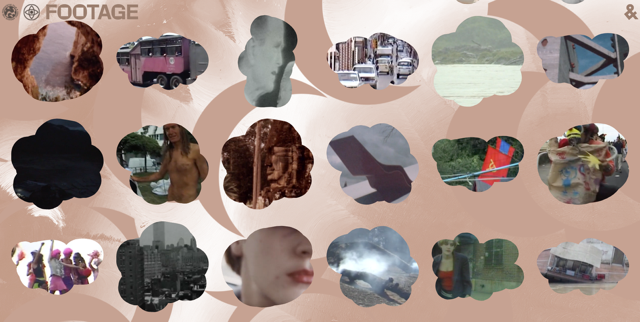
It’s a kill boredom feminist work out for the imaginary. Take a stroll, have a look, the more you click the more it opens up, there is no algorithm anyone determines its own viewing pace. And there is a well organised classic archival inventory which many don’t get to. An art historian told me I had conceived the opposite of an archive because the impact is chaotic, that perhaps I went too far with the decolonial fix. Yet, there is an apparent chaos on the surface, with key words and symbols from the drawings of my studio residency which are there to transgress the formalities of the archives and embrace a conviviality of it instead, like traveling off the beaten track.
So dive in and look for the “&” section if you want the formal database. If not only that go roam into the affective mapping section where nearby projects and endeavours are either searched for, or retrieved from the footage own contexts and linked for an ongoing genealogy around independent archives and the heritage of disobedient and antagonist counter cultures. Most of all be patient as only a very small percentage of footage is uploaded so far. Until I conceive another way to keep it growing while supported, the maintenance is up to my volunteering attitude, depending on whenever I shuffle the quality time to work on it. If you want to get involved and/or support it get in touch through its IG account or visit the website.
How the intimate experience of filming is turned into commons?
I think I already answered that above. “Hard times require furious dancing. Each of us is proof” like Alice Walker said. Viva viva Palestina. Viva Cuba libre. Keep it real.