Listening from Below. Notes on the Overhead
A review of LIMINAL’s installation “Overhead” and its public program during Love is Political at Centrale Fies
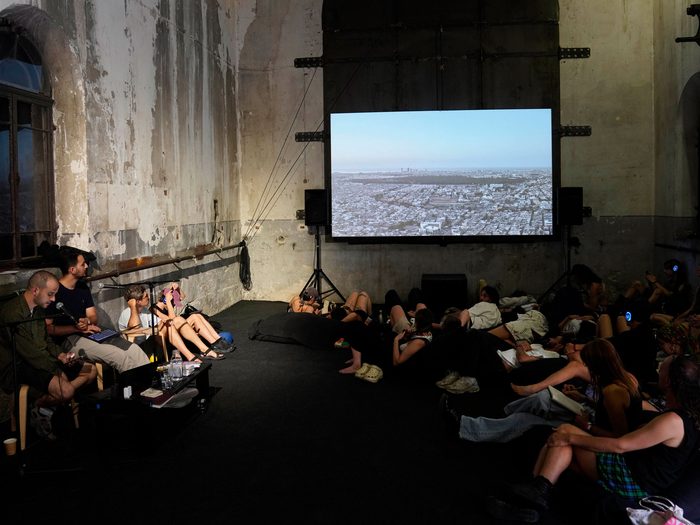
Overhead begins with a problem of distance: the further an act is removed from the bodies that experience its consequences, the easier it becomes to distribute, obscure, or deny accountability. Conceived by LIMINAL, a research laboratory at the University of Bologna’s Department of the Arts investigating intersectional (im-)mobilities and border violence, for Centrale Fies’s program Love is Political (23–26 July 2026), the video installation Overhead and its three-day public program Notes on the Overhead examine how aerial surveillance creates a physical and perceptual separation between those who observe and those who are observed, questioning the infrastructures that make distance possible, as well as the traces left behind. The project brings together three histories of airpower around the Mediterranean: the European Border and Coast Guard Agency, Frontex’s use of aircraft and drones to monitor migration across the Central Mediterranean, Israel’s aerial surveillance and warfare in Palestine and Lebanon, and Italian air operations during the colonial occupation of Libya in the twentieth century. Rather than treating these as isolated episodes, Overhead follows the technologies, forms of knowledge and logistical systems that connect them. The Heron drone is one such thread, linking Israeli military technology to European border surveillance. Radio and aerial technologies provide another, extending from colonial experiments in Libya to contemporary systems of communication and monitoring.
One of the installation’s most relevant propositions is that lack of accountability happens by design. It shows how opacity and fragmented responsibility are central to surveillance systems that rule globally over bodies and policies. This is because responsibility is distributed across private companies, State agencies, subcontractors, jurisdictions, databases, algorithms, and chains of information. Each actor can occupy a limited position within a larger operation, while the consequences become difficult to attribute to any one of them. This is particularly visible in LIMINAL’s own research into aerial bordering in the Central Mediterranean, also presented during the three-day program. The shift from maritime to aerial surveillance changes the relationship between observation and intervention. Aircraft can monitor a boat from a distance, relay its position to other authorities, and remain physically removed from the people whose movements they track. The border becomes a volumetric system: aircraft, vessels, radio signals, data infrastructures and bodies occupy the same space without occupying it on equal terms. LIMINAL’s forensic approach attempts to reconstruct this system from its traces. Flight paths, registrations, transponder data and press photographs become evidence. Drones’ loops, U-turns, circular orbits and abrupt changes of direction can be read as anomalies, and anomalies can sometimes be connected to known incidents. A flight trajectory, therefore, read alongside other evidence, can become a record of an interception or an absence of rescue. But the evidence is itself unstable. Data is a contested political field. Its incompleteness affects what can become knowable about violence. For example, during its investigation, LIMINAL noted a progressive deterioration in the quality of some Frontex datasets, with later data becoming increasingly difficult or impossible to use. Missing information, inaccessible records and changing forms of visibility consequently become part of the border regime itself. Counter-surveillance is a struggle over the conditions under which information can exist, circulate and be interpreted.
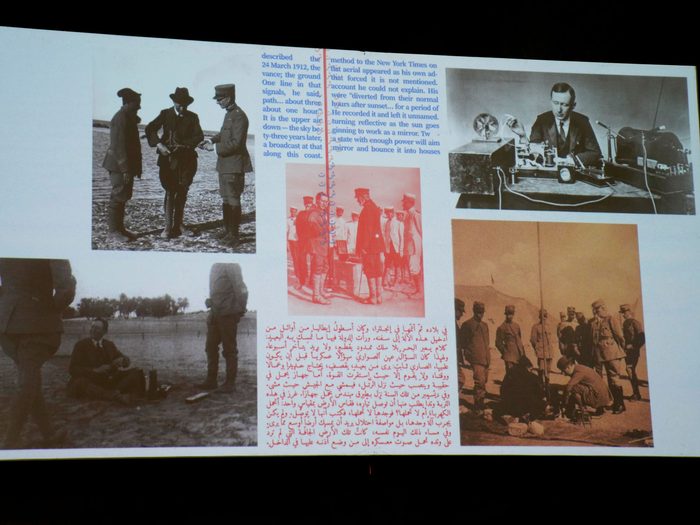
During the first day of the public program Notes on the Overhead, merath, a transregional collective working between the Sahara and the Mediterranean, presented together with Anna Casaglia—Associate Professor at the University of Trento and a political geographer whose work draws on critical, decolonial, and feminist approaches—Radiographic Reverb: A Libyan History of the Noise Floor. The collective approaches the airspace over Libya as a contested electromagnetic field. Their research follows radio across different historical moments: the use of telegraph in the Sahara desert during the Ottoman Empire, the use of Marconi’s technology on Italian aircraft in 1911, anti-colonial broadcasts in the mid-twentieth century, and contemporary radio communication across the Mediterranean. The recurring strategies of elevation, refraction and submergence describe different ways of negotiating this field. Antennas can be lifted above the terrain; signals can be bounced through the upper atmosphere; communication can be concealed within the ambient noise floor. These are technical operations that reveal a political geography of communication in which the atmosphere itself is inhabited, occupied and contested. Besides, the 1911 deployment of aircraft and radio technology during the Italian occupation of Libya belongs to a colonial system that treated territory as something to be surveyed, measured and acted upon from above. Anna Casaglia’s contribution traced this relationship through the history of geographical knowledge, including the archives of the Italian Geographic Society, whose photographs and postcards helped construct colonial territories as measurable and knowable spaces. The vertical view was a technology of power. Against this flattening and containment of a map’s or frame’s boundaries, sound introduces another spatial logic. It travels, reverberates, leaks, and disappears. It can register a territory through radio interference, aircraft noise, broadcasts, silences and interruptions. The noise floor of Tripoli, for example, becomes a historical and political object in its own right. What cannot be transmitted, what is jammed, and what disappears into silence can be as significant as what is recorded.
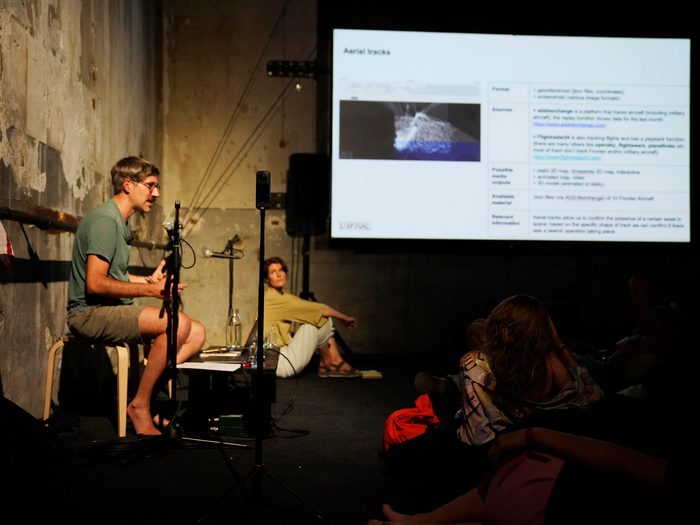
The second day makes the asymmetry of aerial surveillance explicit. During their public talk, Aerial Bordering. Una tassonomia delle anomalie di volo LIMINAL showed how drone operators see without being seen, while the people below may not see the drone but experience its presence through its effects, including its sound. The operator’s vision is mediated through screens, sensors and interfaces, while the people being observed remain embodied within the environment being monitored. Vision can be detached from the body that exercises it. Sound cannot be so easily separated from the body that receives it. This produces a particular politics of proximity. The drone can be physically close to the people it surveils while its operator remains geographically distant. The person on the ground, meanwhile, may experience the aircraft as an intimate presence precisely because escaping its sound is impossible. Distance therefore determines who has to live with the consequences of observation and who can remain insulated from them; who sees from above and what can be sensed from below. In the Central Mediterranean, this distance is institutionalized through the aerialisation and privatization of border control. Aircraft can monitor migrant boats without assuming the same material relationship to rescue as vessels at sea. Operators and authorities can share information, while responsibility is distributed along the chain. LIMINAL describes this as a system in which abandonment is an active condition of European border governance. In the same talk, Sasha Milonova, a doctoral researcher at the Center for Research Architecture who worked with Sea-Watch’s air division, explored how this apparently closed aerial space can nevertheless become a site of civilian intervention. Through airport registrations, press images, flight tracking and radio signals, researchers and activists can reconstruct parts of an infrastructure that States and private operators attempt to keep opaque. These practices do not produce complete knowledge: transponders can be switched off, flight data can disappear, and large portions of the surveillance field remain inaccessible. Their importance lies instead in establishing another relationship to the infrastructure, one in which those subjected to surveillance can begin to monitor its operations in return.
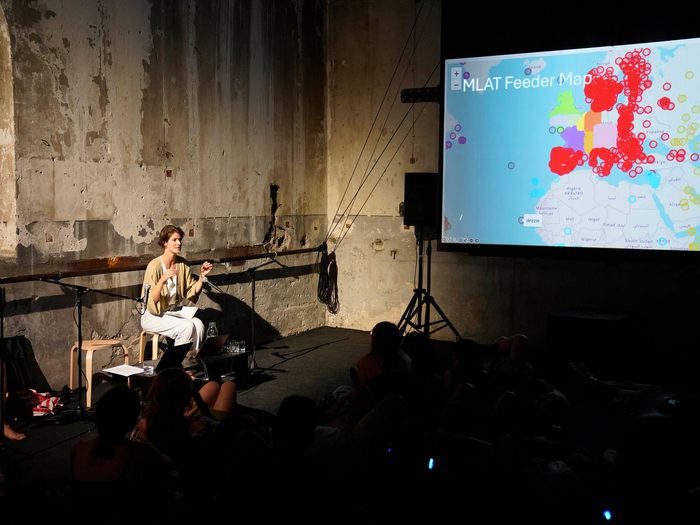
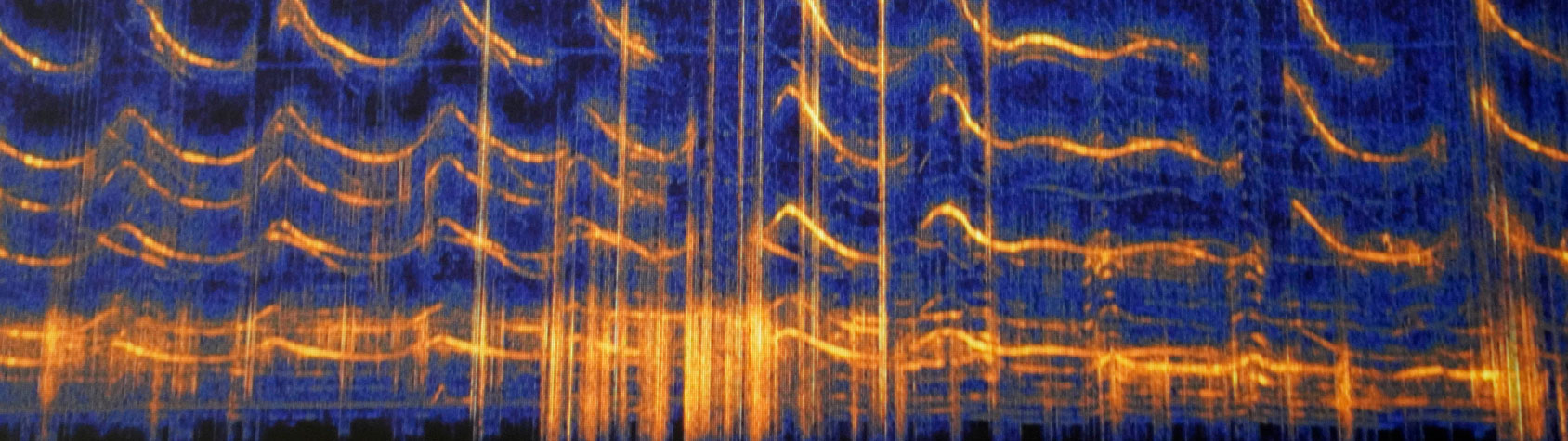
The third day, Sonic Signatures: Tracking the Heron Drone from the Mediterranean to Gaza, makes resistance strategies acoustic. Fabio Cervi, Audio Investigator at Earshot, presented the research into the sonic signature of the Heron drone—using sound recordings as evidence in investigations of aerial surveillance and attacks in Gaza and Lebanon—led by the non-profit organization Earshot, founded by the artist Lawrence Abu Hamdan. As already explored, the drone may be absent from the image while remaining present in the recording. Its acoustic characteristics can reveal movement, direction and position: the Doppler effect changes as the aircraft passes, while differences in propeller noise can help establish its orientation. In the investigation of the killing of Reuters journalist Issam Abdallah in southern Lebanon by the Israeli Defense Forces (IDF) in 2023, these sonic traces contributed to reconstructing the movements of the drone around the site. Moreover, Cervi showed how significant Earshot’s collaboration with LIMINAL is. By comparing Heron flight paths associated with Frontex operations in the Mediterranean with sounds recorded in Al Jazeera reports from Gaza, their research follows the same technology across different political contexts. During the last talk of Notes on the Overhead, the question that emerges is therefore deceptively simple: what else can sound tell us? It can tell us where a machine is when the camera cannot see it. It can establish patterns of movement. It can corroborate or challenge visual accounts. It can register the presence of an aircraft that remains outside the frame. But it can also do something more difficult, because it can reconnect technological systems to embodied experience. A flight path tells us where something moved. A recording can tell us something about how that movement was experienced. This distinction matters because Overhead and its public program at Centrale Fies ultimately aim to challenge the terms of aerial gaze, assembling partial traces to build counter-surveillance practices from below.
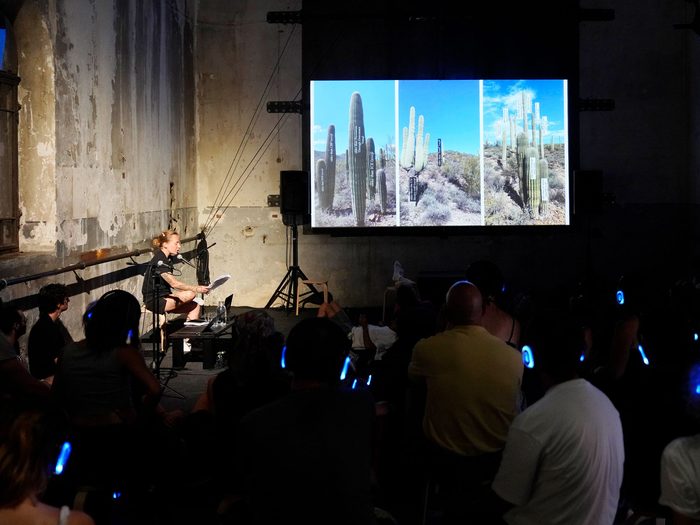
The colonial airspace of Libya, the militarised border of the Central Mediterranean and the aerial warfare of Palestine and Lebanon have different histories and specific political conditions. What Overhead makes possible is the tracing of infrastructures across them. It showed the movement of technologies, the reuse of forms of expertise, the circulation of surveillance practices, and the transformation of military technologies into border-control or commercial infrastructures. The last contribution of the program by Taylor Miller, a writer living between the Sonoran and Chihuahuan deserts and a researcher at the Center for Imagination in the Borderlands, extends this method beyond the Mediterranean, connecting the colonial and ecological transformation of the Naqab desert with the Sonoran and Chihuahuan deserts, one of the most surveilled areas in the world, as well as one of the deadliest border crossings. She showed how the circulation of drone technologies across military, border, and environmental applications further demonstrates that technologies are shaped by the infrastructures and systems in which they are embedded. The result is a method of reading violence through its fragments. This is because the systems described by Overhead are designed to produce gaps. Surveillance itself creates blind spots. The answer cannot simply be another totalizing gaze. It is to listen differently from below.