In the Folds of Friendship
On “Peanut Fields Near Friendship” curated by Piersandra Di Matteo, Edoardo Lazzari, and Annalisa Sacchi
“Vainly do we try to maintain, with our words, with our writings, what is absent;”—what is left of a friendship? In the generative affect of being and thinking together, hovering over—each time—crisis and catastrophes, as through the act of listening to the other person’s trusted reasoning we make sense of the world, while together we can unconsciously renounce to hold our secrets, as we step onto a seemingly non-performative ground, where we can discover something about ourselves. A house of mirrors, where love is administered in just the right dosage, so it doesn’t drive us mad. We find ourselves prolifically centered, comfortably loose, casually grounded. While we were working together on something, we mentioned the word “freedom” several times, or when we didn’t, we realized immediately thereafter.
I often say out loud in public that I only want or can work with friends—I don’t know exactly if that speaks of my actual methodology or whether it serves as some sort of manifesting, but here I am, invited by potential friends to write about friendship. What is a friend? In some sort of elective affinity, it’s a coat we wear or a meal we share, where I find you and you find me, and we want to note down everything that has been said—and I am sure we would never take the exact same notes—or not at all, just float and soft-land from one point of view to another, grips or holds, advantage points when, again together, we discursively ascend (or descend) trying to make sense of the world, we’ll find out of new aspects we couldn’t singularly consider. Jointly and boldly—as in epiphany.
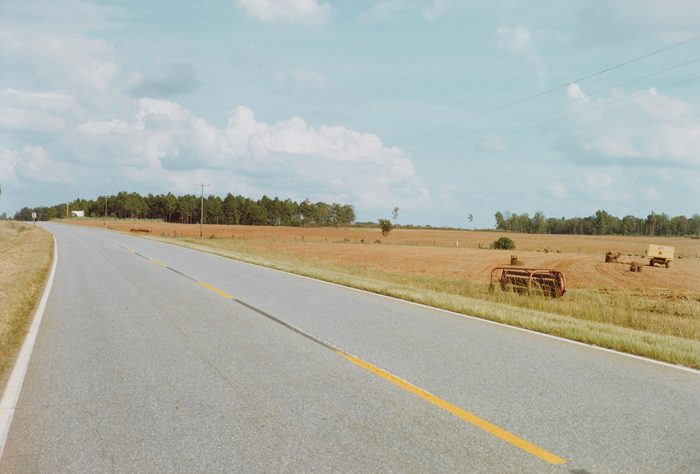
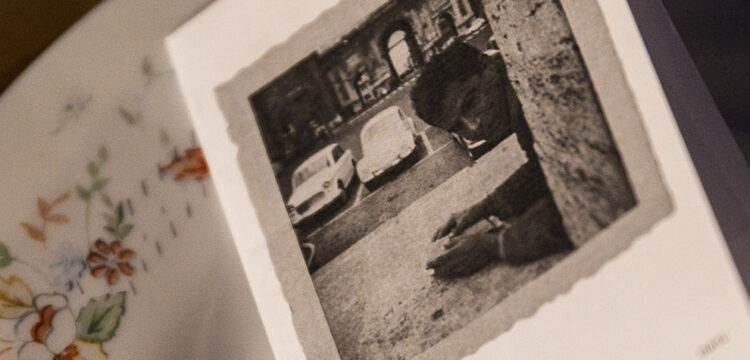
So it goes, here I witness Piersandra Di Matteo, Edoardo Lazzari, Annalisa Sacchi’s research on friendship, as it encounters the world by being embodied by other friendships, between people and disciplines, such as theatre and dramaturgy, and poetry, and literature, where the leftovers of such friendships are solidified into stories first, then anecdotes, to then join major and minor histories, so that we can watch them in retrospect. Bibliographies too are, in turn, a summoning of imaginary friends, and I always wonder whether the author would have reciprocated my appreciation, that is not per se a given. This research takes the form of a public program titled Peanut Fields Near Friendship presented at Scuola Piccola Zattere, in Venice. The title too comes both from a photograph and Annalisa’s personal anecdote, leftover of a reminiscence one would share to someone who could house it, or perhaps, as in this case, decide to do something with it. With Piersandra and Edoardo, they have decided to structure the events in couples, where the two friends are also making, or have made something together—and since we might know the result, here we are offered some backsights.
Friendship thus is meant as the “invisible infrastructure” of a practice—Piersandra quotes Fred Moten—“of common disorder,” perhaps a space we mess up together while we co-construct a (or multiple) line(s) of thought, as if it were bookshelves, to house somebody else’s thinking. Less straight and solid though, the word that is more often mentioned is “tangle,” for it is almost impossible to know when a friendship starts, or where the other begins, who has said what, what belongs to whom, who’s the author of what, and whose secrets are being told. The first encounter, with and between Daria Deflorian and Azzurra D’Agostino, finds and uses objects to navigate and narrate this tangle, as if stars in a constellation, or specific milestones on a long non-linear time span that is their knotted relationship. These are also keepsakes of gratitude, in their belonging they maintain their sense of surprise, or renovate the gift of the transmission between the two. They say, indeed, here is where we’re going to lean on, on these “things without mandate” which are helping to narrate something before one can even see it, for that something opens through the gaze of the other, to get to what doesn’t exist before you make it together, a thing that can brighten you from within, as the other helps you write the details of your own existence. To converse means to localize oneself, within this tangle that has “ceased to be solitary although is not yet collective.”
And these are all quotes, from all the notes I took, the remnants of my listening, as a witness of this friendship I am no longer capable to trace who said what, and what was their purpose. Perhaps as if I would see their work, something they made together, a meal they prepared, I could only distinguish each one’s touch by reading their roles on the credits. But I would for sure not be able to say who ignited what, who picked which ingredients—just and only if I am a very close friend myself, then I’d be able to catch the nuances, taste all the flavours, and recognize all the influences. For only true friendship gives you this sort of proximity, or magnifying lens to see all the minutias. As an audience, I get the benefit of distance that allows me to enjoy the whole image.
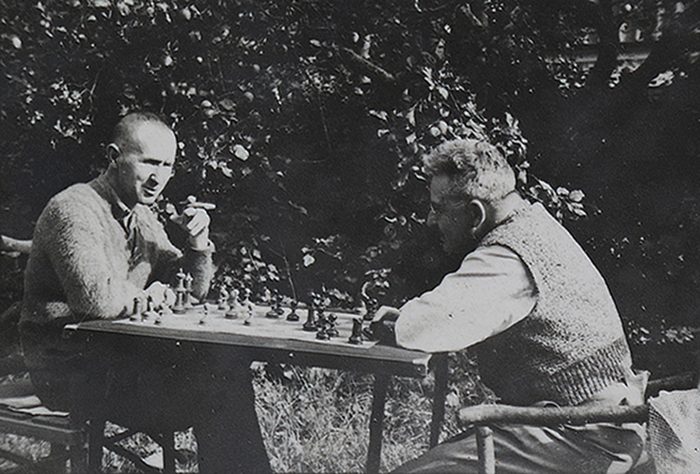
The second event of the series welcomes Lisa Ferlazzo Natoli and Francesco Fiorentino, who instead chose to talk about their friendship through another literary relationship, one so tight that it is impossible to study someone’s oeuvre without the other’s, that is between Robert Walser and Carl Seeling. In this case friendship is the kiln, for the ignition, crystallization of matters, conservation, and preservation of memory. Here—again I am quoting without knowing whom—co-thinking means taking someone’s place, and this chain of knowledge, intellectual intimacy is what allows us to enter certain writings via language. Unlike the former, this friendship is between two people that don’t know each other well, or are getting to know each other—their place is moving at a walking pace, travels long distances, and it’s full of echoing silences, small mundane things, and later on manipulated “monologues.” These are friends by profession, and the milieu of memory implies always a re-writing. An impostor appropriates the other person’s language, in a friendship that is “more ecological than phenomenological”—although all this retracing and mending prevents one’s work from falling into oblivion, through these walks the uncanny friend “sews the hems on the periphery of thought,” while administering both the voice and the legacy, as one writes on the other’s behalf. Again, impossible to say, where one ends and the other begins. The medium here is psychic, and it determines the message. We understand then, that’s clear, that we must be willing to being generated by the other, and by the conversations that occur—as platonic (body-less) intercourses.
In this chain effect, one friendship ends in the hands of other friends, to be brewed into something (or someone) other. The encounter with a new friend changes us structurally. The encounter with the products of friendship can change us and the way we read the world as deeply. If making together (from conceiving, to conceptualizing, to producing something that is visually and materially shareable with somebody else you don’t know) is a form of pleasure, we envision a certain imagery, while we reciprocally liberate ourselves a bit further. These particular friendships always also confront us with death—the not-yet-posthumous of how to cite, how to archive, what to quote. How to speak of the unspeakable, of the factual mundanity both of the object, and of our interaction, our conviviality, that is where our ideas, and the images we later wrap are landing or manifesting or emerging, in between our spending time, not simply within the projectuality of the rehearsals, or at the early stage of a dramaturgy, but in between them, when we are not even together, yet our body remembered for our mind remained in that preparing, and when we least expect, here it shows what becomes a gift for each other, that seldom causes commotion, and most often renews our enthusiasm to keep going together, keep writing, keep moving, keep walking, always reaching out for one another, both in absence and presence.
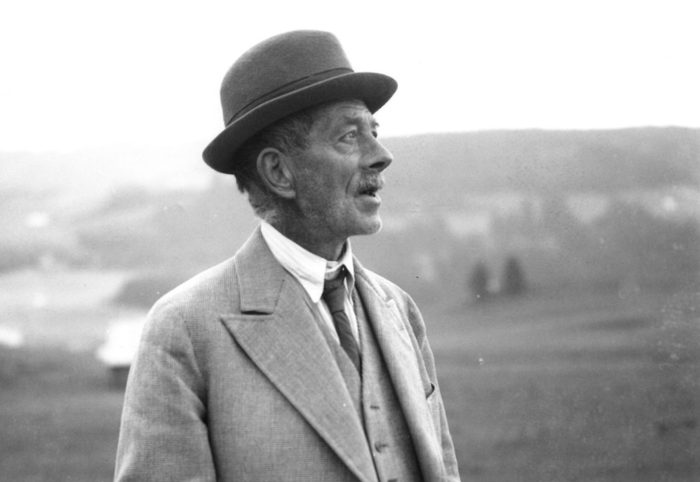
They told of Seeling’s ambiguous posture towards Walser which, understandably so, makes me think of how much we influence each other when we love each other, even our way of speaking bends like a branch reaching toward water or light, toward the other as a source of renewal, while it works as our nourishment to blossom, to become more ourselves, as if our not-so-internal drive goes on auto-pilot and keeps pushing toward some directions we don’t even know, within our double rhizomatic reasoning, that becomes soothing, affords us the chance to renew our gaze multiple times. “We must give up trying to know those to whom we are linked by something essential; by this I mean we must greet them in the relation with the unknown in which they greet us as well, in our estrangement.” Perhaps a friend is not someone we know very well, but someone who’s there to lead us (while we lead them) where we wouldn’t otherwise go.
Yet, within this bond there’s separation, if whilst we’re still alive our friendship entails collecting each other’s details, peculiarities and oddities, in as much as shared experiences, misfortunes and divine rites, and then objects, books, snapshots and souvenirs, gifts in form of artworks, which is nothing more than traces of the time we spent together, when one of us will be gone, who will become the archivist, and then the narrator, who will be the archeologist and who the historian? Friendship (and comradeship) is perhaps the best death-proof device there is, as through one’s loved ones it is possible to keep living, as this recollection exceeds the possible narrative of a biography, so much so that seems to incorporate even one’s will—how do we want to be told, or how are we meant to survive, although the friendship is gone, although the conversation is over, and memory becomes the only consolation. The question remains, what do we do with what has been accumulating in the folds of friendship?
Even in this dialogical speculative survey through some literary apparitions, friendships can only contingently manifest as atmospheric agents, or geomorphologies shaped by them and time, those traits in a broader landscape that, although we give them for granted, are what is making it recognizable. The movements of our friendship are engraved in that view, we would be able to see it and ourselves within it, only if someone captures it with a photo, that we’ll end up looking at nostalgically after a few years, triggering us to return to that until it’ll outlive us to tell our story. Someone might pick it up and use it as a literary case, to find new phrasings to define friendship, or who knows, as a sprout for their own playwriting—and somehow, in some magical ways that exceed time, our words might furtively echo in someone else’s poetry.
When we try to find our bearings we look up at this starry sky that is friendship, we might definitely find some resonance at times, some cues, or why not some no-goes. Astronomers and fortune tellers (who often coincide with our dearest friends) will put that into words to direct us into our past and future—speaking of which, you may find some inspiration in the forthcoming appointments of the same series, in the intergenerational friendships of Giuseppe Allegri and Bruno Montesano and their “im-possible meetings” in the “pleasurable of the night” (on October 26th) and that of Michele Bertolino and Lina Pallotta (on Novemeber 25th), who are also dear friends of mine and I salute them—I’ll surely enjoy hearing them recounting their friendship to one other, while they tear down hegemonic culture, subtly, together.