
Forecast and a Hypothesis about the Future
On Natália Trejbalová’s “Forecast”
Core sampling was one of the ancillary technologies that, from the mid-nineteenth century onward, enabled a certain evolutionary leap in the Industrial Revolution. This technique consists of drilling deep into a material using hollow drill bits or diamond-tipped coring tools in order to extract an intact cylinder of element that reveals its stratigraphy. These first cores extracted from the ground were like geological palimpsests reduced to an abstract form. Naive witnesses that candidly offered themselves to the world for what it was to become. Without this technique, in fact, we would not have the contemporary world as we know it, or rather, we would not have been able to imagine a race for growth rooted in the extraction of raw materials. Core sampling, then, is a piece of technology necessary to define a logic that, as often happens, remains invisible behind the presumed normality of things.
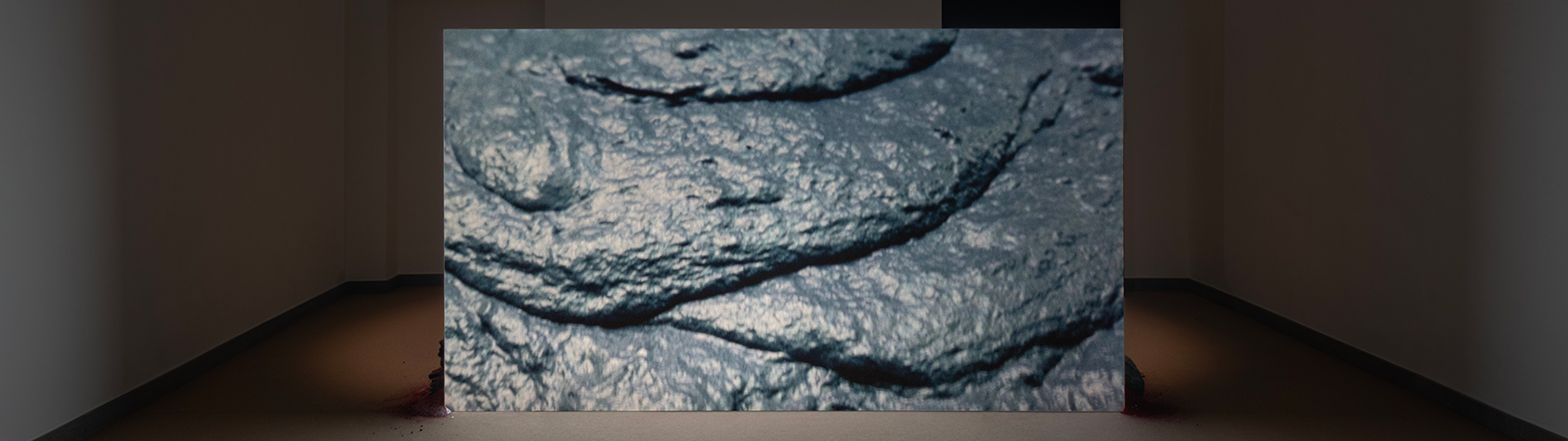
This premise serves as a starting point for approaching Forecast (2026), the latest film by Natália Trejbalová, around which the same name exhibition curated by Arteco and Cripta747 and installed at the Pinacoteca G.A. Levis in Chiomonte (Turin) is constructed. The film is essentially organized around two types of footage; in turn it brought together in a single narrative made exclusively of images and sound. One of the filmed blocks consists of a kind of analytical carousel of various materials, ranging from something resembling mud, to sediments, to liquids and minerals, or things presumed to be minerals. In the film, we see this varied materiality being compressed and reassembled before the camera, or simply boiling up from beneath a cloud of smoke.
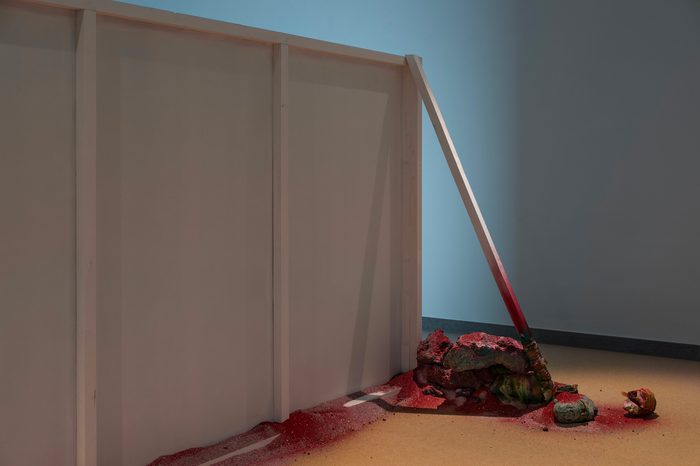
The second group of shots, while maintaining a strongly subjective position, takes on more of a contextual dimension. We glimpse the outline of a landscape, followed by an archive and finally a laboratory that turns out to be a facility designed to simulate extreme cold-weather conditions. The section involving props and miniature sets is filmed in fixed-camera long takes that linger on this moving material while, by contrast, the 16 mm camera remains still. In this pseudo catalogue, the movement of the elements explicitly enters into conflict with what appears to be the common assumption that minerals and sediments are essentially inanimate.
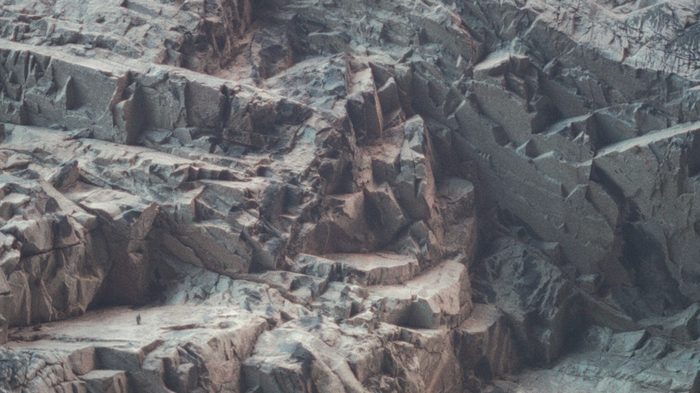
Throughout the film, camera movements are kept to an absolute minimum. In two sequences there is a panning shot: the first moves horizontally across the surface of the rocks in a canyon, while the second moves diagonally, revealing the wooden boxes containing the core samples accumulated over the many years of construction work on the TAV (Turin–Lyon High-Speed Railway). Even on a first viewing, there is a sense that the entire cinematographic posture conceals much of Natália Trejbalová’s research and interests. The artist, in fact, constructs her discourse without resorting to words, instead working through analogies between image and sound effects, or meticulously reconstructing a particular position on the ecosystemic complexity of materials.
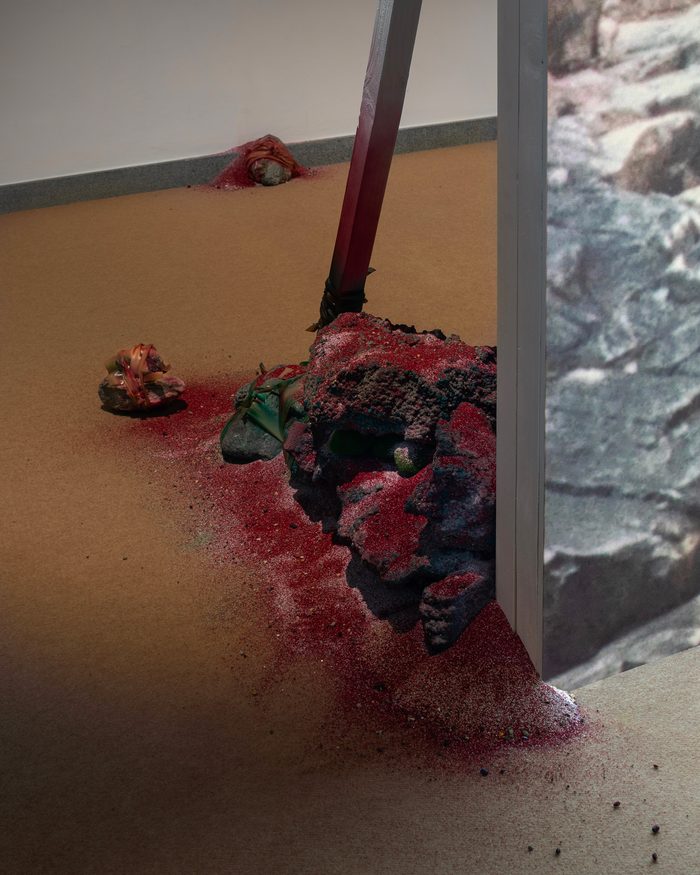
The materials bank, as it is known in the field of design, could be read as an imaginative “geological ethnography”, from which a science-fictional narrative takes shape. A science fiction that, in Forecast, can be traced both to the early ethnographic films, from which it takes its rigidity and sparse camera movements, and to the work of Robert Hazen, the American geologist who was the first to formulate the theory of mineral evolution. According to this theory, many of the minerals we find on our planet today have not always existed, but emerged throughout the history of the Earth in relation to its geological changes and, above all, to the evolution of life and the resulting transformations of the atmosphere.
That moving collection, then, is a hypothesis about things, much as the life of Nanook was a hypothesis constructed and performed by Robert J. Flaherty with a young Inuit man in Nanook of the North (1922). Whether the material we see exists or not, whether it lives or is brought to life, is a question that concerns the capacity of film to give it life. Moreover, the images we see in the opening sequences are accompanied by field recordings that the sound artist Attila Faravelli has deliberately transformed into something that suggests an evolution, or rather an attunement to what surrounds it. These materials are undergoing a process of formation, and we understand this precisely through the sounds. They seem to want to come alive; they alternate across the screen, and we are there to witness the progression of the urschleim or of polychrome sands, as in a Huxleyan abiogenesis.
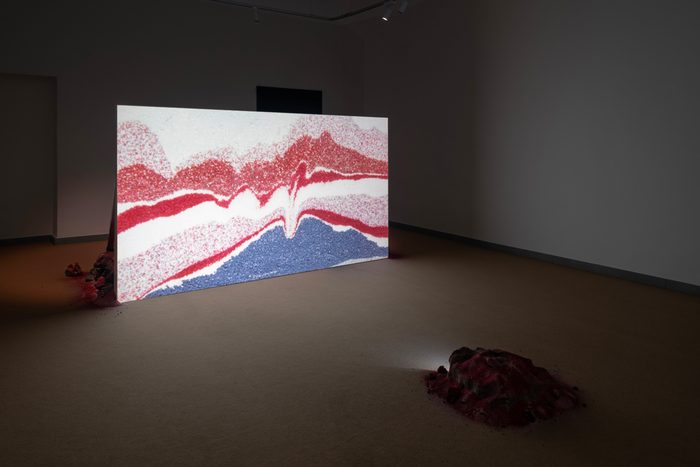
Perhaps not exactly like Thomas Henry Huxley’s Bathybius haeckelii, in which matter is capable of determining itself into life, but certainly as in a hypothesis of cohabitation, or better still, symbiosis. A state of continual transformation that, through the film’s ethnographic displacement, makes us reconsider the position from which we observe the materials on screen.
If ethnography originates as a practice of studying and representing human groups, then thinking of film as an observation of the complexity of social dynamics means hypothesizing that the observed object may itself be animate. No longer “things” to be studied and represented through cinematographic technique, but a reflection on the privileged positionality of the observer, which is implicitly embedded in the very act of observing and classifying.
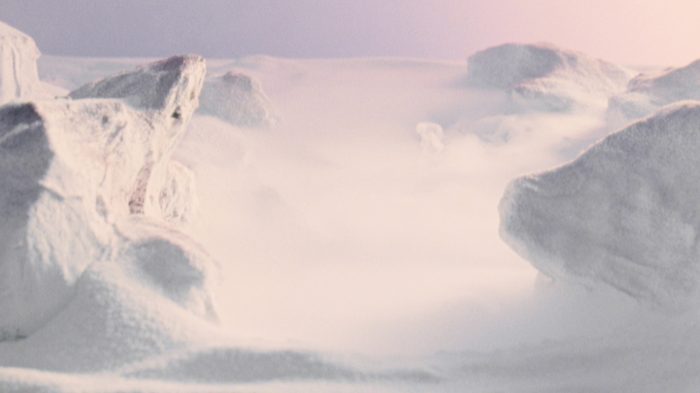
The shift from a catalogue of things to ethnography serves to subvert the taxonomic position. Minerals no longer appear as a collection of specimens available to the gaze, ordered according to their properties, provenance, or possible uses, but as presences with their own histories, made up of appearances, transformations, relationships, and disappearances. This is where the mineral evolution described by Hazen lies: it allows us to think of this history as inseparable from the history of life. No longer two parallel histories but a single one, organic and inorganic, understood as a set of processes of co-creation that produce and transform one another.
It is from this reversal that the science-fictional narrative begins: from the possibility of observing minerals not as inert matter upon which life acts, but as active participants in a system of relationships in which humans, too, are implicated. Geological ethnography becomes a device for asking what kind of privilege is exercised every time something is named, collected, classified, and represented, and what happens when that same privilege is made visible and called into question.
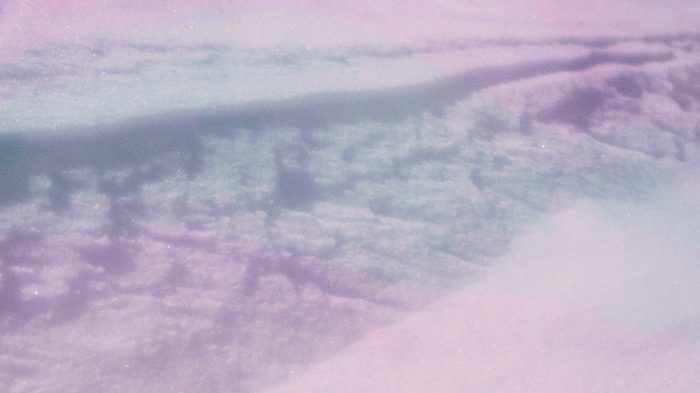
In this specific case, the film acts as an interruption of the customary. It suggests a hypothesis and brings the story of reality back to a completely different perspective. It moves from speculations about the future to describing a contemporary history dominated by extractivist logics.
But in order to understand this, we need to make one final digression, which, as we will see, connects back to the first. The project was developed by Natália Trejbalová in collaboration with Arteco and Cripta747 in the Susa Valley, an Alpine valley located in the western part of Piedmont, west of Turin, extending toward France. A valley that, since the early 1990s, has also become, because of its geographical position, a territory of conflict. In recent years, the valley has been a political laboratory, the center of a form of thinking opposed to the transformation of the living mountain into an infrastructural corridor.
The Susa Valley has concentrated many of the territory’s social tensions, from deindustrialization and workers’ struggles to the first environmental battles. Out of these transformations emerged the No TAV movement, bringing together citizens, administrators, and technical expertise in opposition to the assault on a living territory.
The Susa Valley is more than a geographical boundary, or a territorial limit between two states: it is, in fact, the point where the African plate collides with the European one. A collision that has transformed the territory into a kind of metamorphic laboratory, where, secretly, what Natália Trejbalová redraws in Forecast takes place. Pressure and temperature, as well as the interventions and core sampling carried out in the ground by technicians to test the territory in preparation for the railway infrastructure, redefine the very typology of the rocks, transforming the valley into a hypothesis about the future.
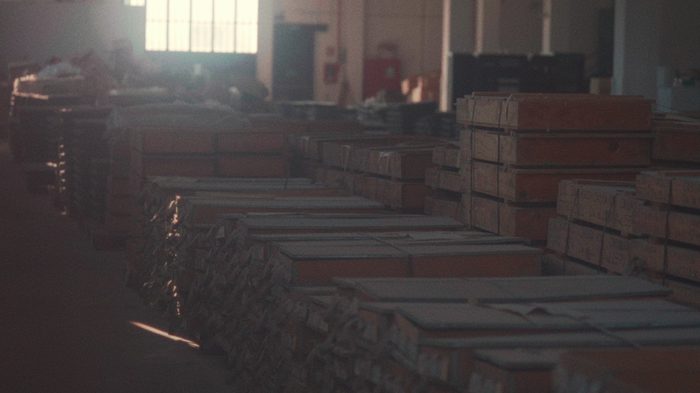
A story yet to be written, in which there is the possible geological transformation of rocks, but also a view of an extractive capitalism that transforms territories and their social structures. An unequal relationship in which Forecast opposes the extractive logic, and in which it is precisely the combination of techniques and power relations that feeds that condition of structural invisibility, rendering the observer blind. A hypothesis about the future in a present marked by repression, made up of images filmed in the studio, ambient sounds, and a room for simulating extreme environments that, from science fiction, become reality.
The initiative is promoted by the Pinacoteca G.A. Levis Chiomonte and curated by ARTECO and Cripta747. The project Natália Trejbalová. Riscoprendo Levis in residenza is supported by PAC2025 – Piano per l’Arte Contemporanea, promoted by the Directorate-General for Contemporary Creativity of the Italian Ministry of Culture.
The activities complementing the original project are made possible through the support of STARTER. Cultura e creatività per la sfida ambientale, call promoted by Fondazione Compagnia di San Paolo.