
To See in the Dark
A conversation with Nicholas Mirzoeff
The Department of Communication and Media Studies’ Digital Delights and Disturbances lecture series presents Nicholas Mirzoeff’s book To See in the Dark: Palestine and Visual Activism since October 7. Join us for the event on Monday, October 12 at 6:30 pm in PG1 – Martini Aula Magna (Pavoncello Campus).
In To See In the Dark, NYU professor and visual culture theorist Nicholas Mirzoeff explores how images, and especially video, viewed outside Palestine enabled a dramatic switch in public opinion, leading to a global uprising against the genocide. In this groundbreaking analysis, he connects the personal and the political through his own anti-Zionist Jewishness and its histories of violence. The result is a new collective and anti-colonial way of seeing, intersecting online and embodied experience.
The DDD Event Series is organized and sponsored by the JCU Department of Communication and Media Studies.
Make sure to RSVP at this link.
As quoted from the title of the introduction of your book, Silvia Federici claimed that “Palestine is our world”, that got me thinking of Angela Davis saying during an interview “we deposit our dreams in Palestine”—althought the Palestinian plight didn’t start on the 7th of October 2023, from then on many more worldwide joined the struggle, so much so that this has truly become our “moral compass” to read broader politics, injustice and oppression. What would you say about this?
Nicholas Mirzoeff: Palestine is not an exception. It is exemplary. It allows people to understand what is meant by an abstract sounding term like “settler colonialism.” In Palestine, it can be seen that this means not just violence but a violence dedicated to eliminating all forms of life that were present when the colonizer claimed the land. It is systemic, determined and without scruples. It is so accustomed to lying that when the Israeli army finally admitted what they had long denied, whether it was that the total number of dead in Gaza was 71,000, or that they had killed the young child Hind Rajab, it barely made the news in the United States. Colonizers want to exterminate that life. Sometimes it moves slowly. Genocide is its top gear.
What happens outside Palestine is that you learn something very simple. If you can tolerate genocide, then anything else is possible, whether it is the fascism of Bolsonaro or ICE murdering immigrants or a fascist party in power in Germany. By contrast, Zohran Mamdani has shown exemplary moral clarity, knowing precisely where the lines that should not be crossed are located. In so doing, he assembled a remarkable new electoral coalition in New York, a city long accustomed to Israel’s dominant influence that found to its surprise that another way was possible. That’s what the expression “moral compass” means: finding your morality allows you to find a path out of fascism.
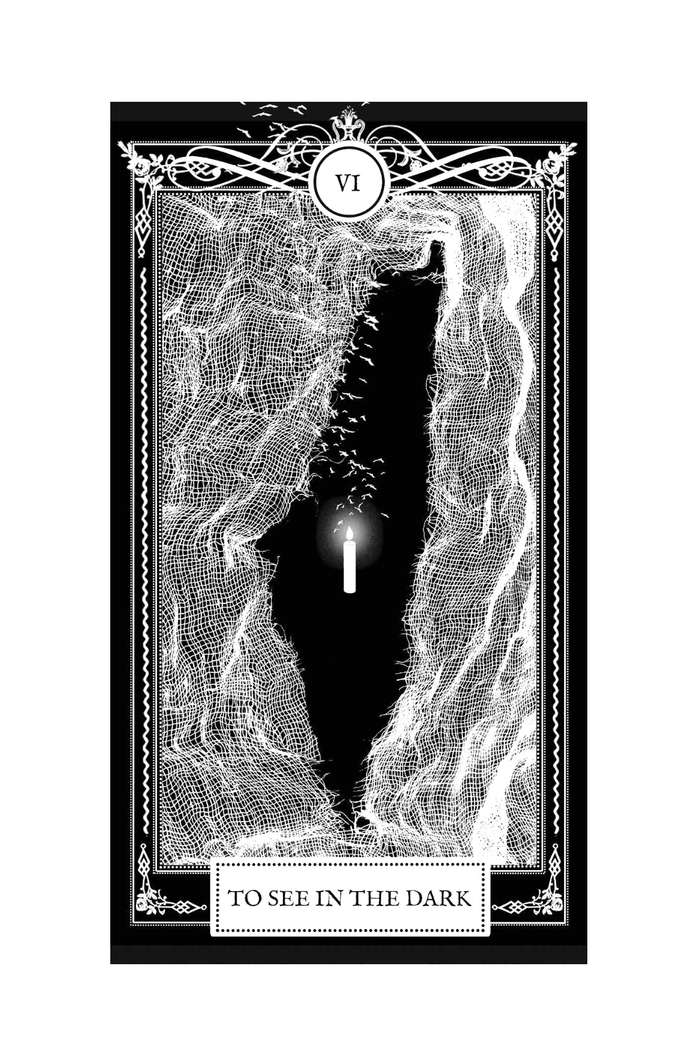
As mentioned in the title To See In the Dark: Palestine and Visual Activism Since October 7 the essay digs into “seeing” both as witnessing and truth telling, but also on both ends of the genocide that happened in front of our eyes, on the one hand the very graphic repertoire of rubbles, war and violence, and on the other a visual culture of resistance that grows while building on almost eighty years of occupation, and anti-colonial resistance at large—how have you approached these aspects?
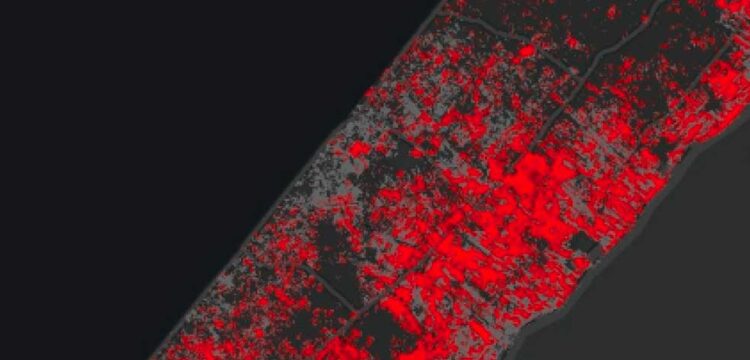
There is precisely a counterpoint of visualizing here. The occupation uses the top-down machine vision that colonialism has been forming for centuries. In my book I compare a 17th century drawing illustrating perspective with the first article about Israeli drones in 1982. The perspective drawing shows armed soldiers with pyramidical lines coming out of their eyes forming a blank square on the ground, the space of colonial extermination and genocide. The drone, too, has pyramidical lines forming a white square. Only now this square has a name: the “kill box.” The kill box is exactly what it sounds like, a space in which everything that can be seen can be killed. In Gaza, the IDF distributed this surveillance machine war by using quadcopters. Some were expensive Israeli machines generating 4K video. Others were cheap DJI drome made in China. They bombed, gassed, filmed and monitored the genocide.
The counterpoint was short-form video created by both professional journalists and amateurs in Gaza. For months, many of us awoke to see these short videos on platforms like Instagram and TikTok. Even though the owners of such platforms were opposed to Palestine, they could not resist the attention –and so the revenue–these videos created. Short form video has an advantage over conventional TV news and newspapers because people trust it. Over time, not through any one video, many people came to see the genocide for what it was. It was a global social media intifada. We hold our phones close to our faces and see terrible things, things that no one should ever have to see. They become part of our bodies, a process phenomenology calls “intercorporeality,” or body sharing. A hug or a handshake is one example. More intimate ones can be imagined. So too the way one person helps another walk or move, whether a child, or an older person or someone impaired. This sharing creates community. It came to feel that in some way those watching were also the target of the genocide, endlessly denounced by Israel and the US as antisemitic, deluded, terrorists and so on. The intifada was possible because of a technological transition. Even though it is a very recent format, cellphone video is about to be displaced by AI generated moving images, as we have already seen in the conflict in Iran. At the moment in which a medium becomes redundant for capital it acquires resistant possibility. So painting was significant in the French Revolution, or photography in the Vietnam War. As this moment passes, the genocide is for many becoming invisible.
At what point have you decided to write this book, and what made you write it? Why a pamphlet?
I had to write this book because I am a Jew and this was being done in my name. I had to make it known that as a Jew, I refuse Zionism. As the descendant of those who did and did not survive the Holocaust, I owe it to them not to let another genocide happen in their name. It has been said that you cannot be an antizionist Jew. I call that “ontological terrorism,” meaning that this terror denies the very possibility of my existence. This became clear to me in the first days of the genocide.
I began writing almost at once, posting a piece called “To See The Rubble In the Dark” on October 13, 2023. I write with the urgency of journalism and the resources of the academic in the era of electronic communications. The pamphlet is the tradition of the left. The book can be kept in a pocket, passed from hand to hand, and read in one sitting, as many people have told me they have done. It’s not expensive. And I finished writing the pamphlet in November 2024 and it was published in January 2025.
I used the pamphlet, too, because this is personal. I wanted and needed to talk about violence not in an abstract way but as I had experienced in my family and in my school and in my body. My Jewish family has a history of political violence in Palestine and domestic violence. By a certain irony, it was my status as a Jew, making me an outsider in the elite school I attended, that led to my being sexually assaulted as an eleven year old. These schools exist to train elites in the practice of violence. I can only speak to this in the first person, as what I call an autopsy in its old sense in English: a seeing of the self.
What is a visual culture of solidarity? And what are our weapons as theorists, artists, writers and cultural workers?
Solidarity begins with the recognition that other people are real. And as such they have equal needs and rights. It seems obvious and simple but in fact capitalism centers around designating people as disposable and then unseeing them. In all Western cities, people pass by the unhoused and unsee them because to recognize them as real would mean taking action. Maybe we give one person something or buy them food. But capitalism teaches us that you can’t do it for everyone. And so we unsee.
The “weapon” we have, according to the revolutionary Amilcar Cabral, is the “weapon of theory.” Theory is not abstracting philosophy. It is how we see in the dark, outside the glare of permanent surveillance, rejecting the “reality” projected by colonialism and capitalism. Cultural workers of all kinds give us the tools to build another reality. It has been called surrealism but it came first. It is the surrealism of the Haitian revolution overturning slavery, an idea so impossible that Haiti has not ceased to be punished for it two hundred years later. As cultural workers, the rejected forms discarded by capitalism are available to us. So as video becomes rejected for AI, many artists turn to it. My sense is that writing itself, now generated by machines in seconds but devoid of sense or sensibility, let alone politics, is the next tool that we can pick up. Pamphlets. Newspapers. Magazines. The old becomes new as history circles around us. To free Palestine is to free ourselves.