
The Death of Images
Do our images take an idea of risk into account?
This text does not unfold through questions and answers, but through images that call to one another, contradict one another, and fall into one another. Our voices move through the body, painting, photography, and the space of the exhibition in order to question what an image can still hold when it is no longer evidence, memory, or a promise of truth. What emerges is a conversation without fixed roles: an exercise in proximity and disorientation, in which thinking also means exposing oneself to the risk of being unable to fix anything in place.
During a somewhat unrestrained evening, M. enthusiastically evokes the power contained in Giorgione’s The Tempest. I immediately think of the woman portrayed as she tries to hold the child in her arms, in a posture hidden among the plants, as though her new identity—that of a mother—had to remain concealed within the very gesture in which her body arranges itself: between an arm and a leg that cover what she is newly nourishing. Her gaze is bewildered and turns toward us as a question. Behind her, a storm is about to arrive, giving the work its title.
On the left, a man smiles at her with such tenderness that he seems out of place. We do not know whether he truly understands what is happening. These two figures share the same lightning bolt without sharing the same event. The lightning is right there, behind them. It forms the backdrop for both of them, and the landscape for us.
The history we are living through offers no consolation: screens are filled with faces that, whenever they can, scream; along city streets, one breathes in a veiled hatred. But do our images take an idea of risk into account?
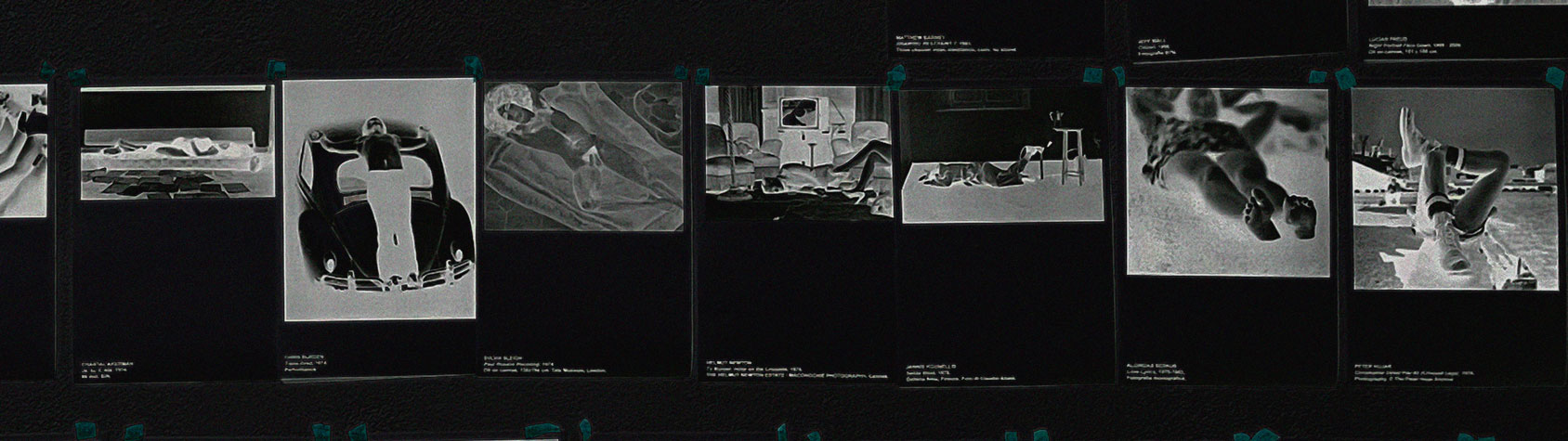
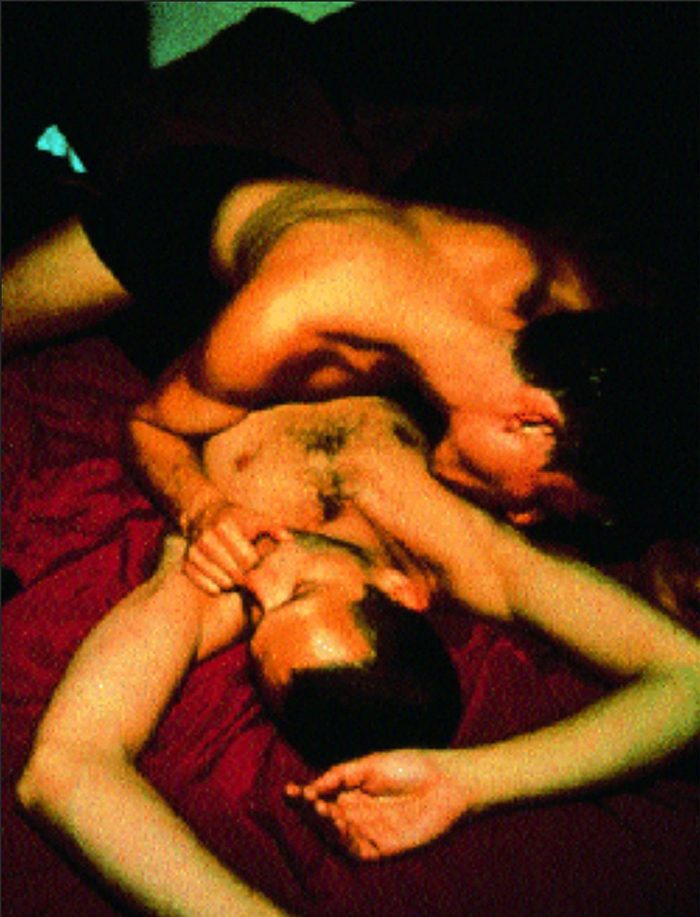
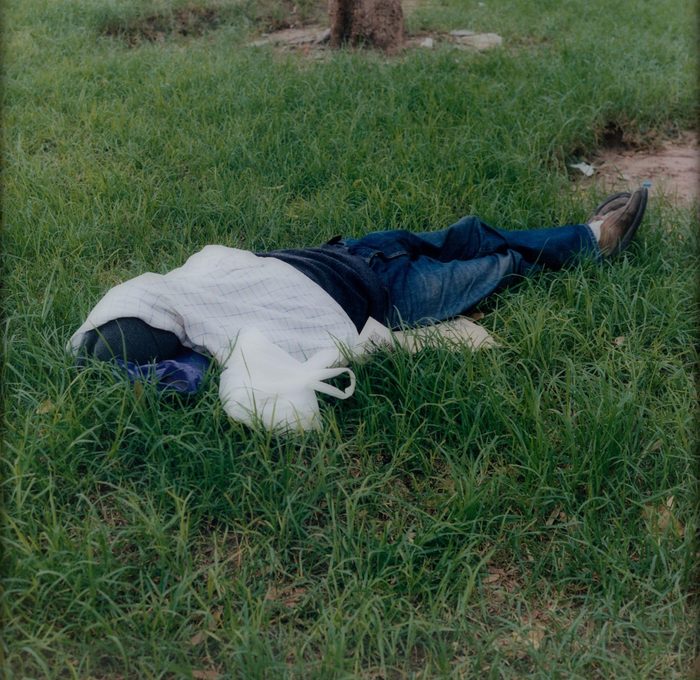
Trusting this question, I have been collecting snapshots that surface like flashes for some time now. They have cluttered my desktop, and only now are they slowly arranging themselves on a wall along a timeline. They are all reclining bodies, in their various falls. They answer only to one great, often underestimated awareness: that of gravity. I spoke about it at length with P.M.
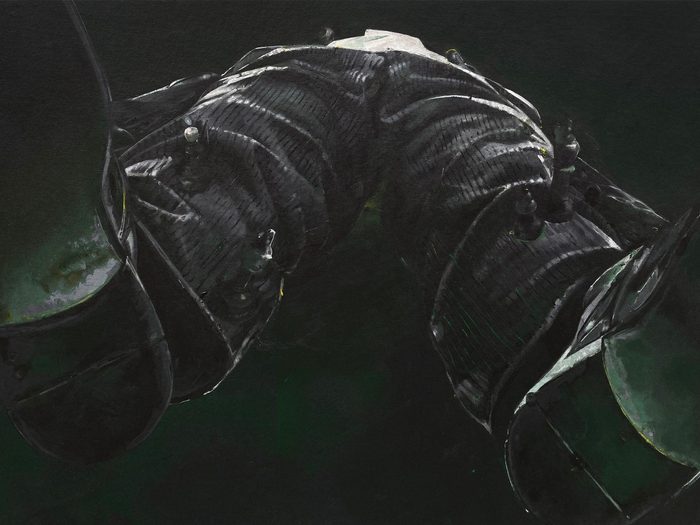
The legs are in the foreground; the feet pierce the space; the head is tilted back; the arms lie abandoned along the body like things no longer needed. Mantegna invents this in the fifteenth century with a foreshortening so radical it almost feels indiscreet, and from that moment onward, the gesture seems never to stop. It passes from hand to hand, century to century, meaning to meaning.
It is in Antonello’s martyrdom. It is the nightmare mounting on the chest in Füssli. It is pleasure, first in Belloc and immediately afterwards in Courbet. It is political death, in Manet and Alborta. It is idleness, in Casorati and Hockney. It is torture, in Pasolini. It is the sleep of those who have survived, in Barrada. It is, and can be, much more.
The form remains unchanged throughout this collection of scenes, while the content always slips out of our hands.
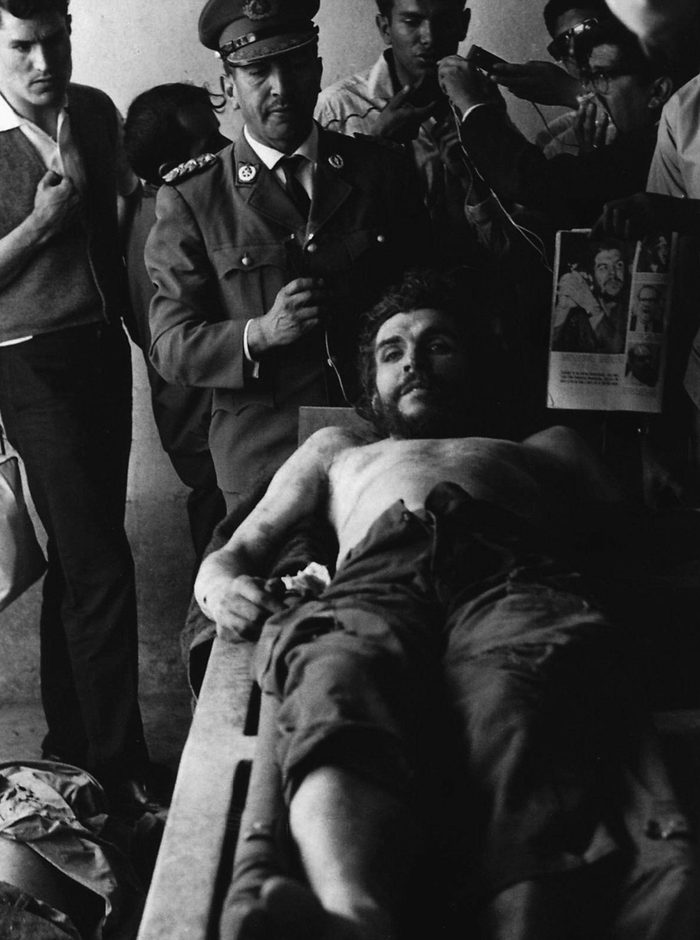
If we place Alborta’s Che Guevara beside Mantegna’s Dead Christ, we need no words. The same foreshortening, the same offering of the body to the gaze, the same list of wounds displayed like those in a medical report—and, at the same time, the same silent plea to be mourned. An autopsy asking for pity. A pity that does not relinquish the autopsy. This is why the image, in its origin, is born out of a vigil.
Perhaps this is precisely where the image begins to lose its innocence.
For centuries, we have asked images to hold on to something: a body, an event, an identity, a death. Today, by contrast, we live amid an almost infinite availability of images. They can be produced, replicated, altered, and circulated before what they represent has had time to become experience.
Images are losing their power to signal status, taste, belonging, or even identity. Let us then speak of the death of the image.
Images were central to communication throughout the twentieth and twenty-first centuries because of the vast amount of information they could convey. Susan Sontag herself described photographs as something treated less as statements about the world than as pieces of it: miniatures of reality that anyone can create.
Today, however, we are confronted with a world in which images are infinitely available, especially when it comes to cultural objects. So even if those objects are physically scarce, they are culturally omnipresent. The problem is that what can be transmitted quickly is above all aesthetics. In this way, the values of subcultures are extracted from their contexts and reduced to an aesthetic, to a costume one wears for twenty-four hours. Does that mean there are no new aesthetics anymore? Once again, the answer is economic: culture has been industrialised.
Today, on social media, we witness an uncontrolled proliferation of new aesthetics. Yet many of these are not, in fact, aesthetics at all: they are products of cultural capitalism. Images are thus born already packaged, ready to be distributed and sold, with a simple commercial strategy behind them. What remains is an aesthetic without culture.
And this is the crucial point. Culture—and even more so subculture in its various forms—is not merely a way of appearing: it is a set of shared values, rituals, behaviours, references, and practices.
When an aesthetic is separated from the culture that produced it, it can be replicated indefinitely. And when it is immediately intercepted by capital and transformed into a product, it becomes far more difficult for a subculture to develop a language of its own before that language is extracted, packaged, and commercialised. Today, it is only through the display of an enormous, interconnected combination of signifiers, distributed across different industries and niches, that one can produce a coherent signal. And perhaps it is precisely here that the image loses part of its power: not only the power to represent the world, but that of bearing witness to a presence. AI then deals the final blow.
Images lose their function: they are no longer necessarily a trace of something that actually happened. The pre-set posture therefore becomes a source of suspicion.
Before even asking what an image passing through a screen means, we ask whether what it shows ever actually happened. An image may continue to show us everything, but it can guarantee less and less that anything has truly taken place. Once, the image was central and the community was the audience. Now, the community is central.
We must increasingly rely on a deep understanding of the norms, rituals, values, and behaviours of these communities. The images produced become almost the exhaust fumes of that understanding; they are no longer valuable in themselves, but are what is produced to confirm that this deep knowledge exists. If the body is what the image attempts to hold, then perhaps representation can once again become the place where this impossibility is made visible.
Not the image as evidence, then, but the image as risk.
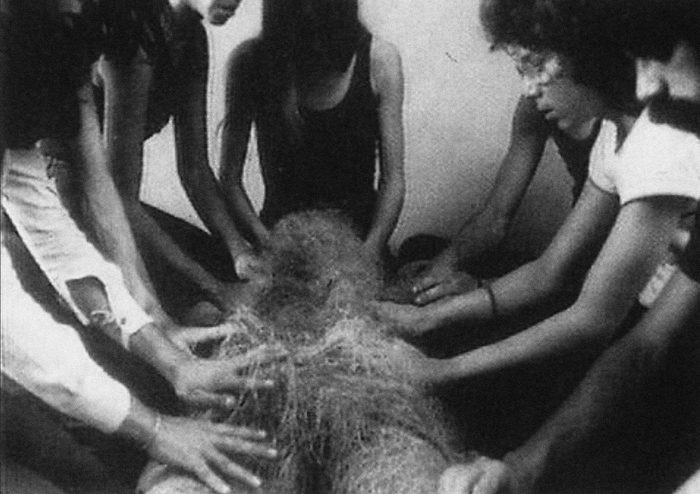
An image that risks failing, being misunderstood, losing its object, accepting its death, lying down. An image that does not claim to stop the body, but records its gravity, its duration, its possibility of falling. For the body cannot be reproduced infinitely, but it can be rethought infinitely. It can be photographed in its states, painted, filmed, generated. But it remains a body that occupies space, that has weight, that falls, ages, sleeps, dies.
If we must ask ourselves why images, then let us ask why the body—the body of one’s own self, the loved body, the enemy body. It is the most perishable thing there is, and the image is the always somewhat desperate attempt to hold it for an instant beyond its time. An embalming that already knows it will fail. If the body is what the image attempts to hold, then, paradoxically, the exhibition may be the place where this attempt is organised.
But the exhibition, too, has a body, a duration, an end.
It comes into being, takes shape, receives bodies and images, creates proximities among them, only to be dismantled in the end. Institutional convention presupposes its death from the outset.
In this sense, an exhibition is not only a device for making images visible: it is itself a temporary image, a form that comes into being knowing that it must disappear. So why do we continue to think of the exhibition as something that ought to endure? Why does its fragility make us so uncomfortable?
Perhaps because an exhibition, like an image, is always exposed to the risk of losing its object. It can deteriorate, be misunderstood, be emptied out, be crossed by presences it did not foresee. It can even die before it is dismantled. Its risk coincides with the possibility that what it contains will no longer allow itself to be contained.
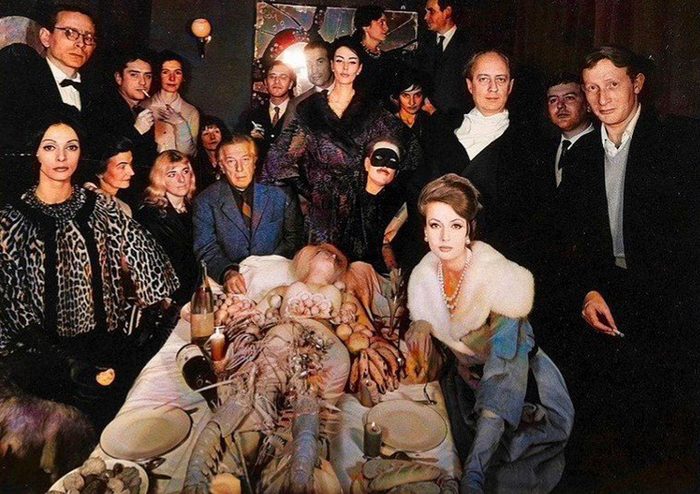
Perhaps an exhibition becomes interesting precisely when it accepts this possibility. When it does not attempt to protect itself from the instability of images, but allows something to be lost. When it admits that not everything has to be preserved, that not every experience must leave a trace, that even the emptiness left behind after dismantling may belong to the work. It is a matter of accepting the risk of one’s own transformation.
A transformation that can be inhabited without claiming to possess it, traversed without demanding an answer, remembered without having to be reconstructed.
Why the end?
Because the end is the only thing an image can truly promise to hold.
Only death, once it has happened, exists solely in its recording. It is the point at which every technique of representation—painting, photography, cinema, and today the image flowing across the screen—is tested against what it can, and cannot, hold.
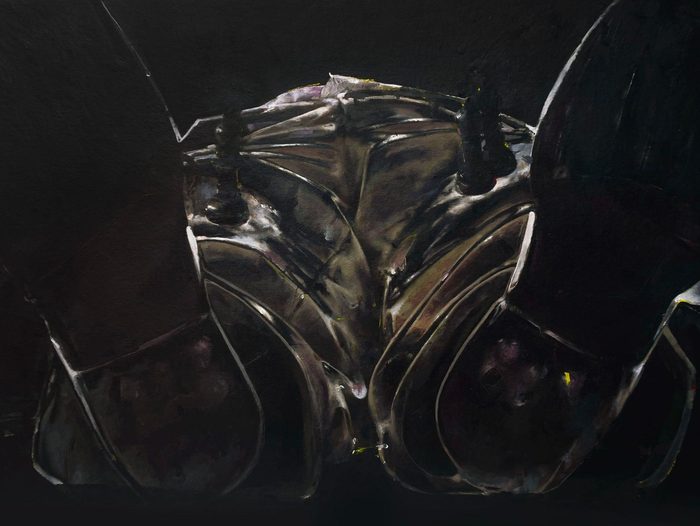
The body can then position itself and become an object, something that lends itself to becoming a gaming table. Whose?
Perhaps the hypnosis sessions that began last year, which I had mentioned to you, are part of this as well: a way of losing control or, if we prefer, of opening oneself to another possibility, one that continually shifts the point of view. Painting itself, within the space granted by its silence, can return to questioning without feeling obliged to answer only to the economic and productive mechanisms of an impoverished society, and can present itself even more clearly as a practice of resistance.
The body loses its verticality, the gaze loses a fixed point, the image loses the need for immediate consumption.
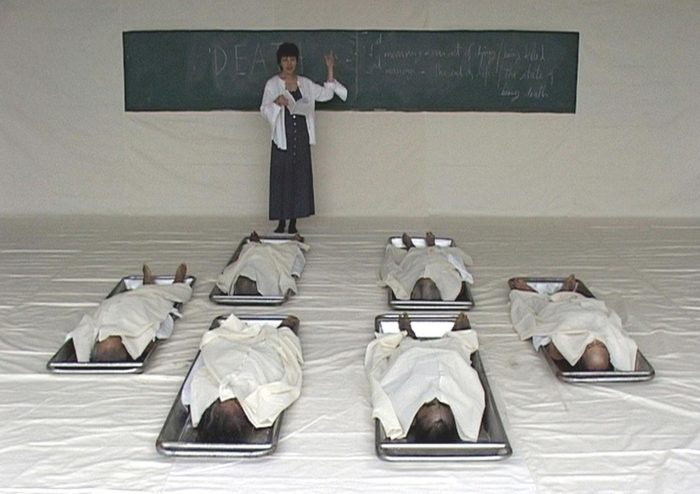
The body no longer has to stand in order to be seen.
It can fall.
It can sleep.
It can be vulnerable.
It can cease to signal.
It is not a pose, but a condition. Tempest. A fall, a sleep, a surrender, a resistance. It is the body when it stops—or at least tries to stop—having to prove something.
My body is horizontal.
Is your body like mine?