
Cultural Autonomy as a Political Practice
A reportage on toxic philantrophy in Palestine
“The West Bank? Don’t worry about the West Bank. Israel is not going to do anything with the West Bank. Ok? Don’t worry about it. Is that your question? They are not going to do anything with the West Bank. Don’t worry about it. Israel is doing very well, they are not going to do anything with it.” Donald Trump, October 23, 2025
In August 2025, I undertook a three week journey to Palestine, driven by personal motivations and by a political urgency. As a member of Galassia—an antizionist assembly of art and cultural workers committed to exposing the ties between cultural institutions and the war industry—I have formed a clear position of solidarity with the Palestinian cause. At the same time, through the Institute of Radical Imagination, I have taken part in transnational initiatives on decolonial cultural practices, connecting with Palestinian organizers both in the occupied territories and in the diaspora.
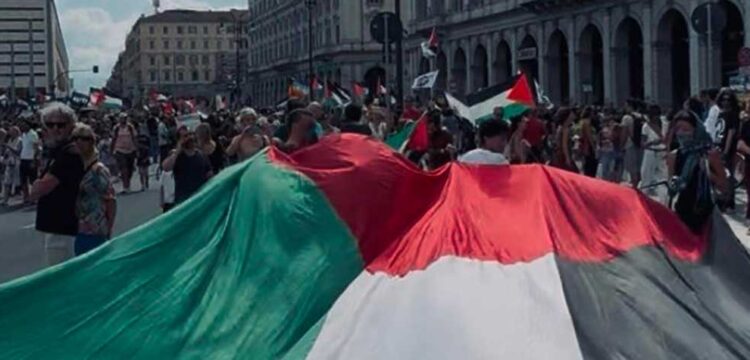
One of these encounters convinced me to go, that was the public assembly at Sale Docks with the Palestinian network Owneh. I therefore applied to be hosted for three weeks at the Qattan Foundation Guesthouse with the intention of directly meeting independent cultural institutions working to break free from the coerciveness of conditional funding. Mine is a situated perspective, that of an Italian cultural practitioner shaped by an experience in occupations of cultural spaces (through my experience at Macao) and now working to rethink funding models in the cultural field.
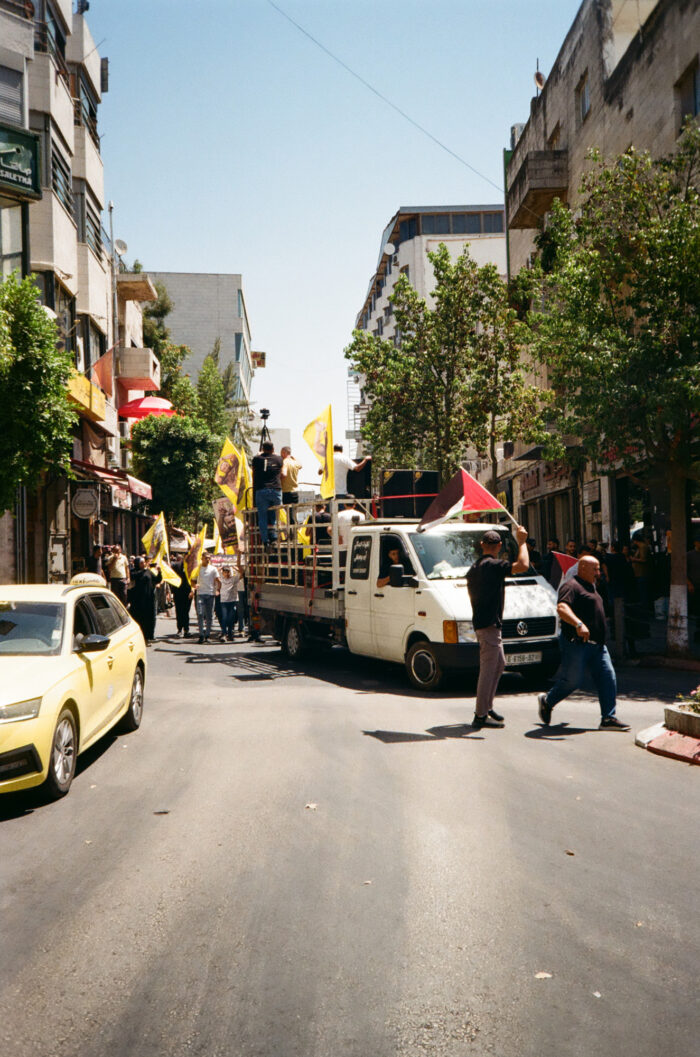
I landed in Jaffa with a few books (including On Palestine by Ilan Pappé and Noam Chomsky, and a small zine with an eloquent title Globalize the Intifada), fully aware of my privileges and Western preconceptions. I therefore decided to adopt an approach based on listening and critical self-reflection, well summarized by curator Elias Rizek: “Palestinian hospitality is immense, but it should not be taken for granted or exploited—those who come from outside must avoid consuming the resilience of others, and instead recognize their responsibilities and their role in the struggle.”
Inside and against the donor economy
From the very first days in Ramallah I witnessed with my own eyes how dependence on international aid permeates every aspect of life in the occupied territories. After the Oslo Accords of 1993, Palestine was flooded with foreign money. Palestinian people built roads, hospitals, political parties, new cultural institutions, but the reality is that today 80% of the Palestinian population depends on that economy to survive and the aid mechanism itself is under accusation: the aid has not touched the conditions that make it necessary, namely military occupation and the Israeli blockade. In other words, the so-called “donor economy” has alleviated some symptoms of the crisis, at the cost of chronicling and depoliticising society.
In the years after Oslo, Ramallah became the administrative and financial centre of occupied Palestine, taking over roles previously held by Jerusalem and other historic cities. The creation of the Palestinian Authority (PA), funded by western aid, corresponded to a NGO-isation of civil society: many grassroots organisations became dependent on international grants, while trade unions and popular movements were marginalised. “Cultural life has been domesticated by foreign funding”, writes curator Rana Anani, “incapable of maintaining a critical role of resistance to occupation and reduced to a mere survival within donor dictated limits.”
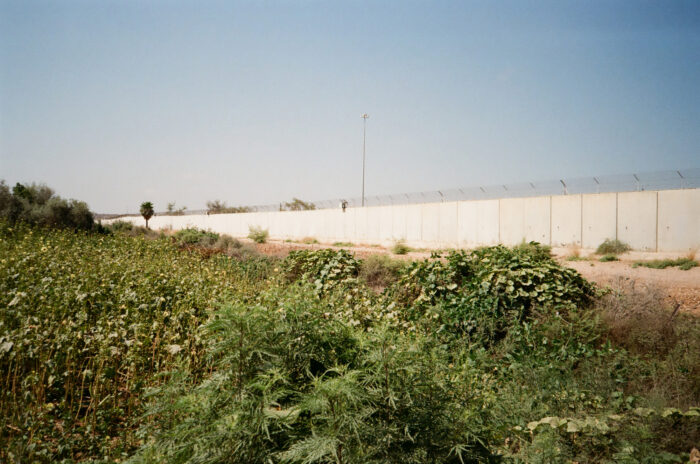
With the new millennium, major western donors began imposing explicit political conditions on their funds. The United States, via USAID, from the 2000s already demanded from Palestinian partners the signing of “anti terrorism” clauses which in effect implied formal condemnation of all resistance to occupation. From 2019 onwards, the European Union introduced new political conditionalities that, according to several Palestinian NGOs, effectively discouraged the use of terms such as Nakba, colonialism or apartheid in project proposals and limited support for activities related to the right of return. While these restrictions were not applied uniformly, for instance organisations such as Adalah continued to receive EU funding for legal work in the Naqab, and signalled a broader policy shift. Moreover Brussels restricted the operations of funded NGOs to the 1967 borders and favoured peace building and dialogue projects with Israelis, rather than initiatives denouncing occupation.
This shift created a fracture: in 2019 several Palestinian cultural institutions began refusing European funding rather than accept such gag rules. As more than one local practitioner explained, this internal debate ended up dividing Palestinian civil society into three opposing positions: those who refuse any compromise, those who accept any condition in order to get the funding and a grey zone of waiters and negotiators.
This situation worsened further after October 7, when war broke out following the Hamas operation in Israel. Just two days later, Ursula von der Leyen announced the European Commission would re-examine aid to the Palestinians and add new contractual conditions to counter incitement to hatred in projects—threatening cuts to Palestinian partners even in the educational sector. Many governments suspended or withdrew funds: Switzerland froze support to 11 Palestinian human rights NGOs, the United Kingdom drastically cut cultural programmes and even the Open Society Foundations blocked many disbursements citing ideological pretexts.
Many Palestinian cultural practitioners experienced this attitude as a betrayal and an additional violence. “The international funding system is a weapon in the hands of colonial hegemony in our region”, a joint statement by dozens of Palestinian NGOs said, “used to bring us to our knees… part of the control mechanisms imposed on us to guarantee the security of the occupation.” The document, released on 16 October 2023, invited Palestinian organisations to “build community solidarity networks, believe in the capacities of youth, stay vigilant regarding the hegemony of foreign funding and treat international donors on a basis of full equality.” Around the same time, RAWA issued its own statement on international funding, further condemning donor conditionalities and the suspension of aid to Palestinian organisations after 7 October. RAWA denounced what it called the “punishment of Palestinian civil society for naming its own oppression,” and reaffirmed the need for solidarity grounded in trust, autonomy and justice rather than political compliance. Powerful words, yet they largely remained on paper. Very few structures in fact have been able to emancipate themselves alone from foreign funding, creating a gap between declared principles and actual practices.
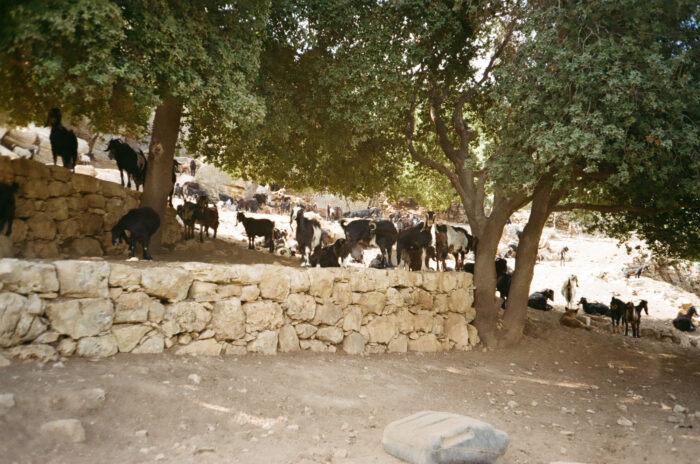
Owneh: A Collective Response to Toxic Philanthropy
In this context, Owneh was born (in Arabic, awneh means “mutual aid”). Owneh is a collective initiative of 30 Palestinian organisations that took shape precisely during the crisis that followed October 7. “…with the accelerated Israeli genocide on Gaza,” their manifesto states, “donors imposed a new wave of unjust and instrumental conditions. The Owneh Initiative seeks to break away from this colonial funding system, reclaiming the independence of Palestinian civil society organisations from external interference.”
Owneh’s principles are explicit and uncompromising: refusal of the conditional funding system, refusal of funds that promote fragmentation, commitment to strengthening Palestinian grassroots resources and refusal of any politically conditioned funding. The aim is to lay the foundations for a cultural economy that can free itself from the dominant one.
In practical terms, Owneh is building three tools: the Aid Watch Platform to expose discriminatory donor policies, the Solidarity Fund to mobilise alternative financial resources for institutions that refuse colonial funding, and the Resources Basket—spaces, skills and material goods—to be redistributed in a mutualistic logic.
I discussed about Owneh with some of its founders, including Fadya Salfiti and Nidal Ka’bi, in Ramallah. “Owneh was born as a reaction to donor behaviour after October 7,” Fadya told me, “In reality it was a process already underway: in 2019, when the EU added the anti terrorism clause, there was a major mobilisation here to boycott European funds, with a joint declaration… but we were not united.” The shock of October 7 acted as a catalyst, making the need for a collective position undeniable. “After October 7,” she continued, “Popular Art Centre returned British funds; the Qattan Foundation also faced problems… some of us told Open Society ‘Stick your money where you know’… we don’t need their money if we are all labelled as terrorists.” Fadya stresses that Owneh was born above all to stand together: “Since 2019 there has never been a strong and united position from our civil society, not even in the cultural sector. With what happened in October, we felt the urgency to unite our voices.”
Indeed, Owneh has had the merit of bringing together diverse entities, such as theatres, independent cultural centres, and social NGOs under a shared objective: breaking free from funding that contradicts the cause of liberation. “We realised donors were truly controlling our programmes”, says Nidal, coordinator of the PPAN network and one of Owneh’s promoters, “and so 30 organisations decided to join forces and say enough.” As I write, Owneh is drafting a collective political manifesto and experimenting with the first mutual aid initiatives. It is not a process without difficulties, “Refusing toxic funding is easy to say, but then how do you pay salaries at the end of the month?”—one participant openly confides.
This is why Owneh does not encourage impulsive individual gestures: the idea is not to shut down cultural centres overnight for lack of funds, but to create a collective mechanism of support that allows them to take courageous positions without sinking. In this sense, Owneh embodies a pragmatic strategy of political self-protection: only by joining forces can Palestinian cultural institutions hope to break the donors’ blackmail and, at the same time, survive autonomously.
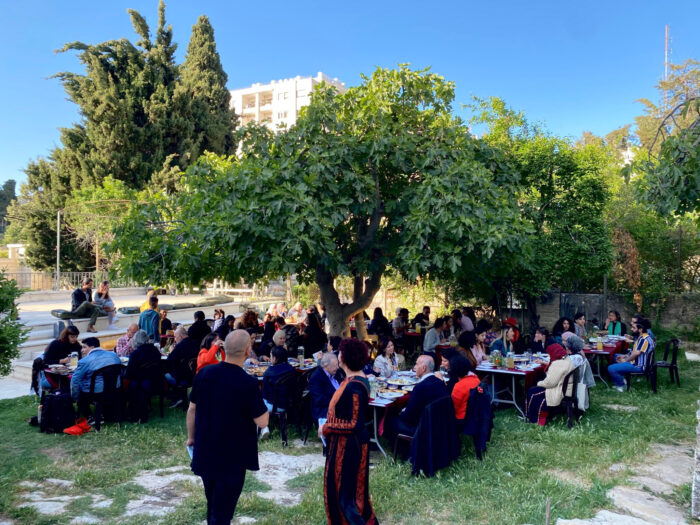
Voices of Cultural Resistance
If Owneh represents the systemic frame, it is through the individual voices I encountered on the ground that I began to understand the nuances of this struggle. In the occupied territories, cultural resistance takes many forms: curators, musicians, farmers, community organizers, directors of foundations and independent spaces. Each of them carries a particular story, yet several common themes emerge, such as frustration toward toxic philanthropy, the determination to seek alternatives, and the daily dilemmas between political coherence and economic sustainability. What follows are a few significant contributions, based on interviews and conversations held between Ramallah, Bethlehem, Nablus, Haifa, Hebron, Tulkarm, and Jerusalem.
Fadya Salfiti (Owneh)
Our conversation takes place on the upper floor of the Khalil Sakakini Cultural Center in central Ramallah. Fadya speaks like someone holding many things together at once: community care, political anger and the daily bureaucracy of survival. “Owneh was born as a reaction to donors, not as a cultural project”, she tells me immediately, without euphemisms.
Then came October 7, “Switzerland froze 11 organizations. The UK cut everything. Open Society Foundation accused us all of terrorism.” She pauses, then adds quietly, “The message was clear: survive if you want to, but silently.” Owneh was born out of this realization: no more individual decisions. “If we accept or refuse, we must do it together. Otherwise the blackmail crushes us one by one.”
She explains the three tools they are building and adds, “The most abundant resource in Palestine is solidarity.” Fadya repeats this with force, “Freedom does not come from projects, it comes from relationships.” When I ask her if all of this is too fragile, she smiles: “Of course it’s fragile. But it’s less fragile than dependence.” Fadya embodies the political heart of this struggle: not symbolic resistance, but the concrete attempt to build autonomy as infrastructure.
Iman Hammouri (Popular Art Centre)
A few hundred meters away, in a neighborhood of Al-Bireh, I meet Iman in her office adorned with posters of dabka. The Popular Art Centre, founded in the 1980s during the first Intifada, is rooted in youth communities and known for its annual festival of Palestinian music and dance. Iman is an energetic woman and activist. She tells me that PAC has expanded its mission: beyond popular arts, it supports social-economy cooperatives, especially those of rural women, to “break the ties with the economy of occupation.”
When I ask how they navigate the donor economy, she answers with a striking example: “One of our main international funders, with whom we had worked for 15 years, accepted the EU conditions. We not only refused that money, we returned funds we had already received.” Few NGOs would dare that. Iman insists: “We do not work with any donor who interferes with our mission.” She recalls when a European sponsor criticized PAC’s choice to dedicate the festival to “70 years of the Nakba,” “They wanted us to remove that word. Ending the partnership was almost a relief. It gave us the chance to leave that trap.” Some funders remain, especially Scandinavian, “They are true partners, not simple donors.”
PAC has diversified through politicized solidarity networks and grassroots cultural organisations, socially-aligned foundations. The portrait that emerges is that of an institution that prefers to remain “poor” but free rather than wealthy and distorted. “We learned to say no, even if it means cutting programs. And we move forward, maybe slower, but with a clean conscience.”
Nidal Ka’bi (Palestinian Performing Arts Network)
Nidal is a former dancer, now leading PPAN, a network of 13 organisations across the West Bank. We meet in his office in Ramallah. He goes straight to politics. “At the end of 2019, when the EU adopted the political clauses, we refused to sign. Go against international law for some money? No, thank you.” He reminds me that under international law a people under occupation has the right to resist. Asking NGOs to renounce that right in contracts is “humiliating, and illegal.” The US, Canada and Australia have demanded this for years, he says that is why “we haven’t taken a shekel from USAID or similar in a long time.” But Europe was still a major cultural donor until 2019, “that was the drop that filled the cup.” Many others continued as if nothing happened.
After October 7, “donors pulled the handbrake—grants frozen, calls suspended.” That push led to Owneh—“We felt held hostage. The message was: you get money only if you behave. It’s anesthesia before surgery, aid-injected to keep you quiet. They give you money to shut you up.” Some donors can be pressured, for instance two organisations refused to sign with Enabel in Belgium, and the clause was removed. “But we cannot rely on others’ goodwill. We must organise ourselves. Owneh is for that. United we can say no, and build something else.”
Layla (Khalil Sakakini Cultural Center)
Sakakini in Ramallah is housed in a beautiful ottoman villa dedicated to contemporary art. Sitting under the fig tree in the garden, Layla recalls a recent visit by a French cultural officer: “Before his visit I checked their website. All the usual keywords: joint projects with Israelis, focus on women… as soon as he arrived, I told him clearly that asking a Palestinian organisation now to collaborate with an Israeli one is a betrayal.” Then she corrects herself: “Maybe it was always a betrayal, not just now. But especially now.”
As for the obsession with women, “it reeks of a civilizing mission. As if the west told us: fix your women, make them like ours—emancipated, but abstractly.” The risk, she says, is that donors import a fake feminism disconnected from context, glossy gender balance projects that do not challenge real patriarchy nor the occupation.
Layla studied art in Europe before coming back. Her gaze is lucid also toward local infrastructure: “Many art projects here are rooted in land and community, far more than in Europe. But few outside understand how art is funded here. It seems spontaneous, but behind it there’s always money, and where there is money, there is a political discourse.” Then she explains the new donor driven trend: requiring cultural centres to income generating activities, like cafés, gift shops, rental spaces… “We are opening a small bookshop with a café, but it feels unnatural. To survive we must become half-entrepreneurs.” Frustration emerges, “How can we plan long term if we have to worry about how many coffes we sell?”
Layla is also deeply involved in Owneh, “We inspire each other with principles… then I come back here and ask myself: how do I cover this year’s deficit?” She embodies the drama of many Palestinian cultural workers today: radical in analysis, critical toward toxic funding systems, yet forced into compromise to keep the doors open.
Soheir Atassi (Rawa)
Rawa is a small experimental fund of community philanthropy, created in 2018 to reverse the paradigm. “We want to strengthen the grassroots Palestinian ecosystem while resisting colonization, and part of that is freeing ourselves from dependency on external funding.” Rawa raises donations and distributes them as micro-grants to community initiatives: urban gardens, women’s collectives, artistic projects in villages.
What is new is how they operate, “We are decentralized—no central of ice, no heavy hierarchies.” Decision-making was participatory—based on local clusters rather than a board. War has disrupted this model, but horizontal governance remains the compass, “We don’t have a director. We are fluid. And five-year plans make no sense under a constantly changing colonial regime.” This light structure is also strategic, “The more visible and structured you are, the easier it is to be targeted or co-opted by the occupation. We move under the radar.”
Rawa resists both donor conditionality and the colonization of organisational models imposed by decades of aid. “The aid industry taught us to work in a certain way—budgets, logframes, indicators—which often do not create change, but only reproduce themselves.” Soheir admits sustainability is the hardest challenge—but insists the experiment already matters, “Even if we make mistakes—we are already shifting how many people think about funding here.”
Fida Touma (Qattan Foundation)
She welcomes me in her office on the third floor of Qattan’s cultural center in Ramallah. Qattan is an anomaly: a private foundation born from the diaspora (a family of entrepreneurs displaced to Kuwait, then London), with its own endowment, guaranteeing a margin of financial independence. “For the first 15 years or so, our Board decided: zero external funding. We work only with our own means—so as not to have interference in our agenda and priorities.” Over time, Qattan co-funded some projects with European governments, but always cautiously: “There is no funding without interference. No donor gives money because they love you, they give it because they have priorities, an agenda. Even when we give small grants to artists, we do it for a reason.”
The ethical code includes rejecting conditional funds tested when the EU imposed anti terrorism clauses, “We chose not to apply to calls requiring that. Since then, we barely receive any international funding.” This has meant sacrifice, that means fewer resources to redistribute: “We were clear: no money that requires criminalizing our people.”
Her stance represents the “hard line”: cultural independence justifies material constraints, yet speaks from a position of relative privilege, as those without endowments cannot afford the same stance.
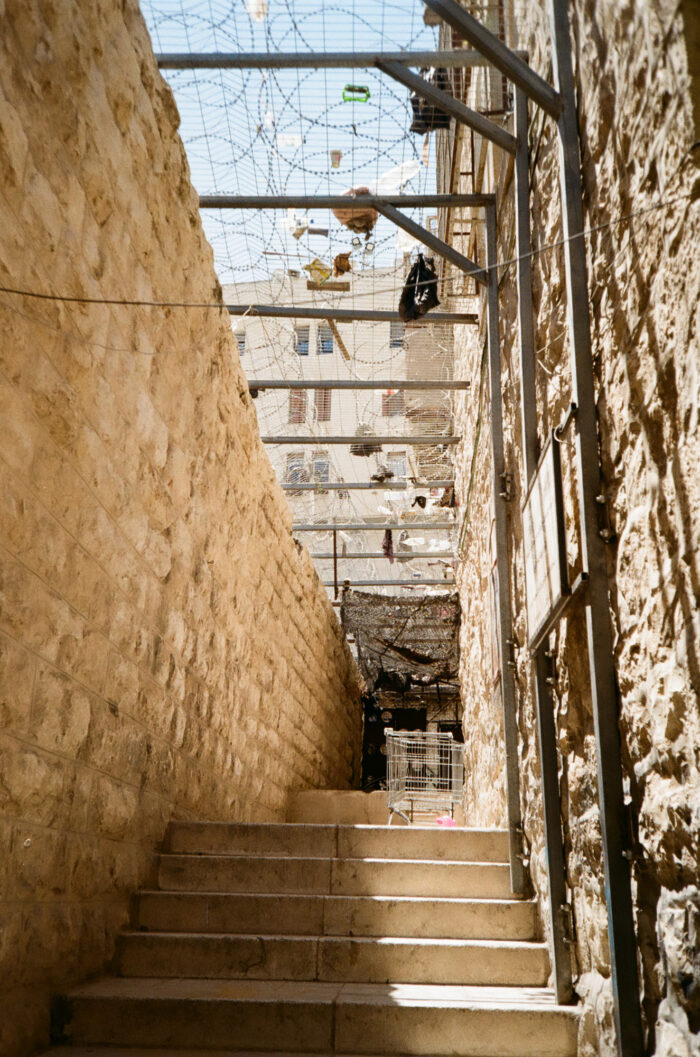
Cultural autonomy as political practice: open questions
In the final days of my journey, I reflected on the experiences I had lived and the words I had gathered. Each person I met offered a unique perspective, yet tightly interwoven with the others into a collective discourse. In the background emerges the idea of cultural autonomy as a political practice, not as a form of aesthetic isolation, but as a deliberate act of positioning: refusing funds that require watering down one’s message becomes, in this context, a gesture of resistance. Running an independent cultural programme—a festival, a library, a youth centre—becomes politics by other means, opposing both Israeli occupation and the softening pressures of international donors. But what are the limits and the possibilities of this autonomy?
A first observation is that absolute autonomy, in financial terms, remains extremely difficult to achieve in an impoverished context like Palestine, and not only there. The cultural institutions that thrive without any external aid are very few (one is Qattan, thanks to family funds). All the others must grapple daily with the same dilemma, where to find resources without betraying their mission? Some paths emerge: grassroots support from the diaspora and politically aligned international allies; ancillary commercial activities, local fundraising from ethically aligned Palestinian entrepreneurs and mutualistic cooperation to share costs and resources. Each solution has strengths and limits, and none appears sufficient on its own.
At the same time, one encouraging element is the growing critical awareness. Today in Palestine there is a real counter discourse around funding, one that exposes mechanisms of power and attempts to dismantle them. Concepts such as “sumud” and self sufficiency are being recovered, not nostalgically but as values to reinvent in the present. Owneh has already achieved one concrete result: bringing these themes out of whispered corridors and giving them public political dignity.
The book by Pappé and Chomsky I carried in my backpack, On Palestine, emphasizes how the Oslo Accords institutionalized a paradigm of economic peace that replaced liberation with development, justice with a façade of stability. Today, criticising dependency on aid and claiming cultural autonomy means according to many to reactivate the decolonial horizon betrayed at Oslo. It is a compelling and demanding argument, as it implies recognizing that, over the last thirty years, while funding Palestine the international community has not helped it, but partly domesticated it, and that it is up to Palestinians (with the support of global solidarity) to reverse this course.
On the flight back to Italy, with my head still full of voices, I realized that this reportage remains open, unfinished. Many questions still lack definitive answers: How do we build a sustainable model of free culture in a land fragmented by occupation? How do we avoid turning the refusal of toxic funds into self-marginalisation or self-ghettoization? What role should “donors” play in decolonizing and supporting the Palestinian cultural ecosystem?
What is certain for now is the sense of urgency and possibility I felt. Urgency to escape an unsustainable, unjust system. Possibility to experiment with new forms of solidarity and cultural production. In the faces of my interlocutors I saw fatigue and concern, but also determination and hope. After all, the cultural autonomy they speak of is not a state to reach once and for all, but a continuous process, a daily exercise in coherence and creativity. I like to think of this, just as intifada in Arabic means shaking off, as a cultural intifada: a movement to shake off the interested tutelage of the powerful and stand on one’s own feet, proudly.
On my last evening in Ramallah, walking between an improvised art show in the street and a local rappers’ concert in a self-managed garage, I breathed this spirit. I don’t know where it will lead, nor what difficulties it will meet along the way. What I do know is that I return home transformed by these encounters, convinced that Palestine’s freedom also depends on its words, its images, its songs, free to express themselves without patrons or censorship.
Acknowledgments
My heartfelt thanks to Fidah, Ali, Ameed, Abeed, Mohammed, Dar, Fadya, Faez, Hakeema, Yasmin, Johny, Rashed, Basel, Rawan, Issa, Majd, Sohair, Elias, Sacha, Mohammad, Tamer, Fida, the taxi drivers of Ramallah, Amjad, Nidal, Iman, Yara, Ali, Sahar, Waehl, Roberta, Emanuele, Andy, Maddalena, Gio, Ilaria and all the others—whose names remain unwritten here but whose care and courage guide every line of this work.
Primary Sources
Testimonies gathered by the author in Palestine (August–September 2025).
Owneh Network, Principles and mission documents.
Ilan Pappé & Noam Chomsky, On Palestine, 2015.
Rana Anani, The Genocide War on Gaza: Palestinian Culture and the Existential Struggle, 2024.
Elias Rizek, Palestinian Hospitality, and its Reasonable Limits, 2024.
Assets in Apartheid (LSE Palestine Society Dossier), 2024.
Globalize the Intifada, 2021.
Yara Asi, Aid to Palestinians Has Failed. Here’s How to Fix It, 2022.
Notes to the Reader
- All interviews cited were conducted between August and September 2025 in the West Bank, as part of a research done while staying at the Qattan Foundation Guesthouse.
- References to EU “anti terrorism” clauses come from internal documents shared by interviewees (Qattan, PPAN, PAC) and are corroborated by joint declarations of Palestinian NGOs (16 October 2023).
- The terms “toxic philanthropy” and “mutual aid basket” are drawn from the Owneh Manifesto (2024) and from the “Owneh/Radical Solidarity” gathering at Sale Docks, Venice, May 2025.
- The term “donor economy” is used here in an expanded sense, to refer to the political and economic constraints generated by structural dependence on external funding—as analysed in Assets in Apartheid (LSE, 2024).
- All individuals and organisations named in this work are real. Minor formal variations have been introduced where necessary for privacy or safety reasons.