
Vilnius Keeps it Real
SODAS 2123, embodiment and independent infrastructures in Lithuania’s cultural scene, through the eyes of Demetrio Castellucci
In recent years, Vilnius has become one of the most interesting points on Europe’s independent cultural map. What keeps this ecosystem alive is not the presence of major institutions, nor any polished strategy of urban branding, but a network of artists, performers, musicians, curators, and independent spaces still rooted in presence and sharing. Here, many of the most vital cultural practices do not revolve simply around the production of events, but around the building of shared infrastructures: places where visual art, dance, performance, experimental music, and publishing can still intertwine spontaneously. One of the key nodes in this geography is SODAS 2123, an independent centre housed in a former Soviet school building in the Rasos district. A collective space made up of studios, workshops, shared kitchens, performances, concerts, and everyday relationships.
To better understand this cultural ecosystem, I spoke with Demetrio Castellucci, an Italian musician, sound artist and performer working across experimental practices, installation and DIY culture, who has been living and working in Vilnius for some time. When Castellucci first arrived in Vilnius, he tells me, someone mentioned an evening organised at Marsas where the dress code was “invented shoes.” Some people showed up with leaves on their feet. Not long after, he discovered that parties were being organised on an island in the Neris, the river that runs through the Lithuanian capital. “I thought that some things are still possible here,” he says, “maybe like they still were in the ’90s back home.”
His perspective on the city has been essential because he recognised the existence of a cultural ecosystem still capable of functioning through direct relationships, slower rhythms, and a certain material closeness between people.
It is difficult to talk about Vilnius without falling into the rhetoric of “Europe’s last authentic scene.” In recent years, many Eastern European cities have been absorbed into a Western imaginary that quickly turns them into newly desirable territories: cheap enough to be accessible, peripheral enough to seem spontaneous, distant enough from the major cultural centres to retain a certain aura of freedom. Vilnius, however, partly escapes this simplification. Not because it is immune to gentrification or to contemporary creative economies, but because its cultural scene seems to have developed under different conditions from those of the major Western art capitals.
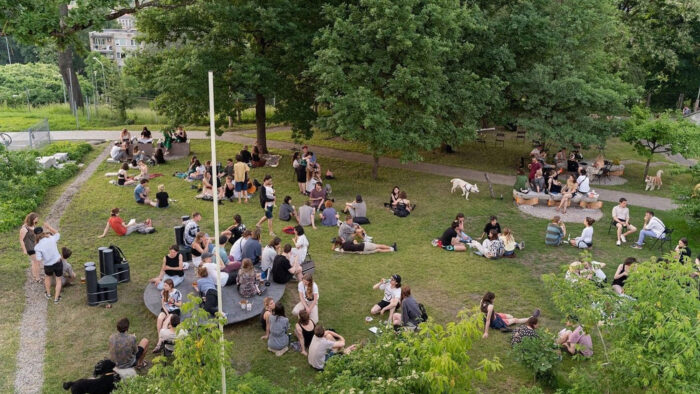
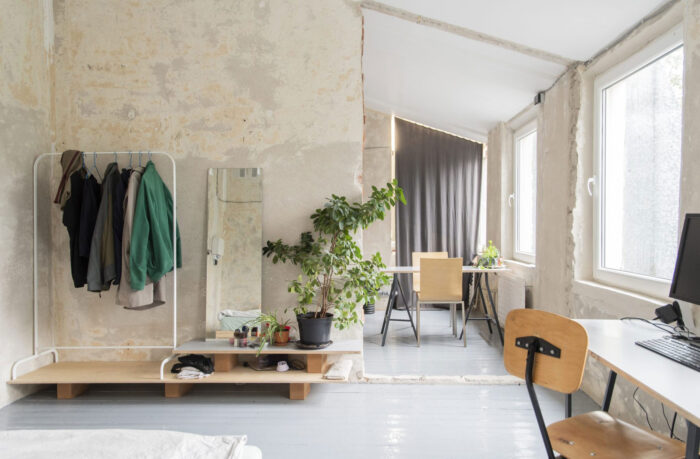
One of the central points in this geography is SODAS 2123, an independent centre inside a former Soviet school building in the Rasos district. To describe it simply as an artist-run space would be reductive. SODAS works more like an organism in constant motion: artist studios, rehearsal rooms, workshops, shared kitchens, performances, concerts, exhibitions, open rehearsals, informal discussions, lunches, temporary archives. Many of the people moving through Lithuania’s artistic scene inevitably pass through it.
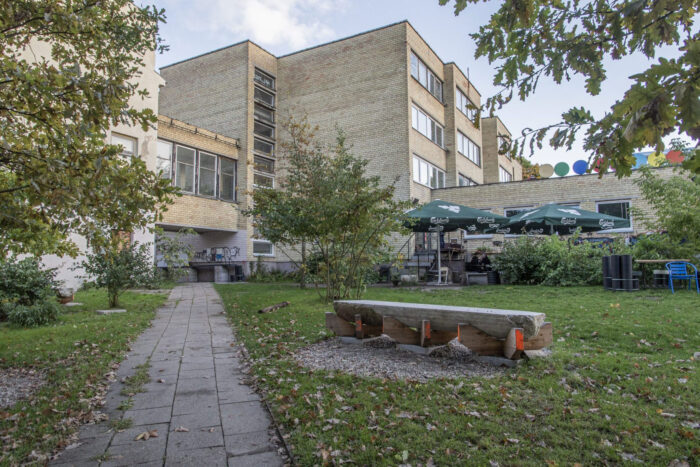
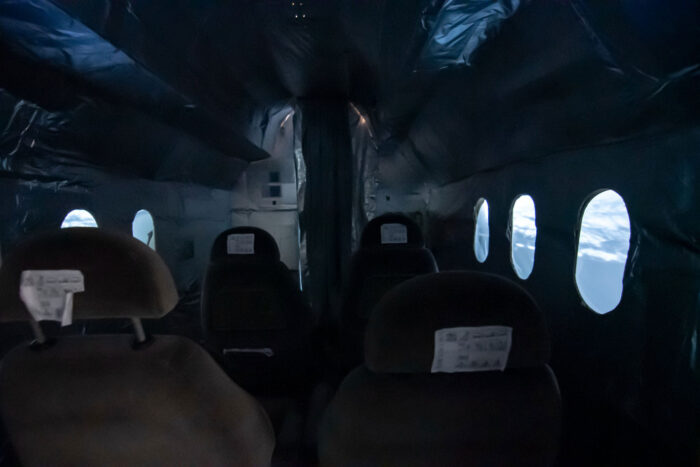
“There’s a theatre, a bar, a gallery and a garden with a pavilion you can book to serve food,” Castellucci says. “In my studio upstairs I have a corrugated cardboard flight simulator for concerts, and it’s really nice to go downstairs into the venue and hand out boarding passes on the dance floor.”
The feeling, when entering SODAS, is that different disciplines coexist without constantly needing to be separated or explained. Musicians collaborate with performers, visual artists work with sound, choreographers build installations, researchers organise listening sessions.
This proximity also changes the way artistic work takes shape. In many European cities, independent spaces often end up reproducing, on a smaller scale, the same productive logic as larger institutions: constant programming, open calls, permanent professionalisation, the need to become immediately legible. SODAS, instead, seems to work through a more porous sense of time. Here, works can still pass through phases of testing, error and transformation. A place where the time spent together matters as much as the final production.
Perhaps this is also why Lithuania’s contemporary cultural scene appears so deeply marked by performance and embodiment. In Lithuania, the body never seems fully separate from the space it inhabits. The role of the Lithuanian Dance Information Centre becomes particularly important in understanding how contemporary dance has contributed to defining the country’s cultural identity over the past few decades.
Founded in the early 1990s, shortly after Lithuania’s independence from the Soviet Union, the Lithuanian Dance Information Centre played a fundamental role in supporting the development of the local contemporary dance scene, creating international networks, support programmes and production platforms.
But its impact goes beyond the institutional sphere. Many Lithuanian performative practices seem to share a deep interest in the relationship between memory, landscape and the transformation of the body. It is no coincidence that some of the most internationally recognised Lithuanian artists, from Eglė Budvytytė to Lina Lapelytė, have developed works in which voice, movement, vulnerability and environment constantly coexist.
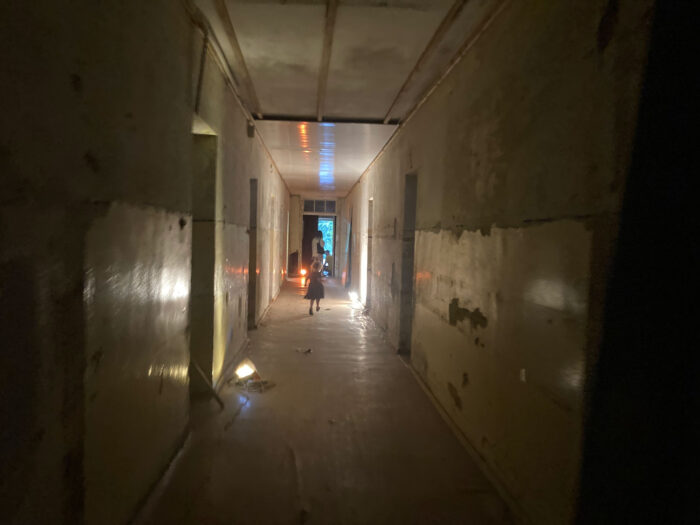
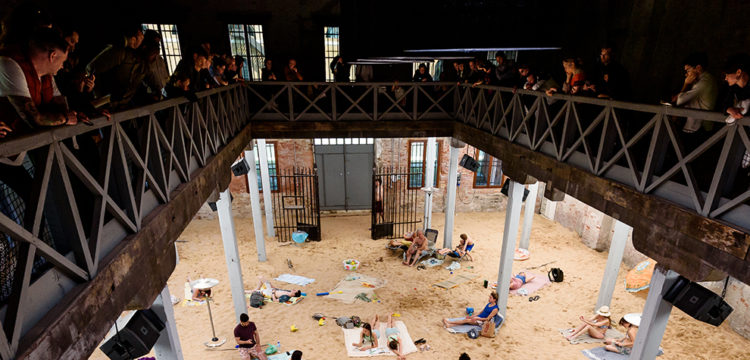
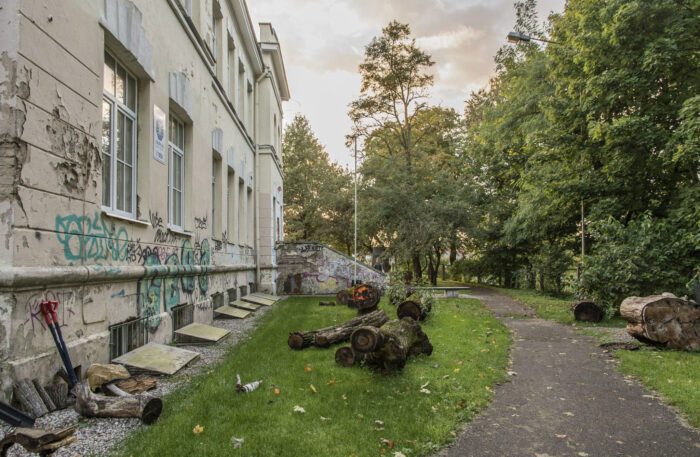
Looking at Lithuania’s contemporary scene, one feature stands out clearly: the body is treated as a tool for relating to space. This may also have to do with the city itself. Vilnius is a relatively small capital, crossed by green areas, rivers, large empty spaces and a still very visible presence of Soviet architecture. The distance between centre and periphery feels less sharply defined than in other European cities. Many cultural spaces are housed in repurposed industrial buildings, former schools, private houses, abandoned sanatoriums.
The feeling is that of a city still incomplete, and it is precisely this incompleteness that makes certain cultural forms possible. Castellucci tells me about a summer cinema built under a bridge, “with the river flowing behind the films,” and about a mushroom-shaped structure in Vingis Park that can be booked for DJ sets or concerts. These may seem like marginal images, but they capture the way Vilnius continues to leave room for spontaneous forms of collective use of the city.
The same attitude can be felt in places such as XI20, one of the city’s most radically independent and openly punk spaces, and Draugų Vardai, another node in this constellation of self-organised cultural life.
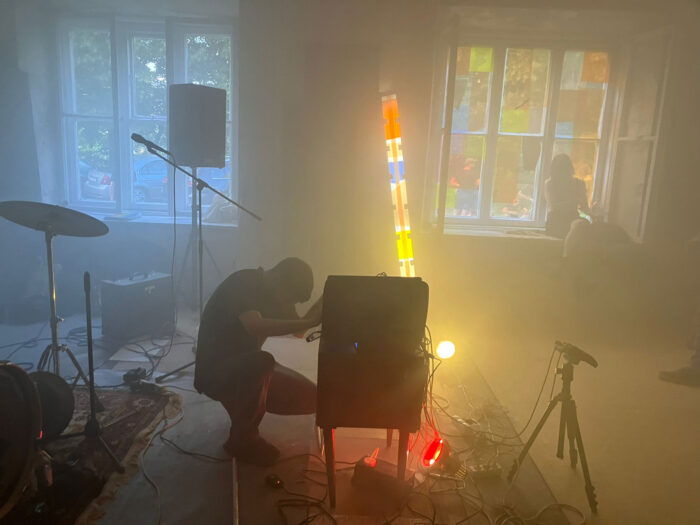
Many DIY realities also seem to emerge from this same material availability. Retrito Smarsas, for example, is an independent centre inside a former sanatorium that also hosts Empty Brain Resort, one of the most active hubs in the local experimental scene, moving between cassette culture, independent radio and sound festivals, Braille Satellite. Studium P organises sound art and electroacoustic music concerts in an almost domestic space. “They offer you hot soup when you arrive,” Castellucci says. These are small details, but they say a lot about a certain idea of cultural hospitality.
This network also extends through radio. Platforms such as Radio Palanga and Radio Vilnius function as less visible but essential infrastructures for the circulation of experimental music, conversations and independent cultural narratives.
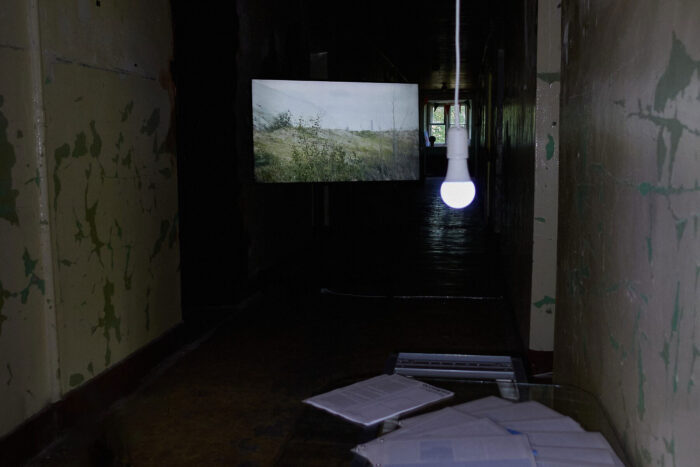
Many DIY realities also seem to emerge from this same material availability. Retrito Smarsas, for example, is an independent centre inside a former sanatorium that also hosts Empty Brain Resort, one of the most active hubs in the local experimental scene, moving between cassette culture, independent radio and sound festivals. Studium P organises sound art and electroacoustic music concerts in an almost domestic space. “They offer you hot soup when you arrive,” Castellucci says. These are small details, but they say a lot about a certain idea of cultural hospitality.
“Different worlds meet, constellations of friendships touching different disciplines,” Castellucci says. “A lot is done with people’s own hands, and people help each other.” Collaboration does not appear as a curatorial strategy, but as a practical necessity—and perhaps this, too, is a consequence of the city’s small scale.
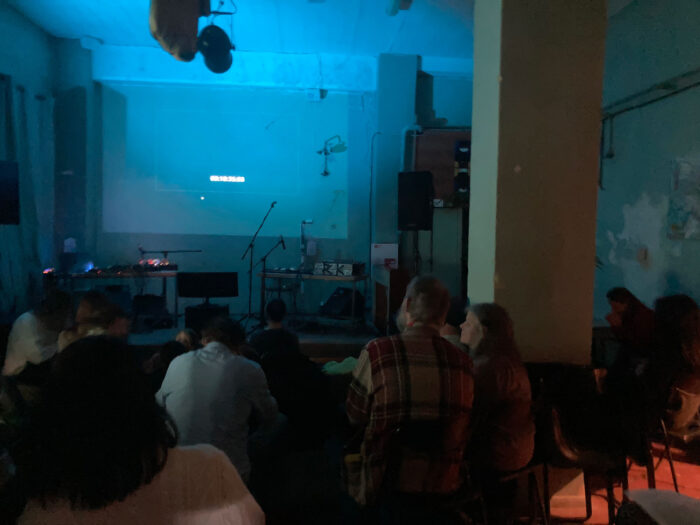
Vilnius does not have a scene large enough to allow for a strict separation between different worlds. Musicians, performers, visual artists, programmers and curators inevitably end up sharing the same spaces, the same events, the same people. This produces a highly interconnected ecosystem, but also a less rigid one. “The fact that Vilnius is a small city on the edge of the Western empire makes following certain trends feel slightly cringe,” Castellucci says. “Vilnius keeps it pretty real.”
Many Lithuanian cultural practices seem to develop with less pressure toward immediate international translatability. Not because the scene is isolated, on the contrary, Vilnius is deeply connected to European circuits of contemporary art, performance and experimental music, but because its relationship with these networks appears less accelerated.
Perhaps it is precisely this relative distance from the major Western centres that allows different temporalities to exist. In many European capitals, independent cultural production appears increasingly crushed by the logic of the permanent project: grants, residencies, open calls, constant networking, the need to produce visibility without pause. In Vilnius, there still seems to be an intermediate space where experimentation can coexist with a certain informality.
This does not mean that the Lithuanian scene is free of contradictions. Economic precarity remains strong, many spaces exist in fragile conditions, and the possibility of rapidly losing places and infrastructures is very real. “Kompresorinė / Ideas Block was a very, very active place inside an industrial space,” Castellucci says. “They took it away from them very easily.”
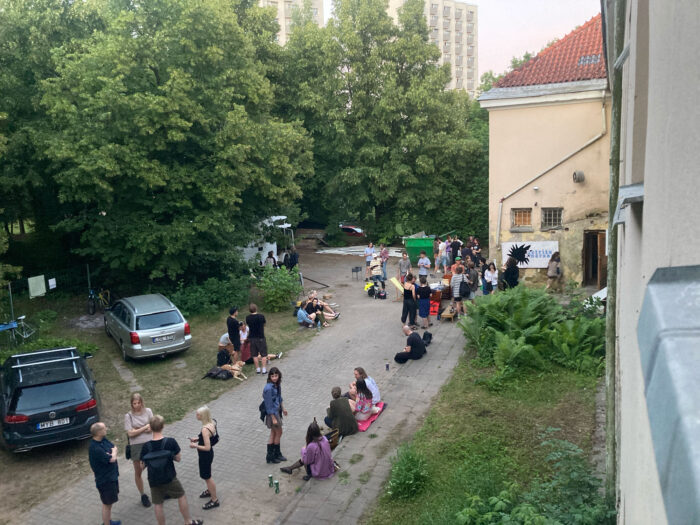
Yet this fragility also seems to have produced a different idea of cultural organisation. Many spaces are not created with the explicit aim of building a “community” in the almost corporate sense the word has taken on within Western creative industries. “I don’t think the main goal of these places is to create a community,” Castellucci says. “I feel that it’s the place where people meet that defines the pact.” Community is not constantly named or performed. It exists instead through shared work, the collective use of spaces, everyday proximity.
Perhaps this is also why many places in the Lithuanian scene still maintain a certain opacity. They do not necessarily try to make themselves fully legible. And at a historical moment when much of Europe’s cultural scene seems fully integrated into economies of visibility and permanent self-narration, this opacity becomes almost a form of resistance.
Contemporary Lithuania naturally continues to carry the traces of its Soviet past. Brutalist architecture, abandoned buildings, industrial infrastructures and natural landscapes constantly coexist. Many artistic practices seem to emerge precisely from this layering. There is no simple nostalgia for the past, but neither is there a total embrace of the Western neoliberal imaginary.
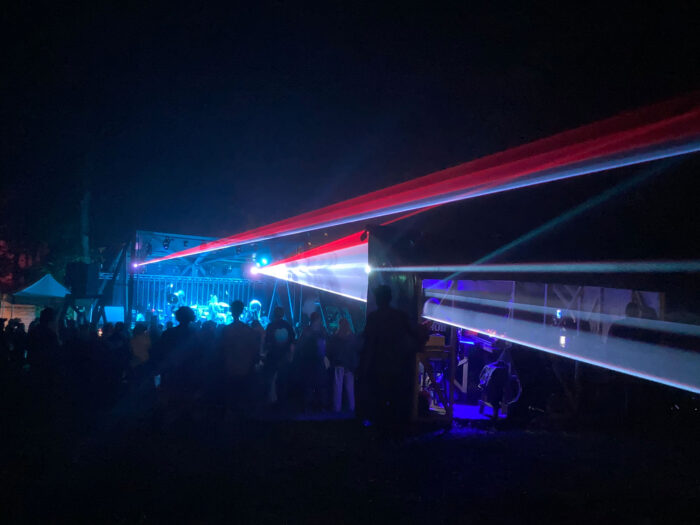
The city still appears to be something in transformation, and it is certainly this condition of instability that makes Lithuania’s contemporary cultural scene so fertile. Looking at places like SODAS 2123, or at the work developed around contemporary dance, a broader question emerges: what makes the existence of an artistic scene possible today?
Not simply the presence of artists or institutions, but the ability to build infrastructures that can be inhabited, lasting relationships, shared temporalities. In this sense, Vilnius recalls something many European cities have gradually forgotten: culture does not emerge only from the production of events, but from the concrete possibility of inhabiting spaces together.
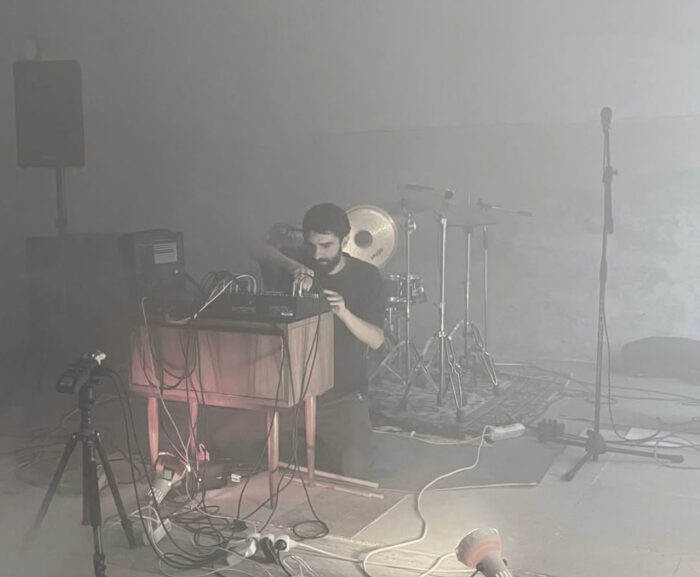
“These places make you feel safe,” Castellucci concludes, “while also proposing things to hear and see that don’t make you feel safe.” It is a good definition of what a cultural space should do. Not reassure the public, not simply produce belonging, not turn risk into harmless aesthetics. Rather, create the conditions for something difficult to happen without everything collapsing. Give artistic risk a material base. Vilnius is not interesting because it is outside the system. It is interesting because it still shows clearly what many European cultural cities tend to hide: that a scene is not born from visibility, but from the material conditions that allow people to produce culture together.