
Untimely Pasts / Urgent Presents
Collecting Queer Memories from Cyprus
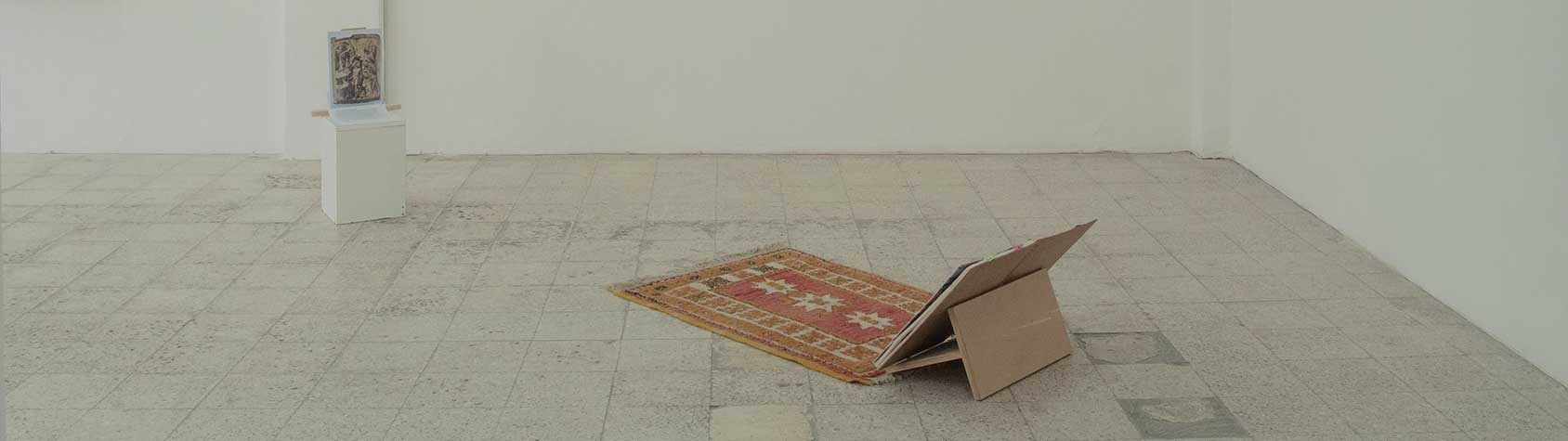
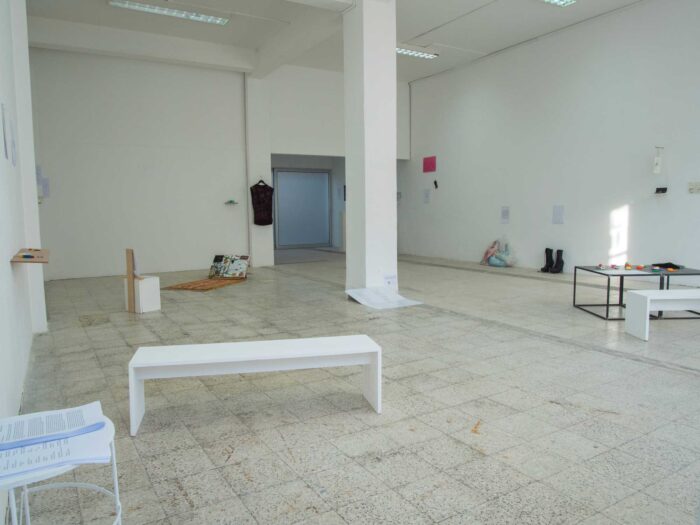
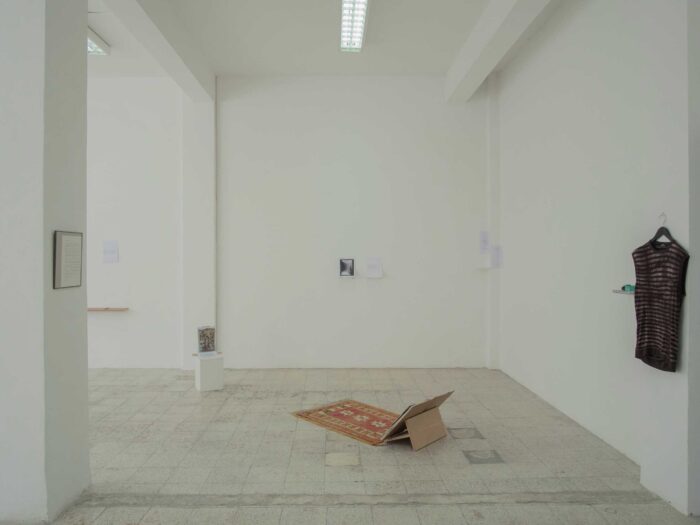
Alessandro Cazzola’s research project Collecting Queer Memories from Cyprus makes its first public appearance at Koraï Project Space, Nicosia, from March 27 onwards. Titled My Journey Through Your Memories, the work intervenes in a field that remains dramatically under-archived in Cyprus—queer memory—operating simultaneously as curatorial practice, archival methodology, and affective infrastructure. The project enters into dialogue with earlier initiatives, among them the exhibition nono, bad timing! (Nicosia Municipal Arts Centre – Associated with the Pierides Foundation [NiMAC], 2024), which was the first to pose, in exhibition terms, the question of how queer times and spaces on the island might be made archivable at all.
These two projects constitute an emergent discursive field, signalling something beginning to be felt across the spectrum of queer cultural production on the island—from the advocacy work of Accept LGBTI Cyprus and Queer Collective, to the Queer Wave Film Festival, now in its seventh edition, and Sessions, a series of queer happenings, all of which have substantially expanded the terrain of queer visibility and discourse. Yet what this expanding field has not yet produced is an institutional framework adequate to its own memory. As curator of the NiMAC exhibition, I faced the structural contradiction that any comparable archival effort must confront: the richness and layered diversity of queer life in Cyprus has consistently outpaced the frameworks of care available to preserve and transmit it.
Cazzola similarly observes that the queer history of Cyprus “remains largely unexplored, without having been institutionalized or historicized”—a condition that is not merely descriptive but diagnostic, naming the epistemic violence through which certain lives are rendered historically incoherent. In Cyprus, however, that incoherence assumes a specific and compounded form: queer life here is lived at the intersection of hetero-normative erasure and the island’s unresolved ethno-political division, a structural condition that multiplies the axes along which memory is fragmented and community cohesion is made precarious.
An Italian researcher and curator, Cazzola initiated the project during his first year on the island, a period of sustained movement between Italy and Cyprus, a place he has since made his home. He frames the work as “an attempt by a foreigner to enter the space of queer history and culture in Cyprus.” That position of structural exteriority carries methodological consequence. It often takes an arriving perspective to make visible what those embedded within a context have habituated themselves to: the systematic absence of mnemonic infrastructure. The “foreigner” here functions not as an ethnographic observer but as witness to a structural gap, namely the distance between the richness of lived experience and the poverty of its institutional legibility.
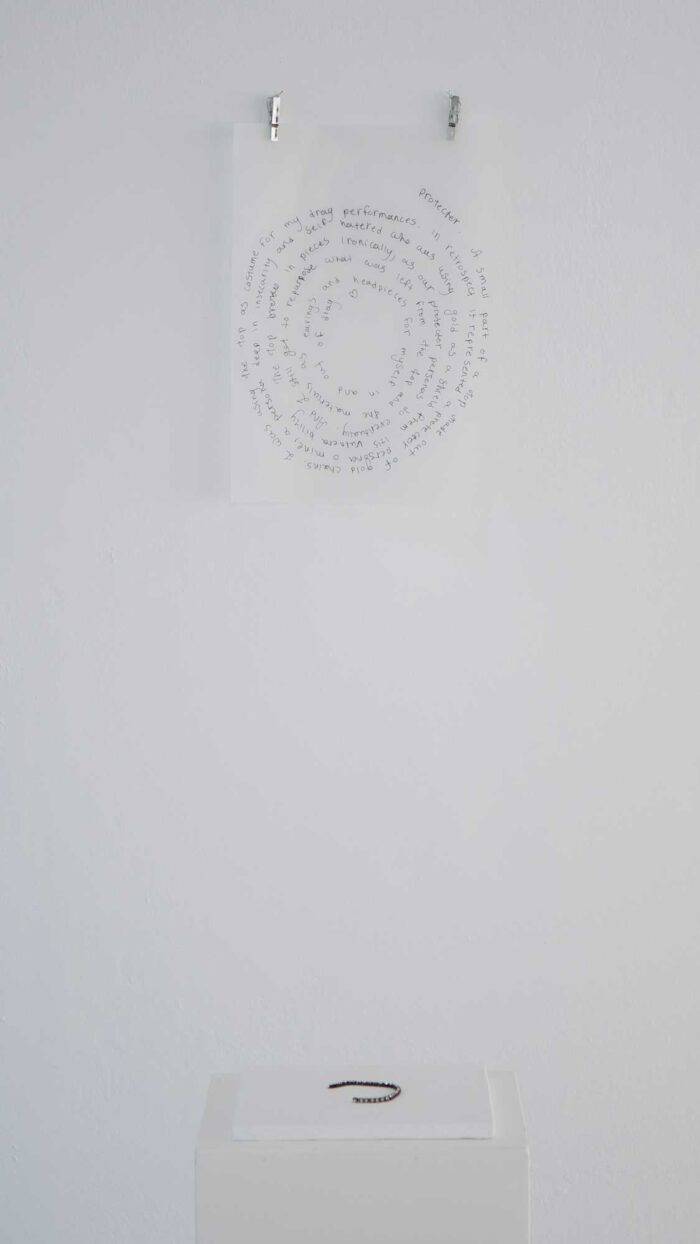
What escapes institutional inscription persists but rarely becomes accessible on the terms of official historiography. Archival acts of a different order like encounter, exchange, and inter-subjective recognition, occur elsewhere: in domestic space, in corporeal knowledge, in objects, in vernacular and informal modes of transmission. This is precisely where Cazzola’s project locates its operative field. Rather than aggregating data, he convened a series of one-on-one meetings, asking each participant for an object that carries a memory from queer life in Cyprus, and a text that accompanies it. The texts are reproduced in whatever form they arrived (email, handwritten note, WhatsApp message) and are presented without editing or correction: an epistemological and political decision, a refusal to normalize these voices into any institutional or aesthetic register, to let them retain the grain and texture of their original conditions of utterance.
This methodology resonates closely with Ann Cvetkovich’s foundational work An Archive of Feelings: Trauma, Sexuality, and Lesbian Public Cultures (Duke University Press, 2003), in which she develops a queer theory of the archive as affective repository, arguing that collections of queer and lesbian life must preserve feeling alongside information, and that the separation of embodied knowledge from propositional knowledge reproduces the very structures of erasure such archives seek to counteract. Her central claim is that a logic organized around a public/private binary, has systematically misread the experiences of women and queer people. This bears directly on any archival effort in a context where the public/private distinction is itself a primary mechanism of regulatory power. The archive she proposes is a site where cultural objects, performances, and testimonies enact a transformative relationship to the traumatic conditions that produced them, converting wound into resource without neutralizing its charge.
Jack Halberstam’s In a Queer Time and Place: Transgender Bodies, Subcultural Lives (NYU Press, 2005) extends this problematic into the domain of temporality. Halberstam argues that queer experience generates its own temporalities that are structured outside and against the reproductive institutions of family, inheritance, and normativity. Queer subcultures constitute alternative, lived timelines that refuse the conventional periodization of a normative life course. If queer life does not unfold along a linear axis, there is no theoretical justification for demanding linearity of its archive. This same logic animates nono, bad timing!, where the title operates as an unorthodox theoretical proposition: there is no correct temporal position for queer visibility, only a constitutive asynchrony with dominant social temporalities, a permanent untimeliness that is not a failure of timing but a condition of existence.
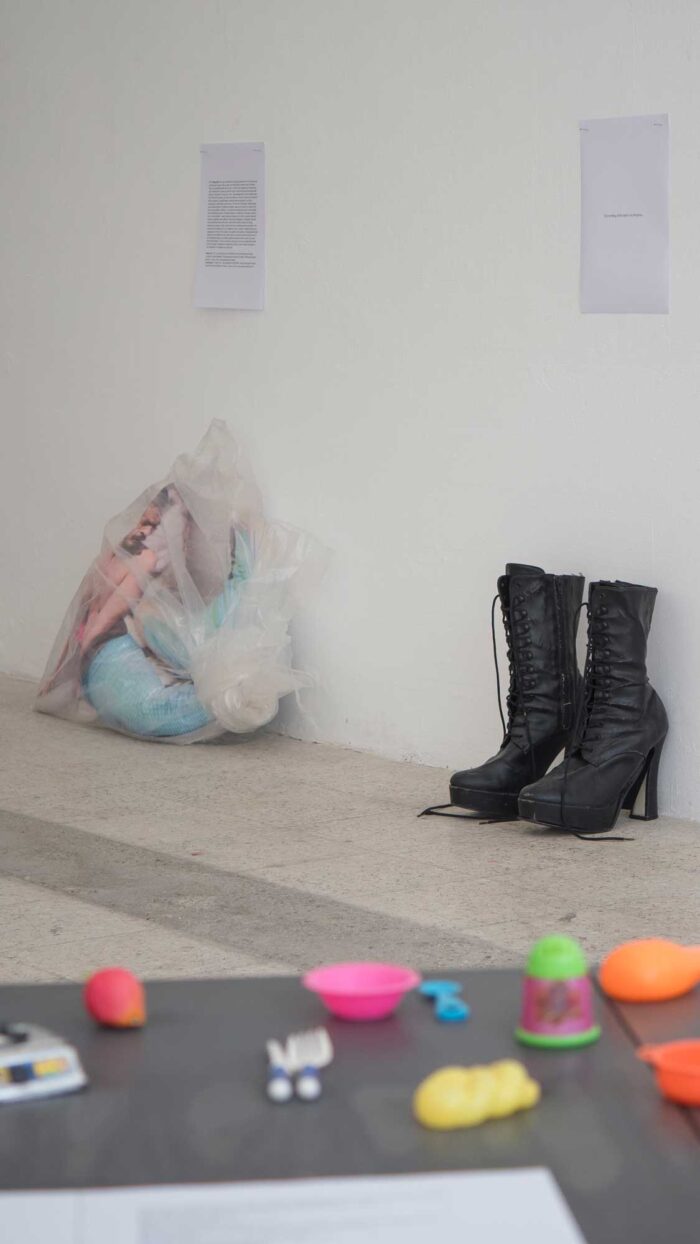
Against the particular pressures of the present in Cyprus, the fracturing of institutional silences shifts from archival principle to political imperative. As Cazzola observes, “this history risks leaving pieces behind as the world and time move on.” The loss is already in progress, and it is not solely retrospective. Contemporary public discourse in Cyprus continues to exhibit profound structural tensions around questions of gender and sexuality. Recent interventions by political figures targeting a so-called “woke agenda” are not merely rhetorical surplus but symptomatic evidence of a climate in which queer existence remains actively contested, and in which the production of counter-memory carries a political valence that extends well beyond the archival.
In Cyprus, legislative advances have arrived belatedly and largely under external EU pressure, hate speech legislation remains structurally unenforced, same-sex marriage and adoption rights are absent, and no institutional framework exists for the preservation of queer cultural memory. In the specific domain of memory and heritage, projects that assume this mnemonic responsibility do not merely supplement existing archival infrastructure, but constitute it. With the support of Celadon Arts Centre, the memories gathered for this project will be housed together on temporary loan at the organisation’s home in Kapedes, a village located in the Nicosia District, with further activities to follow.
Cazzola’s project privileges proximity over completeness, and processual fluidity over the stabilizing imperatives of the institutional record. This position connects directly to the tradition of community archives and counter-archival practice. Rebecka Taves Sheffield, in Documenting Rebellions: A Study of Four Lesbian and Gay Archives in Queer Times (Litwin Books, 2020), traces four major queer archives in North America, among them the Lesbian Herstory Archives in New York and the ArQuives in Toronto, demonstrating that their persistence depended not on institutional support but on communities assuming sustained, collective responsibility for their own mnemonic life, and that their relationship to incompleteness and non-representativeness functioned as a methodological principle rather than a deficiency.
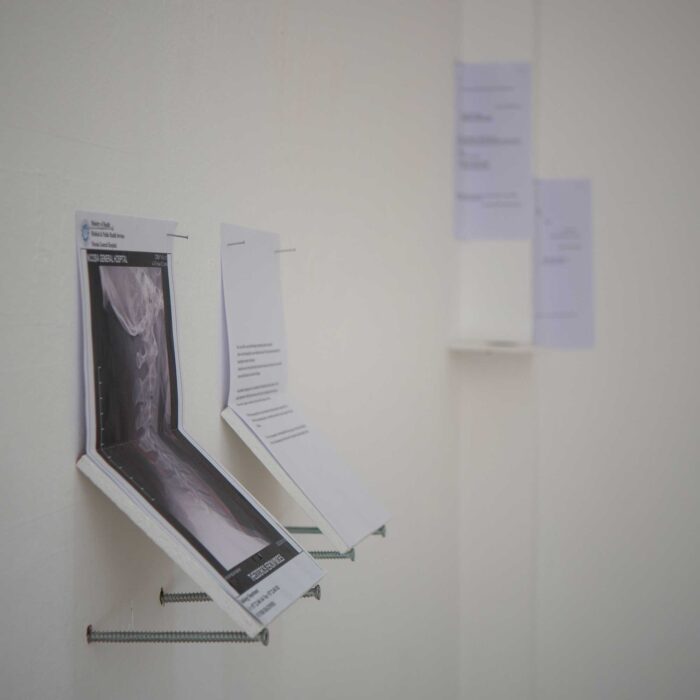
The construction of a queer archive requires trust, negotiation, and the assumption of risk. Who seeks visibility? Who requires anonymity? What does it mean to place a traumatic experience, in the form of a memory that exists at the threshold between the unspeakable and the communicable, into a shared public space? The objects in this project carry precisely these tensions in material form: a bracelet from the first Pride, a garment used to manage the social legibility of gendered embodiment, cut hair, an X-ray taken in the aftermath of a homophobic assault. The body here is not background but the primary site of conflict, inscription, and contested meaning-making.
The twenty memories gathered, from across the line of division, do not aspire to completeness or statistical representativeness as to do so would be to reproduce the epistemological claims of the very institutional history from which this project departs. They speak of loss, fear, desire, joy, violence, endurance, and above all of relational entanglements: familial, erotic, social, affective. Together they produce a fragmentary but living landscape of queer experience, one whose fragmentation is itself a methodological stance and an acknowledgment that queer experience in Cyprus is not uniform, that it is traversed by the island’s political dividing line, by the differential conditions of distinct generations, and by histories that rarely achieve spatial or discursive co-presence.
These are not narratives of resolution. They point toward something more structurally unsettling: the persistent imbrication of individual experience with the historical and social conditions that determine what is possible and what continues to be silenced. It is at this juncture that “collecting memories” ceases to function as a record of the past and becomes an operative instrument in the present—a tool for producing legibility, solidarity, and the conditions of collective self-understanding. In this sense, projects of this kind produce, through the shared space of testimony, a deeper apprehension of the historical, political, and social conditions that have structured queer communities on the island, contributing to their cohesion through the practices of care, empowerment, and shared remembrance.
Both Collecting Queer Memories from Cyprus and nono, bad timing! refuse premature closure, holding critical questions open rather than resolving them: Can a permanent queer archive exist in Cyprus? Who exercises the authority to determine what merits preservation? Which voices remain structurally absent—not despite the archive’s efforts but because of the conditions under which those efforts must proceed? These questions do not have answers yet. What these projects offer instead is something more foundational: the space in which such questions can be asked collectively, publicly, and without the demand for resolution. In a context where queer memory has historically had to sustain itself without institutional support, that space is not incidental to the work. It is the work.
My Journey Through Your Memories is hosted at Koraï Project Space, and funded by the European Union and the Goethe-Institut. The research project Collecting Queer Memories from Cyprusis supported by Celadon Centre for Arts & Ecologies.
The exhibition nono, bad timing! was organized by QueerWave, Goethe-Institut Cyprus, Institut Français de Chypre and co-organised by Nicosia Municipal Arts Centre, Associated with the Pierides Foundation (NiMAC).