
Through Lines
Approaching LOST Music Festival through gyrofield’s experimentations
With each edition, LOST Music Festival reaffirms its commitment to creating a sense of community through a shared space for listening and dancing, championing different forms of experimentation focusing on an embodied engagement with music. Shaped by the curatorial vision of Luca Giudici and the Festival’s team, bringing together an ever-broadening range of artists and artistic practices with a keen ear for emerging sounds and unexpected connections, the Festival’s adventurous programming continues to expand the possibilities of both dance and listening music.
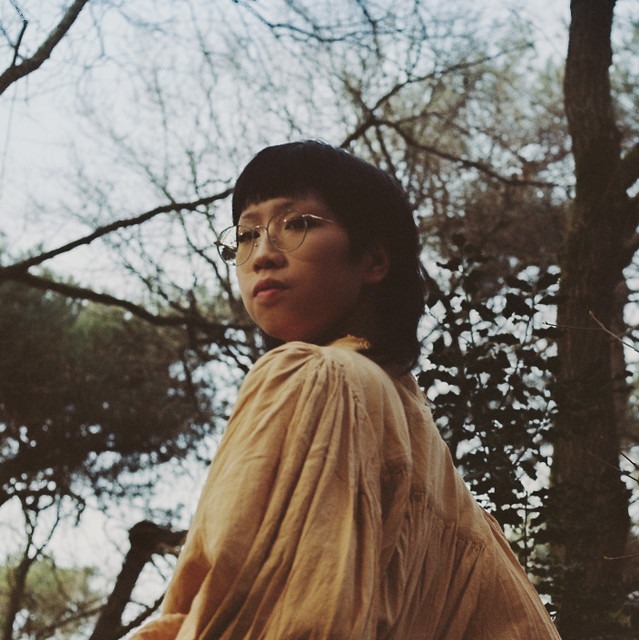
For the upcoming fifth edition of the Festival, taking place inside Franco Maria Ricci’s Labirinto della Masone from July 3-6, 2026, we connected with gyrofield (Kiana Li) to discuss about her musical practice and about music communities, ahead of her DJ set closing the Gate Stage on Sunday, July 5.
Emerging from the digital sprawl of Hong Kong, Amsterdam-based artist gyrofield first discovered a portal through the glow of online communities, and that portal was a gateway to electronic music. From that first encounter, curiosity took the wheel: through drum and bass, techno, ambient, pop, and free jazz, for gyrofield, genres were never destinations but doorways. What emerges is music that resists stillness.
Moody and introspective, gyrofield’s productions cut one layer deeper into machine music, revealing colourful perspectives guided by a sense of melody and sampling. It is music that incites movements of the body and the mind. As a DJ, her sets are guided by the same principles as her productions—a deep attentiveness to the musical and emotional arc of tracks in tandem, drawing listeners through shifting moods and textures.
A young and prolific computer musician, she has been cultivating increasing support across the globe, first via the internet and then through a remarkable rise within clubs, festivals, and international shows, coinciding with a broader renewed appreciation for drum and bass. Yet her work has been developing far beyond drum and bass and its community, fueled by a deep curiosity that has also driven the recent launch of her own label, Field Research. In many ways, gyrofield’s spirit of exploration—guided not by genre expectations but by a genuine curiosity and willingness to venture into left-field territory—makes her a natural fit for LOST Music Festival’s closing set.
GYROFIELD: I would call myself a computer musician—I think that’s the most irreducible way to put it. I have a very personal, almost diaristic approach to music, as I try to capture memories and moments and personal feelings, but also the headspace that I am in when I write tends to affect the outcome.
Being more of an outsider and not sticking to any one scene is also quite beneficial to me, it allows me to find sort of my people. And that’s how I’ve been operating for the longest while, embracing being an outsider. This has helped me reach a lot more people than I thought would be possible. It’s always an unexpected and surprising journey to keep doing music.
You have recently moved from the UK to the Netherlands. How’s that been?
There’s been a lot of changes with me coming to the Netherlands, diving straight into what the local music scene has to offer, also connecting with people living across the country’s major cities.
I think I can be a bit of a recluse. I like having quiet surroundings. When I was in the UK, I lived in a suburb as well. I would stay there, make my music, and process everything going on in my life. Then, when I felt like it, I would go out in the city or go out to gigs and be able to meet people. Further back, when I was growing up, all these people in electronic music and dance music were essentially names on screens to me.
I really got into it because I felt so fascinated by the music that I felt like I had to make it. I guess this kind of curiosity is a big part of what’s getting me to connect with new people and take these really cool opportunities where I can, meeting people from all over the world.
The Netherlands has a really great dance and electronic music infrastructure. So, through places I’ve played—like Le Guess Who? last November—I’ve been able to bring all these people together into one space. For my last club night at Garage Noord as well, I invited a local Dutch artist, Ambu Bambu, and an artist from the dub sound system scene, John T. Gast.
I do want to continue this path of bringing together people from all sorts of places. Since everyone travels here quite a lot I’m able to meet more of them. Being able to support and uplift FLINTA people in the Dutch scene is also crucial to me. As someone coming from a male-dominated scene, I care about diversity and try to speak about it, also through talks and events I’ve been involved in.
I also try to give my bit talking about radical imaginations and futures for this music, which I think is crucial in a time when everyone has to be more realistic due to external factors. We need people who can speak about radical futures for everyone in this scene.
Your work seems to build community beyond genre boundaries. Speaking of genre, do you feel you’ve had to carve out your own space within drum and bass, or have you brought its sensibilities into other scenes? Who do you see as your audience, and how does working across genres shape the response your music receives?
When it comes to performing music, DJing to audiences, I try to channel this sort of absurdist view that everything is connected and even if these scenes or styles of music feel quite disparate, there’s always a way to link them up together in a way that feels playful and expressive.
I want to show crowds something new, of course. Back when I was DJing mainly at drum and bass parties, it was quite a different experience because I felt like everything other than drum and bass was sort of a side dish to the main pillar of drum and bass. I always felt that a lot of the tracks that I would really enjoy and play in a drum and bass context weren’t really recognised as such by the scene.
It’s kind of a structural problem that newer and more experimental forms of music stemming from drum and bass tend to be underrepresented. I guess a lot of people are complacent with how drum and bass should be, as the people who started this music 30 years ago are still actively representing the music, of course. This can be slightly creatively stifling.
The biggest thing I took from those years in that scene was learning to find those pockets and moments, bridging differences in taste with a certain staple like drum and bass. So drum and bass would be the staple in my set and if the moment is right, if I can string together that story, then I can actually open the floor to many other sorts of music. These days I’m playing anything from ambient to techno to dancehall to hip-hop to drum and bass and jungle all mixed together.
I don’t think there needs to be a distinction between it all. It’s just up to what fits with the music that’s already going in the moment and what are the main rhythms and main feelings that I’m trying to continue on or switch up. So it’s really a free flow for me, and finally that becomes congruent with what I believe in with making music.
I don’t try to limit myself, and that’s because I was always super scattered with my listening habits and what I enjoyed. As a young person, growing up, of course things like EDM were appealing, and so my listening habits would span from Boards of Canada and Autechre to really poppy EDM. My attitude, still, is: if it’s good, it’s good. I try not to box myself in with any notions that things have to be a certain way, or they have to be underground, or they cannot just be catchy or straightforward, because there is value in that too.
For example, when I listen to really good house sets, those sounds—those vocals and melodies—are what keep people going on and on. The beat underneath is what makes things feel consistent and allows for the DJ to select a bunch of different ideas and moods and vibes into one set. So I’m taking that concept of finding the through line in everything and seeing how far I can go with it, and this is becoming a more congruent thing between my music making and my DJing. It’s a flow and it’s whatever feels right in the moment.
Being able to anchor experimentation to something so beloved as drum and bass probably helps with being able to communicate to audiences that maybe otherwise wouldn’t like those “side dishes.” The central pillar of something recognizable allows them to trust whatever else is given to them. Having a through line can help with audiences that maybe wouldn’t be so willing to let themselves go.
You’ve talked about the club as a kind of a privileged space for listening, even if the focus is usually drawn on to dancing. LOST is a one-of-a-kind space, shaped by a great commitment to nurturing both listening and dancing to music. What do you have in mind for your set?
I haven’t prepared the set yet, but for me this is always an iterative process. Sometimes I bring in one or two playlists of new stuff that is exciting to me, going into a new pocket that I haven’t explored yet. Recently, it was expanding on hip-hop-y, nearing down-tempo selections, and bridging that with more energetic dancehall and drum and bass. That went really, really well at the last few gigs, for example when I was playing back-to-back with Simo Cell at Tresor. Yesterday I got back from my first gig in America, and it was really special, because it was kind of everything I wanted from a set where I played that kind of slow-fast combination of hip-hop-y beats up to drum and bass, so there’s this clash of slow and fast rhythms. I was just so happy the crowd just locked in for it all and knew how to move to it in a way that was really just clearly translated from my playing.
I don’t like to do the same thing too much, though, so I don’t know — things could change. I have certain tricks to go from one tempo range to another. I’m also a fan of having quite wide dynamics in my sets, where I can break things up entirely and then build up a new kind of energy from that.
I like having my core playlist and then bringing in one or two extra playlists of music to steer myself in a certain direction. And I guess time will tell what directions those end up being. I think in terms of an everything-goes mindset. You can fit in so much music that isn’t normally intended to be in a club, and also in these places with amazing settings, like at Dripping Festival, where I had my first gig in America. Some other gigs I’ve had this year have been in amazing settings, like Horst Club, where there are elements of nature spilling into the space, elements of really interesting stage design, set design, and also performance elements. I really enjoy when a space has its own character, and that can steer me in different directions regarding what I’m actually going to play.
Also, I’m thinking of whoever’s on before me, who’s keeping people dancing, how are they keeping people dancing, what kind of music they’re playing. This helps me figure out whether I should radically change things in a different direction or kind of follow from that. I think there’s a great respect in both empathising with the kind of state of mind the crowd and dancers are in, versus kind of having the intuition to say, “this is actually what the floor needs right now, this is what we need to keep going.” Empathy is a big part of it and I really respect people who can ride that line between crazy and accessible.
The internet has played a significant role in your journey—from sharing music online during the pandemic to then connecting with club audiences irl. How does the internet shape the way you discover music and build community today? Are there particular online spaces that feel especially fertile for discovery, and how do you navigate the abundance of music and the influence of the algorithms? How do you approach digging for music and building your DJ sets?
To me the internet is most alive when I can tell there’s someone actually sharing their perspective, curating, and talking about something out of their own interest. I’ve always used internet chat rooms, from Skype to Discord, and I’ve met so many people over the years online that I then met in real life once I came to the UK or the Netherlands, or at gigs. This is just crucial for being who I am and maintaining my music taste.
There are so many different places, radio stations, community spaces that have their own internet chat rooms, like on Discord or WhatsApp, either to promote parties or just to share music. The Lot Radio and NTS, for instance, have their own Discord servers where people can interact with show hosts and share their own music, or just ask about what’s being played, on air, right now. Those are really great places to find music on a whim. You just put on the radio and hear what’s going on, and you know that afterwards you can look at the archive and tracklist, and start to look deeper. But all of this is under the basis that someone is out there making those spaces and really curating culture and making it progress. I’m quite pessimistic about the current algorithmic culture, but it’s not something I try to look at when there are so many real people putting out so many interesting ideas.
In terms of deeper digging, I do use SoundCloud. That was where I started posting my music like eight or nine years ago. At some point I was making digital and almost pop music—what people would call hyperpop. It’s interesting to see how those trajectories all evolved, and my taste has, of course, changed. I’m not listening to all the SoundCloud beats and EDM and hyperpop that I used to. Nowadays I look for things that are kind of undiscovered.
You can go really deep into rabbit holes on SoundCloud and just find tracks that have like less than a thousand plays, less than a hundred plays, and they’ll be either like podcasts or sound experiments—so not exactly music—or someone’s first steps into music making, and I find it exciting when something like that really hits the spot.
For example, there is this Dutch-Caribbean producer and artist from Curaçao named awhlkuhn. I found his music through a SoundCloud repost by Polygonia, the techno producer. There’s been a few times when looking through other people’s SoundCloud likes I found something that’s really good, and this is one of those cases. I found out he’s living in the Netherlands, operating in Amsterdam. It’s really cool to see someone who has something great going on but is in an earlier stage of their career and self-standing. It’s really nice to get in on it, start playing their music, and just connect. I believe real opportunities for human connection on the internet can still happen, but those are not as much of a given if you just stick to what algorithms feed you. It takes self-awareness to break out of that mold and find culture for yourself.
I use Bandcamp and Discogs together when it comes to searching for older stuff. I mainly go on Discogs to find stuff that came out during a time when vinyl was the only medium the music was released on. There tends to be a good stock of digital re-uploads of those releases. So oftentimes I find something that was released on vinyl like 20, 30 years ago and then I find it on Bandcamp. But Bandcamp is also just a great place to find new music. When I go digging and put my mind to it there’s always something good to find.
Alongside releasing music through established labels, you’ve recently launched your own label, Field Research, with Your Fight. How does that move toward independence connect to your broader interest in building community and creating spaces outside of algorithm-driven systems or predefined career paths? What motivated you to start the label, and what do you hope to develop through Field Research in the future?
Field Research started as my anonymous imprint for my own releases. It’s also the name of my NTS show, where I workshop non-dance music that I really want to show and share, as well as new ideas and new styles of production. So, Field Research has always been fueled by curiosity. I’d say all the music that I’ve made since I started has been made from the body of knowledge that I had at the time about music, about life: my worldview at the time and the way I saw music and wanted to express ideas.
Even in the early days I wanted to find ways to express my ideas on drum and bass culture, on technology, and on the relationships people have with technology. When I was releasing my music via VISION, for example, that was a key part of it. Later on, I began to feel a need for more vulnerability in sound system music. I wanted it to feel a bit fragile, a bit more personal. Later, I wanted to turn drum and bass into something that was more airy, sappy, sentimental, and that’s why I did These Heavens EP for XL.
Everything that I’ve done comes from an emotional and personal basis of what music is to me, which made me realise eventually that I had to take control of that emotional journey and that personal journey I was on. And reclaim the ways and the formats in which I could communicate and express things. So the label to me is a kind of starting point for that. It’s going to evolve as I release more music there, as I bring other people onto the label. And it’s going to be a place where format and function are kind of loosened up.
I don’t want this place to only be a brand. I want it to be a canvas on which things can happen. I don’t think it’s necessarily welcoming to other people and to myself to say “we’re going to do your record and it’s going to be in this format and it’s going to look like this and this is how we’re going to promote it.” I do want to allow for flexibility in the way music is expressed, the way that I’m able to help building that story through the visual side of things and through writing about it. I think that’s a pretty logical conclusion to my perspective on music. The main thing for me to keep doing is to nurture that love for all sorts of music, for all sorts of culture around the world, so that people feel welcomed and assured that they can be something there in their own right. They can reclaim their own narratives just as I wish to do for myself.