
The Skin Keeps The Score
A conversation with Noémi Büchi and Brigitte Fässler on Exuvie
Audiovisual performance has become pretty much omnipresent. Screens, reactive graphics, and synchronized lighting are now the standard, whether at the party or the gig. Festival programs regularly feature A/V sets that promise immersive encounters between sound, image, and architecture. Many clubs and venues have followed suit, developing increasingly high-tech visual counterparts to their already high-end sound systems, with real-time software and projection systems allowing artists to integrate sonic and visual material in more sophisticated ways. Through converging tools and curatorial frameworks, audiovisual performance has taken shape as a recognizable field situated somewhere between concert, cinema, and media installation; a “contemporary artistic expression of live manipulated sound and image, defined as time-based, media-based, and performative,” according to Ana Carvalho’s seminal definition. [1]
The genealogy of audiovisual performance traces back to early twentieth-century experiments in visual music, when artists like Oskar Fischinger and Viking Eggeling attempted to translate musical rhythm and structure into abstract moving images. [2] In the 1960s and 1970s, expanded cinema and intermedia art practices shifted this relationship from pre-composed analogy to live spatial experience, with figures such as Nam June Paik and Stan VanDerBeek combining projection, sound, and architectural space.[3] Later developments in video synthesis and electronic media art intensified the real-time interaction between sound and image. [4] By the time digital tools became widely available in the 1990s and 2000s, these trajectories converged into the contemporary A/V performance format, where artists manipulate audio and visuals simultaneously through computational systems. [5]
Because of its interdisciplinary nature (the field spans film sound theory, VJing, live coding, and multimedia art), the literature can sometimes feel scattered. The term itself remains unstable. Does A/V performance simply describe music accompanied by projected imagery? Does a film screened with live sound qualify? Or does the label imply a deeper structural relation between sonic and visual composition? What exactly happens when sound and image share the same temporal space? How do they interact perceptually? And how do artists approach the balance between the two? These questions remain open, which may also be why the format still feels innovative and full of possibilities despite its widespread presence.
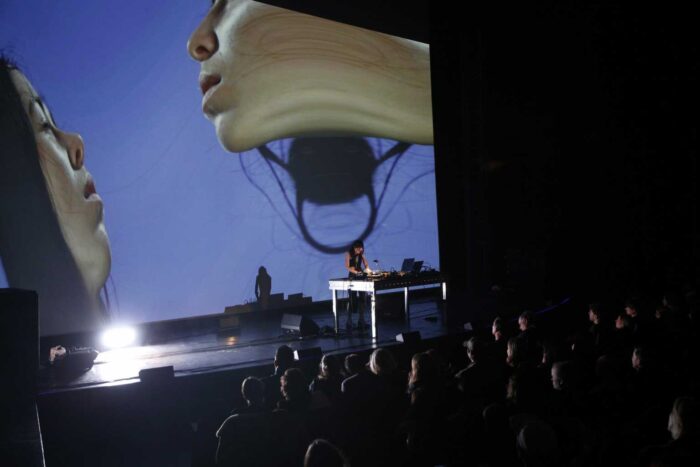
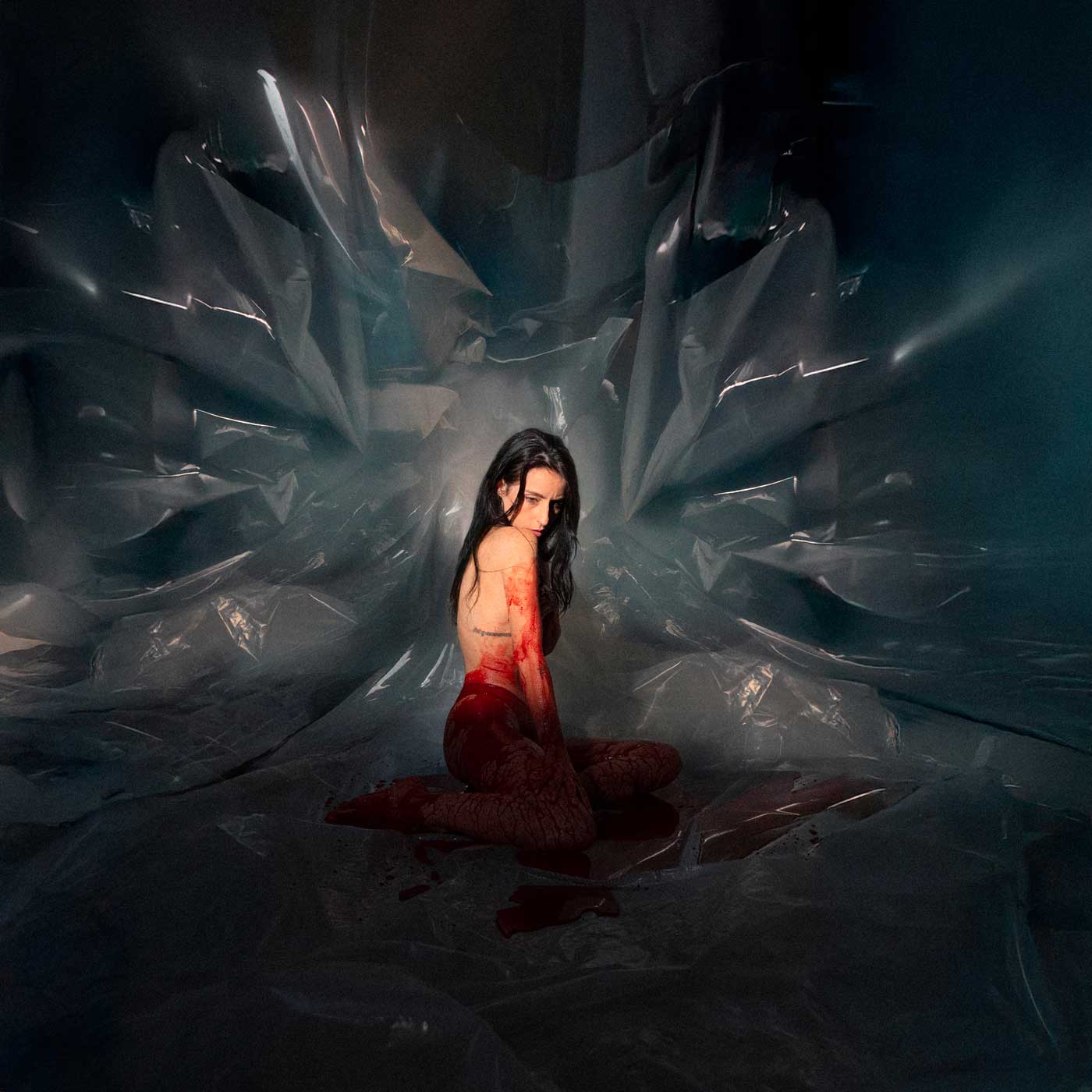
Ahead of the release of Exuvie, I spoke with Noémi Büchi and Brigitte Fässler about their collaborative A/V show, which premiered at CTM Festival earlier this year and will soon tour across Europe. It is undeniable that the supremacy of visual culture, combined with the ease with which video can now be captured and circulated, has encouraged many composers to incorporate moving images into their work. At the same time, experimental music festivals increasingly tend to “festivalize” album releases into bespoke A/V performances, sometimes diluting what could be a raw, album-born live set. Exuvie, however, emerged from a different impulse. The album grew out of a choreographic collaboration with dancer Rebeka Mondovics, who approached Büchi to work with her sound. “It was always a dream for me to compose music for dance,” Noémi confesses. That initial request gradually expanded, first into a full album and eventually into a larger audiovisual structure.
Competing attentions, shared sensations
“I personally find most combined music-video art problematic. It seems to me that the sound and images often compete for my attention. If I pay attention to what I am seeing, I often miss what I am hearing, and if I try to concentrate on the music, the images can often be an irritating distraction.”[6] When computer music pioneer Max Mathews voiced this complaint in the late 2000s, he pinpointed a tension still central to A/V practice: sound and image share a temporal frame, yet perception rarely processes them equally. One element tends to dominate while the other slips into the background. “I totally agree,” Brigitte comments. “For me, it was always the goal to make something that is not in competition with the sound.” To Noémi, each form already carries its own completeness. “Every medium has its own quality, and this is enough. I love concerts where you have only sound. And I love images without sound.”
Besides, many audiovisual performances today lean toward excess. The grammar of spectacle dominates the format: towering LED screens, rapid editing, algorithmic visuals, and generative imagery create environments designed to impress instantly. “I am a bit sick of the spectacular,” Noémi admits, “Everything has to impress. Everything is huge, everything is loud. I don’t want to impress people. I want to touch people.”
Instead of building a show around visual overload, competing for attention through scale or intensity, Exuvie relies on duration, physical presence, and small shifts in sensory focus. Rhythmic structures stretch across slow pacing, while shots linger long enough to be perceived as environments rather than information bursts. Brigitte describes how unusual this felt while editing. “Video clips on Instagram or YouTube are so fast. There are lots of cuts, everything has to happen quickly. But here the scenes could be long. It was quite new for me to accept that something doesn’t have to change every second. I kept asking myself if maybe more should happen,” confesses Brigitte. But Noémi encouraged the opposite approach: “I told Brigitte we can take our time because even the music develops an element for many minutes. It’s an invitation to perceive things slowly.”
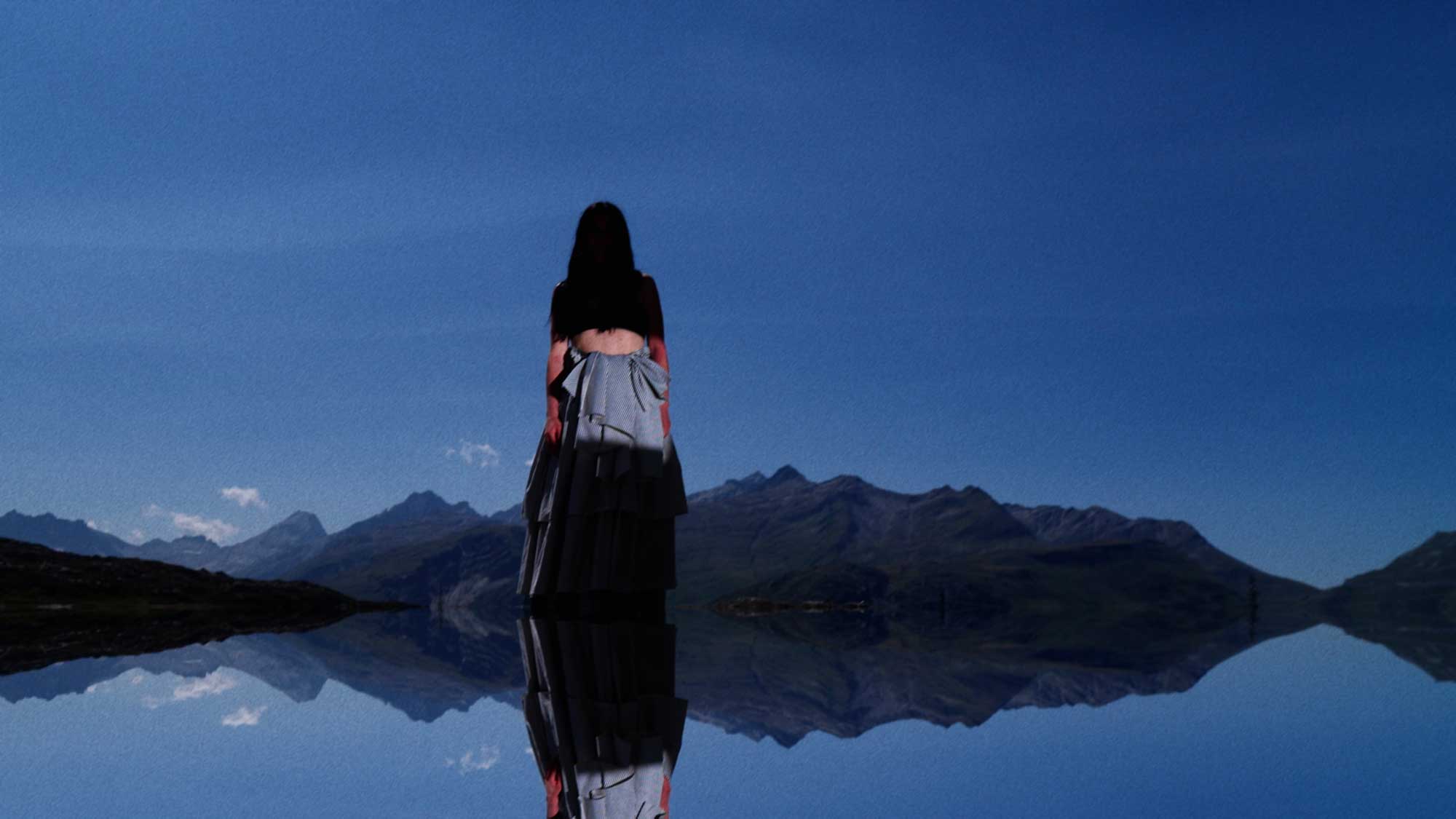
This slower rhythm reshapes how sound and image interact perceptually. The film theorist Michel Chion describes audiovisual perception as a process of fusion in which the brain spontaneously binds simultaneous aural and visual events into a single experience (the sound of a hammer striking heard at the exact moment we see the blow), an automatic mechanism he calls synchresis. “Added value” follows from this fusion when it succeeds expressively, when one perceives each medium enriching the other through the act of perception itself. In his words, “Sound shows us the image differently than what the image shows alone, and the image likewise makes us hear sound differently than if the sound were ringing out in the dark.” [7] This is not inevitable. Synchresis nearly always occurs with temporal coincidence, but added value emerges only through reciprocity, where sound and image mutually transform each other. For poor alignments, synchresis persists but added value fails, yielding mere masking or redundant highlighting rather than expressive enrichment.
Rather than illustrating specific sonic events, Exuvie’s visuals create a shared perceptual field where gesture and color circulate with sound, creating a generative friction that produces new sensations rather than semantic decoding. Noémi explicitly rejects meaning-making, “There is nothing to understand intellectually… it’s really based on sensations.” That emphasis shifts the spectator’s role as well. The work does not demand interpreting a message or following a story. Instead, Exuvie crafts a common phenomenological space—the lived space of experience—where sonic and visual cues remain fluid, boundaries dissolving over time.
Mathews identified competition (sound/image destructively vying for attention) as AV’s core risk. Exuvie navigates this successfully via restraint, embodying composer and researcher Constantin Basica’s insight explicitly, “It is precisely this perceived competition, or sometimes the lack thereof”—the initial friction (gesture vs. rhythm) or its strategic absence (slow cohesion)—“that allows sounds and images, or music and video, to merge into a whole that is more than the sum of its parts.” [8] Slow pacing turns potential rivalry into perceptual unity: what could distract becomes generative, proving competition’s transcendence yields added value.
Material images
The decision to avoid AI-generated imagery emerged from both aesthetic and ethical concerns. Both artists had experimented with AI tools before the project, yet eventually stepped away from them. Brigitte complains that the results often gravitate toward a predictable, over-polished visual style: “It’s difficult to get a distinct look. Everything starts to have this high-gloss AI touch.” For Noémi, the choice not to work with the technology anymore is primarily ethical: “We don’t know where it will bring us as humanity. I’m a bit scared of this techno-feudalism. Big companies controlling our data, controlling our minds. I prefer avoiding using a technology that is very uncertain or unstable on a moral level.”
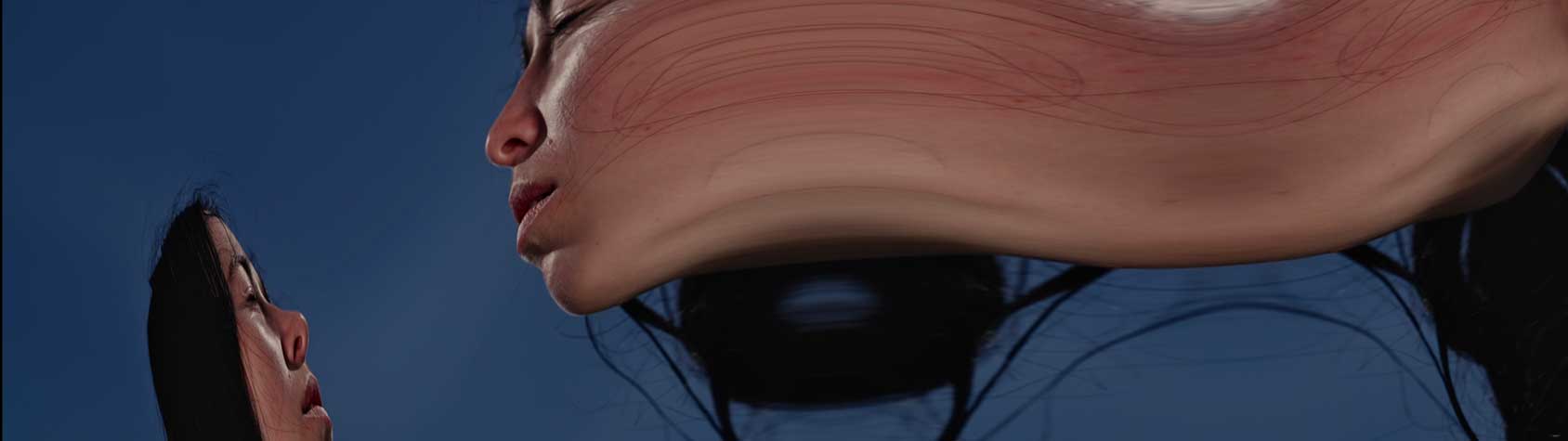
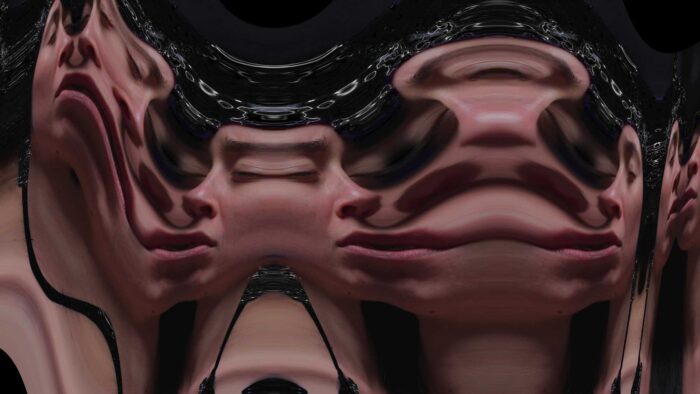
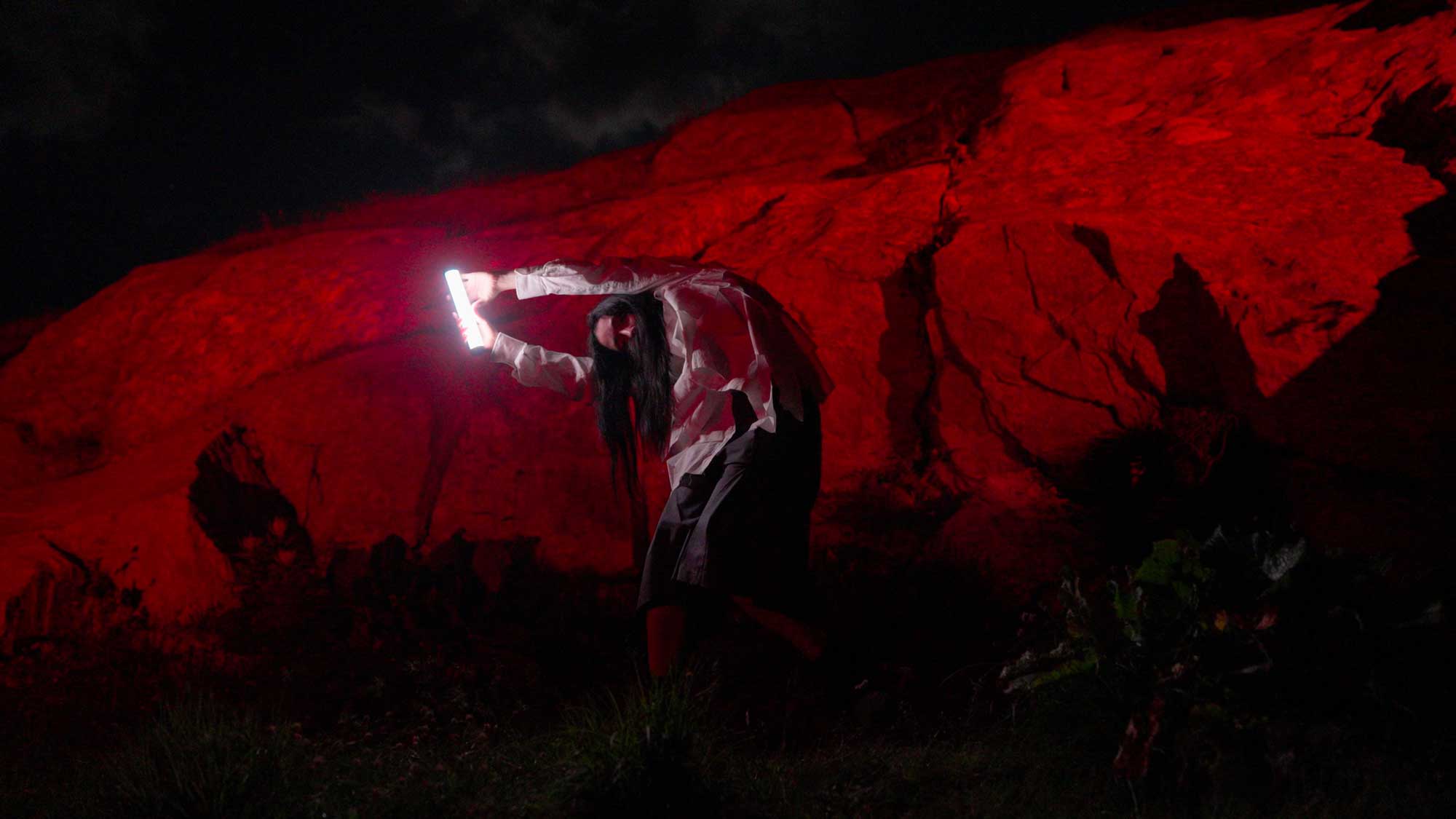
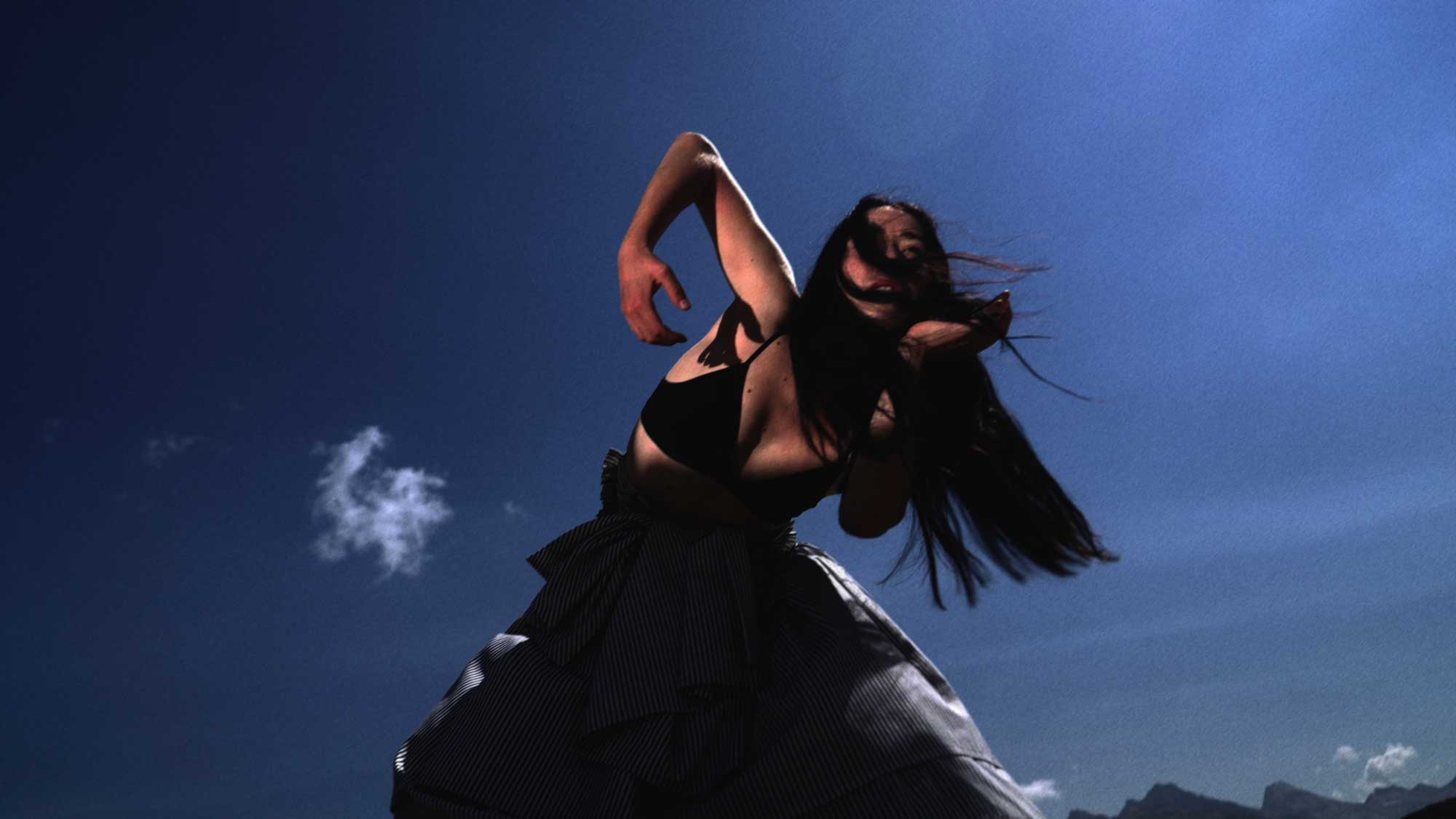
Exuvie keeps its visual language tied to physical processes. While the images might occasionally look digital (like it or not, the “digital” has permeated every aspect of our lives and cultures, with more and more elements from cyberculture making their way into compositional practices), the source always traces back to filmed material. Brigitte worked mainly with footage she recorded herself, filming Mondovics dancing in mountainous terrain and nocturnal environments. This choice introduces friction into a field that often aims for seamless illusion. The visual layer does not attempt to simulate infinite worlds or algorithmic complexity, but stays grounded in the textures of bodies, landscapes, and light. In fact, many of the lighting effects were produced manually on location, with mirrors used to redirect light toward the dancer’s body. Unexpected constraints, like crowded locations and a physical injury preventing Mondovics from entering the water scenes initially imagined, forced them to abandon most planned shots. “Working with the unexpected is super cool,” Noémi admits. “Even if sometimes it’s frustrating, it’s a surprise.”
The archive of the body
Noémi has long explored matter’s sonic qualities, approaching sound as a physical medium. This theme threads through her discography: the EP Matière (French for “material”, 2020), along with her albums Matter (2022) and Does It Still Matter? (2024), form a loose trilogy that reflects on materiality in a world growing ever more fluid and intangible. Exuvie extends this inquiry to the body’s own substance. The title refers to the skins shed by animals during processes of growth or metamorphosis, an image Noémi associates with how bodies store memory and transformation. During our conversation, she describes the difference between cognitive understanding and physical memory: “Trauma can be analyzed, rationalized, even archived by the mind. The body operates differently, it will always remember what happened. Even if with the mind you understand that you are safe, the body can still react.” The project, she suggests, explores that dissonant, slower temporality. The body changes continuously, often outside conscious awareness. “Did you know a body takes seven years for all its cells to be completely new?”
In the audiovisual environment of Exuvie, the body functions as a kind of archive where different temporal layers intersect. The sonic material carries traces of childhood memories—video games, films, anime—echoes that remain inscribed in the body itself. Movement becomes a way of accessing what the body has stored over time. As Noémi explains, “Rebeka’s choreography is based on the archive someone can have in the body. How you can remember things through the skin.”
While many A/V works emphasize the synchronization between sonic and visual signals or the technical complexity of real-time image generation, in Exuvie, the dancer anchors the perceptual space. Sound, camera movement, and projected imagery circulate around a physical presence that remains recognizably human. The screen operates less like a visual amplifier of the sonic realm and more like a prosthetic extension of the body that birthed the material.
Seen from this perspective, Exuvie stages transformation across several layers at once. The album grows out of dance. The choreography becomes video. The filmed images become projections. The projection becomes a live audiovisual environment shaped in real time by the composer-performer. Each step involves a shift of medium while preserving traces of the previous form. The work moves like the image suggested by its title: a process of shedding and renewal where earlier layers remain visible within the new skin.
[1] Cravalho, Ana. 2015. “Live Audiovisual Performance”. In The Audiovisual Breakthrough, edited by Ana Carvalho and Cornelia Lund, 130–43. Berlin: fluctuating images.
[2] Moritz, William. 2004. Oskar Fischinger: Visual Music. Bloomington: Indiana University Press.
[3] Youngblood, Gene. 1970. Expanded Cinema. New York: E.P. Dutton.
[4] Collins, Nicholas. 2007. “Video Synthesizers: From Analog Computing to Digital Art.” In Leonardo Music Journal 17: 7–13.
[5] Manovich, Lev. 2001. “The Language of New Media”. Cambridge, MA: MIT Press.
[6] Coulter, J. 2010. “Electroacoustic Music with Moving Images: The Art of Media Pairing.” In Organised Sound 15 (1): 26–34.
[7] Chion, Michel. 1994. Audio-Vision: Sound on Screen. Translated by Claudia Gorbman. New York: Columbia University Press.
[8] Basica, Constantin. 2022. “Audiovisual Performance.” In Revista MUZICA 8: 24–51.