
Textual Nebulas, Sonic Borderlands
From the Lips to the Moon
“From the Lips to the Moon is the witch I always go to.” Highlighting the power of languages, sounds, and frenzy, Diana Damian Martin reflects on four years of From the Lips to the Moon live shows and their upcoming album—crossing genres and borders.
Writing from Tashkent, artist Furqat Palvan-Zade says that today (a today a while back, maybe six years ago now, but in any case) he had a bad dream: “In my country, they say that you should never describe a bad dream to someone and should instead tell the story to a source of running water.”
They say the same in my culture, where I come from. One of the places where I come from. But we disagree on what is a dream, what is reality, and what floats in their midst. The place I come from is adjacent to war; sometimes mines wash over or drones crash on the shores of the Black Sea, and there’s new militarised zones now. The place I come from is adjacent to my friends’ place, which is at war, my other friend’s place, a two day walk away, which is at war, and my other friend’s place, where genocide is happening. This overwhelming evidence of violence seems however to be caught up in evidentiary struggles. We can’t call this a bad dream, because the bad dream is here.
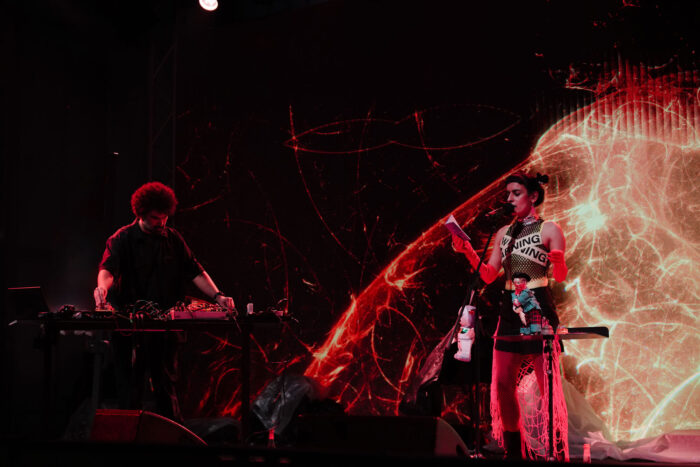
I was looking for a source of running water when I started going to From the Lips to the Moon, a performance evening (and much more) bringing together poets and musicians, hosted by Pouya Ehsaei and Tara Fatehi. Instead, I found luminescent textual nebulae, sonic bodies of poetic dust, clustering in the midst of bad (dreams, but not dreams at all). Like a deviant, fierce, sonic, displaced multilingual home that we can hang out in.
It formed a habit, travelling across the city, finding resonance in these recurring evenings, these temporary atmospheric clumps, dense enough to form a star. That’s how new planetary systems emerge, I thought, in this place where language rubs against sound until they fold into one another, flowing through bodies, so we can feel elsewhere, maybe recognise something of what cannot be said now, or maybe just feeling our way through time-travel, in parallels rather than aways.
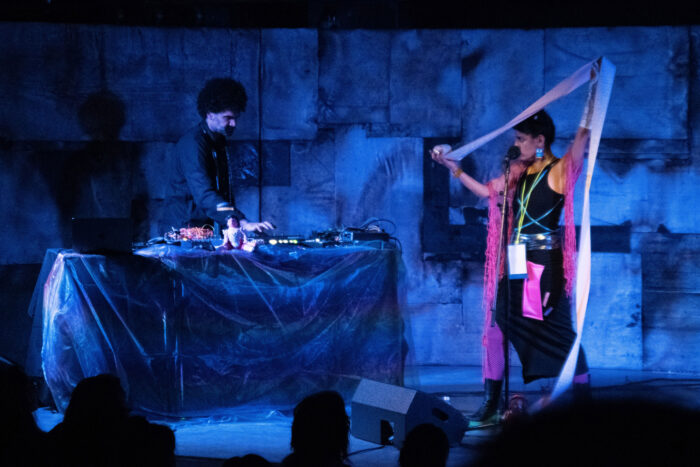
“Now let’s step into your mindgarden; but I see bulldozer”—Tara Fatehi
I grew up on the seventh floor of a block of flats overlooking a dried up patch of land, an abandoned factory, a petrol station, a junction, on the other side of which were other housing blocks. You could taste the snowflakes in winter by stretching your tongue beyond the edge of the balcony, suspended over this dried up patch of empty land, and feel a fizz on the tongue. My parents would remind me that the snow wasn’t clean; it might be toxic. Careful with the tongue, they’d say. Be careful how far you lean. Bootlegs lined our living room and we were always searching for radio frequencies from the outside. The snow felt of the same genre. A kind of border-crossing.
Close to where I used to live, there is now a tall building, built at some point in the nineties, a kind of brutalist three-sectioned block, clad in opaque blue windows and concrete. In large font near the top of the building stands what looks like a title: “poliția de frontierǎ” (border police).
I remembered about this tongue fizz at my first From the Lips to the Moon. It felt like a séance, and I felt I could punch through the windows, simply by connecting with the sonic frequencies.
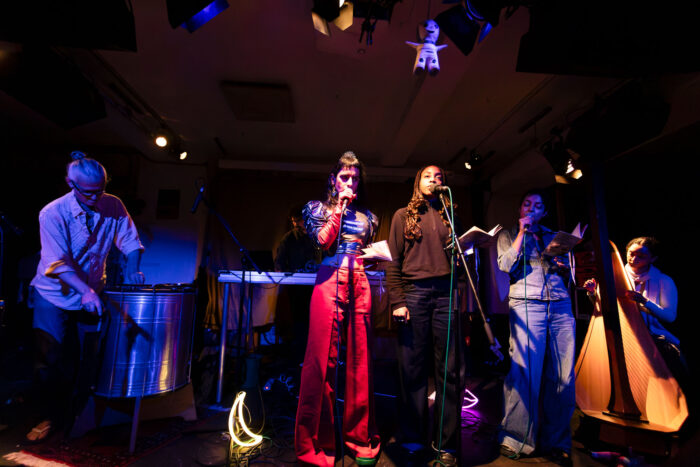
“I spit gasoline”—Maureen Onowunali
I heard From the Lips to the Moon in its multiple iterations: amongst the concrete and book-lined walls of Reference Point; surrounded by vinyls and steaming windows at Café Oto; tuning in online; holding a zine. Whilst encountering fierce, unruly poets, performers and musicians, I learnt something about listening through movement, and about the importance of wild forms; or maybe sonic frenzy, or linguistic frenzy, like a ritual that cleanses and filters through all the nonsense to sketch some mythologies of the now.
Since its early days in 2022, From the Lips to the Moon has been a vital point of gathering, improvisation, hang-out, resistance in the London scene and beyond, built, first and foremost, from the ground, against all odds. In an ecology where real experimentation is rare, especially across forms, I found From the Lips to the Moon to be shaping a playful, unruly mode in which performance was a frequency of many cities in one, and one of the few spaces where border-crossers could gather to hear the sounds and words of all the towns, villages, seas, mountains that we always carry with, or that remain near.
From the Lips to the Moon holds the temperatures of wars, displacement, imperial plunder, but also gives space to mythological figures, tales from other times, linguistic cross-genre experiments, poetics that shape new political visions, making the mundane extraordinary, the surreal and the abstract palpable. I always found, across its iterations, and the communities it always brings, this sense of desire and rage, of energies, frequencies and atmospheres that sharply undercut the fascist, authoritarian and nativist visions normalised in our everydays . What it builds is something more strange, beautiful, and of many more temporalities. It’s at From the Lips to the Moon where I found the London of cross-linguistic experiments and sonic borderlands.
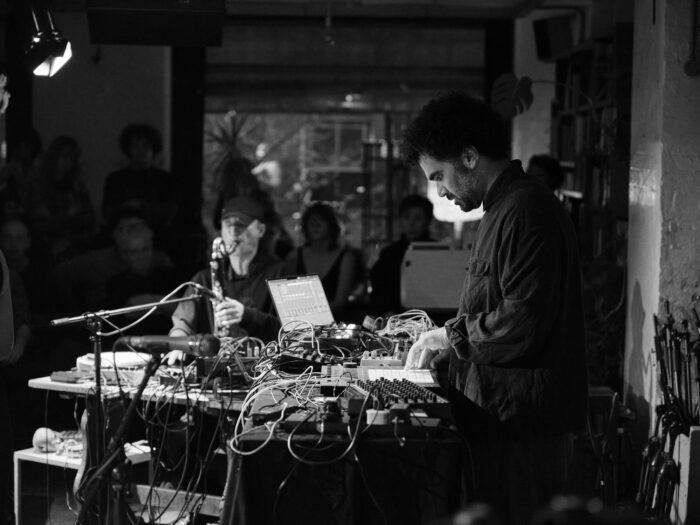
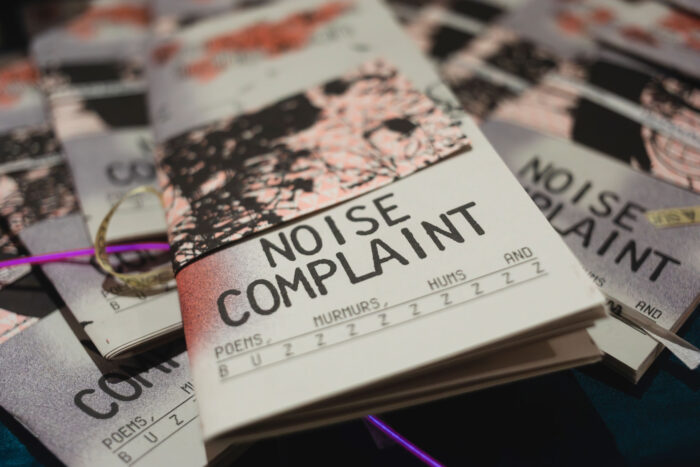
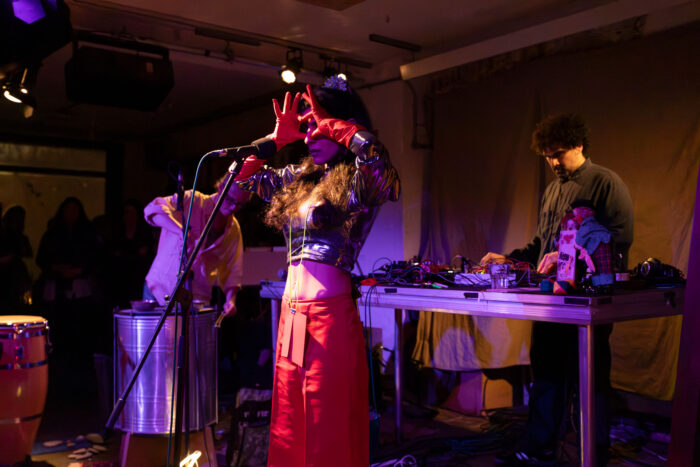
Weaving together Pouya’s immersive, undulating, epic electronica that weaves together dub techno, industrial sound, noise, jazz and Iranian folk, with Tara’s moving performances as host, dancer and poet, From the Lips to the Moon has brought together an incredible array of poets and musicians, migrant, diasporic and other border crossers of genre or form. They’ve launched several poetry zines publishing performance texts, the latest of which, Noise Complaint, printed by Slow and Dirty Press at House of Annetta, brings together excerpts that perform so much of the spirit of the evening—sharp, fun, moving poetics, across multiple languages that hold us in dissonance, joy, desire, resistance, like Arabic, Farsi, Kurdish, Portuguese, Amharic, Afrikaans, isiXhosa, isiZulu, Punjabi, Spanish, German, Urdu, Wolof and more.
Launching with Akazib Records in May of this year, their upcoming album weaves together sound from Koroleko Moussa, Sam Warne, Hammadi Valdes, Tamar Osborn, Parham Bahadoran, Kareem Dayes and Yelfris Valdes with texts from Tara Fatehi, MA.MOYO, Maureen Onwunali, Nomakhwezi Becker, Tim Etchells, Oluwaseun Olayiwola, Nisha Ramayya and Tasneim Zyada—whose excerpts also shape parts of this text.
Across twelve tracks, the zones of uncanny, eerie, dissonant, unruly, collective sonic and textual intercepts accumulate, crafting an affective experience that offers release and an ecstatic embrace of dissonance. Like their live nights, you move—physically as well as affectively—through grief, collectivity, transcendence, joy, rage, release—all discordant and bewildering yet deeply resonant. In the beautiful, moving chaos, some semblance of hope emerges.
This is something I’ve only ever experienced at From the Lips to the Moon—the heartfelt belief in the collective power of these zones of convergence, a real borderland—that exposes the porousness of war, empire and occupation—and the power of mythologies, cosmologies and what hides in the everyday.
From the Lips to the Moon is the witch I always go to.
“Kaleidoscopic bananas, upside down trees, bulldozer”—Tara Fatehi
There is something about From the Lips to the Moon that constantly wraps itself around the felt effects of many different violences; it creeps behind language and sound, the familiar and the mundane, to craft temporary, precarious, latent, powerful visions of the now. Tara hosts a plethora of personas, of movers, lamenters and healers. At From the Lips to the Moon, I hear of ghosts returning, travellers on their journeys, dehydrated monsters, supermarket conversations, stories of fallen empires, conversations in the back of a taxi, bottomless wells.
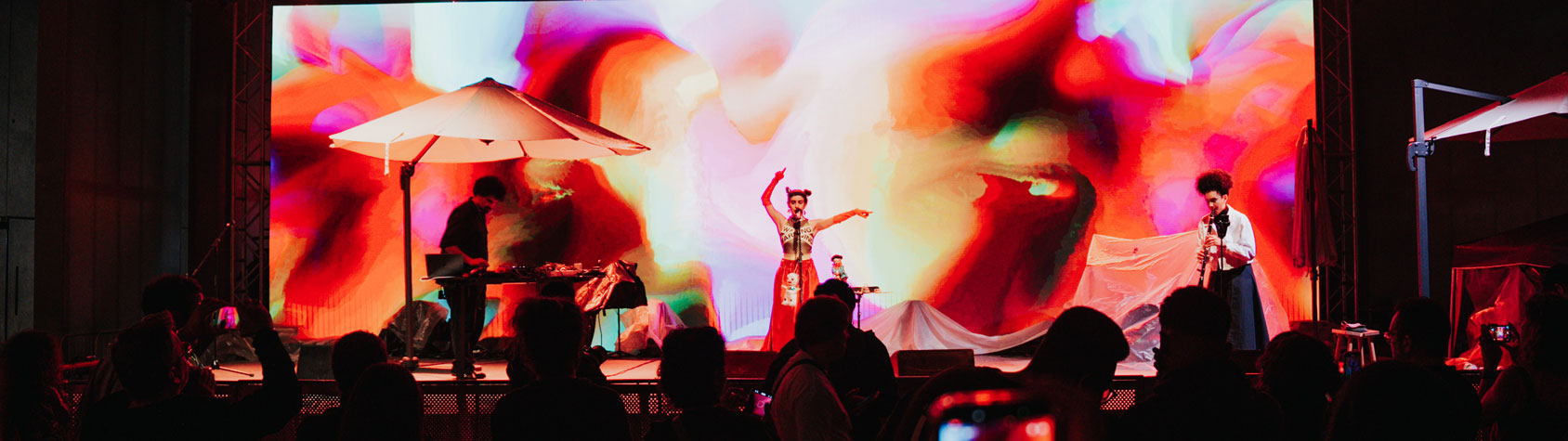
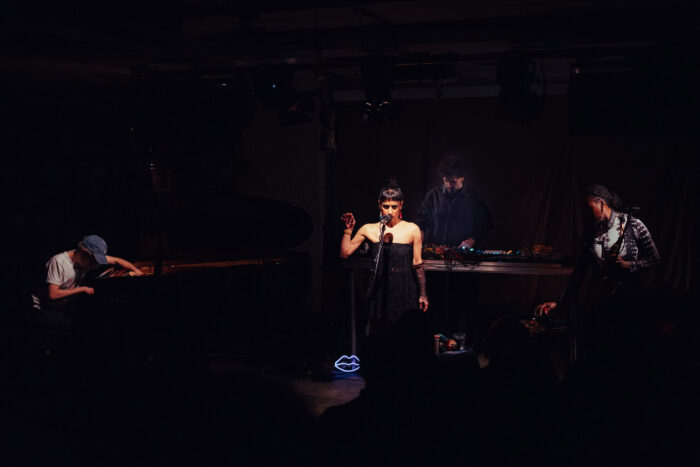
This sense of the many worlds within worlds, of the power of language and sound to reveal the many other potentials of nows and thens and futures, pervades the events. The name of the night, from the lips to the moon, is a reference to Iranian writer associated with magical realism Mohammad Reza Safdari. There are elements of playful performatives too—at Reference Point, this was VJing from 2 Digit Visuals, and at Cafe OTO, dolls, paper trails, neon signs—like small scenographic traces of the journeys made together.
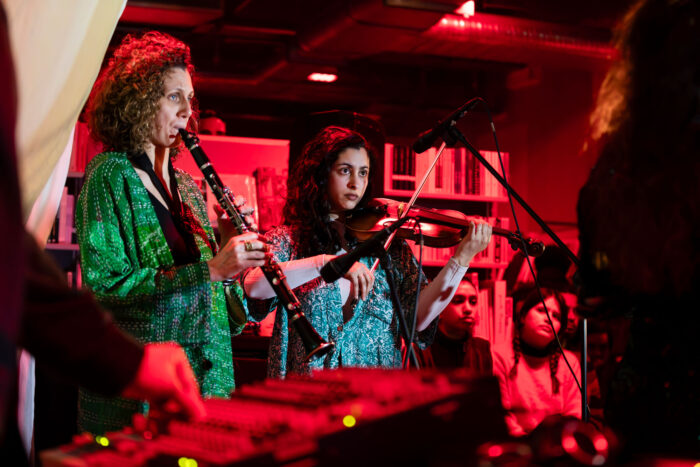
Soundscapes merge with voice, ordered and disordered languages, vibrations, beats, micro-stories and improvisations. In this heightened sonic fronts language drips into beats and beats push texts elsewhere, making words, micro-stories, encounters pop or hide or drench. I’ve heard synths, drum machines, trumpets, bongos, clarinets, duduks, cellos, balafons, saxophones. I heard many languages, some familiar and some less so. I ate poetry, or maybe poetry ate me, beats and rhythms and vocal play-turned-to-sound-and-back-to-language. Sound swallowed me. I met sonic deviants and we travelled into the night.
“Booming light of moon”—Nisha Ramayya
Laurent Berlant and Elizabeth Povinelli, both thinkers of late liberalism’s mechanics, talk about energetics of endurance—what is produced by touch, proximity, conversation—as eruptions of resistance that are also moments of pleasure. That’s how I think of From the Lips to the Moon. I think of this question of listening and audibility—the joy of getting lost in languages known and unknown. I think about what it takes to create the conditions to hear the otherwise, the elsewhere, the uncanny, as something always latent in the now; and to hear the now differently, to recognise what is sometimes felt but unable to be said.
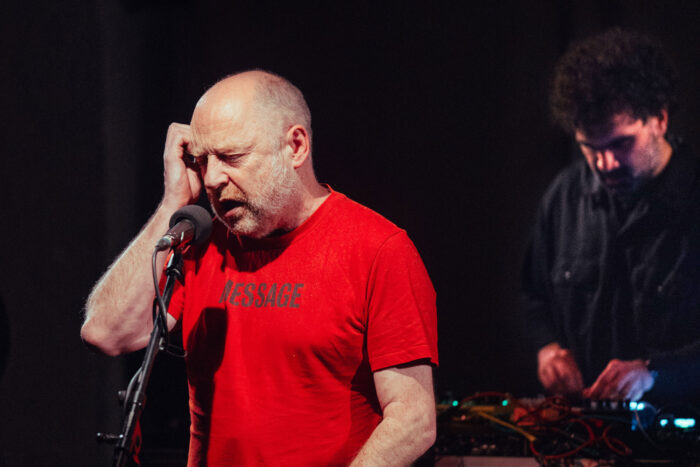
Improvisation and encounter are core to From the Lips to the Moon; performance underpins the dialogue between sonic and textscapes, between bodies and instruments performing together, between vocal ranges and intonation, rhythms both instrumental and electronic. They coagulate with each other, poets with musicians stretching the limits and uses of their instruments, some meeting for the first time, words puncturing sounds of different weights, textures, frequencies, elongated or thin, wide and vast against minute words. Pouya is always on stage, listening, tuning in, bringing scale or shape or resonance, whilst Tara’s shape-shifting, playful presence holds us on the journey.
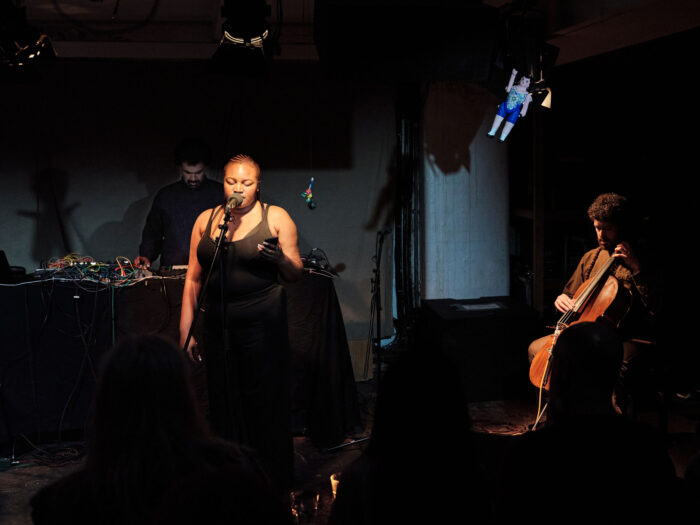
Sometimes, during live iterations, I get so swept in the beats that I only realise after that I hold an offering of micro-narratives or words that have punctured through. Tara’s poetic-scapes, always frame the evenings like scores that make mythologies out of the everyday—the sound of a cashier, a conversation between a child and a parent—and expose the interconnectedness of it all; birds fall from the sky whilst language takes on sonic frequencies. In Choppers, “money money money” lands like a bomb in a bunker; if capitalism’s war machine could speak, that’s what it might say.
The last iteration I saw of From the Lips to the Moon at Cafe OTO on 28 February opened with a sonic whirlwind, holding grief and rage and vision, on the same day as bombs landed in Iran. At Reference Point, we gathered in the midst of genocide, bodies with goosebumps, sounds and words accruing on hearts, against skin, in bodies.
“I scream,
You scream
We all scream
Empire”—Maureen Onwunali
At first, my legs start moving, up and down, underneath the chair. Then my arms, they open sideways, punctured by a rhythm that’s emerged from elsewhere, but it’s also, somehow, in my body. My head bobs. I catch a word in Farsi, it comes in through my gut, then moves into my eyes.
We’re all moving now, wrapped in the beat, folding into this language that moves the room, moves into the room, but can’t stay still. None of us can quite stay still, with this awe, or this rage, or this curiosity. Because if anything, this is not a time for stillness.
“That house full of things that get heavier and heavier,” performs Tim Etchells, “move that house full of things that get heavier and heavier.”
I tune into the album again to stories on how roots met their land, to supermarket soundscapes, to tanks arriving, to travelling across seas.
*
I’ll bite my tongue along with the others in this borderland, instead of the acid tongued fascists, or the sound of bombs. Here, we can let go a little. Run in the wild. See what else is there. Just listen to lipstomoon’s Choppers.
From the Lips to the Moon’s album is out 8 May on Akazib Records, followed by a live show and launch on 15 May at Café OTO, London.