
Per Aspera Ad Astra
A conversation with Malibu on the occasion of the twenty-third edition of C2C Festival
Talking to Malibu, all smiles backstage at the C2C Festival, you can rightly sense the relief of an artist who has just successfully performed on one of the most important stages of European avant-pop. There is a sense of lightheartedness in the air, but few know that achieving this collective mood has not been easy. At least, not this year in particular.
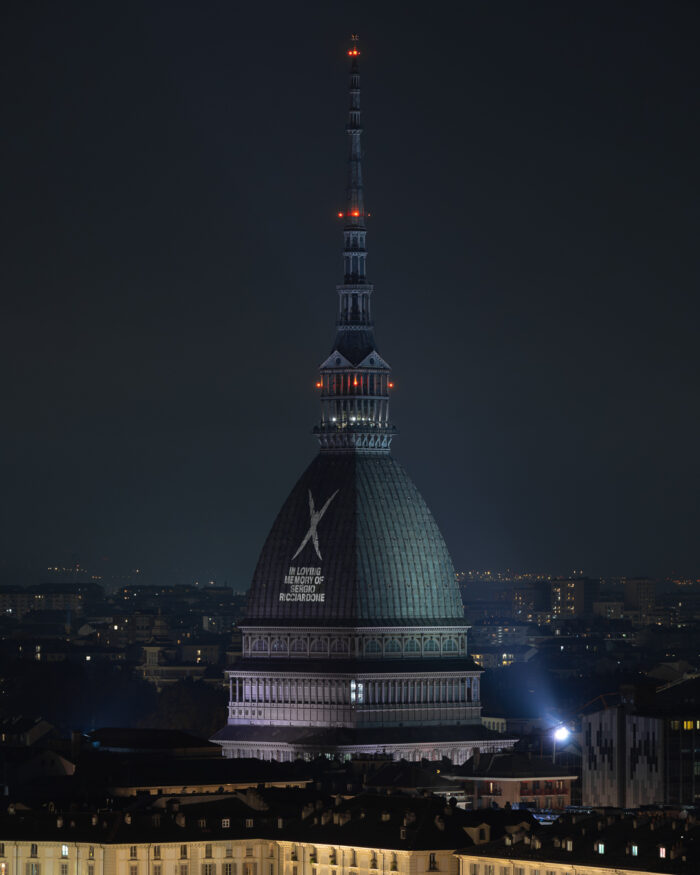
The theme of the 23rd edition of the Turin festival, Per Aspera Ad Astra, is an ancient Latin motto, of Greek origin, which was used to describe the arrival of the most valiant warriors on Mount Olympus. Those who, through insurmountable adversity (per aspera), had earned peace among the stars (ad astra). In March, the founder and artistic director of C2C Festival, Sergio Ricciardone, died after a sudden illness. His passing left a frightening void in the Italian avant-garde scene, as well as a huge burden on the shoulders of Guido Savini, who had always been his right-hand man in artistic direction, and the entire festival staff.
There was a lot of expectation and pressure on an edition that, even if it had been a flop, could not have been criticized, either verbally or in print. But that was not the case, and the problem did not even arise. As we chat about her practice, latest release, and what it feels like to play in Turin, Malibu’s polite and satisfied smile is worth more than a thousand mathematical proofs that C2C and this melting pot of different genres wisely brought together by Ricciardone under the term avant-pop are more alive than ever.
Malibu, aka Barbara Braccini (but also DJ Lostboi, belmont girl), is a French electronic musician operating freely within the wide range of sounds one could group as “contemporary ambient”. The C2C Festival set drew from her latest album, Vanities, a gently unsettling record released just last October, which unfolds through sonic fragments. Loose, spacious textures hold everything together, forming a soft narrative that only emerges through close listening. These qualities sit comfortably within the everhard to define landscape of contemporary ambient— stretching, dissolving sounds nestled in between samples —yet Malibu understands the genre, and her place in it, a bit differently:
“If it was me, I wouldn’t call what I do ambient. I don’t know what I would call it. I don’t really care. Ambient is a very broad term. To be mislabeled, however,” she says, “is kind of not my problem anyway.”
This provocation comes from a distance that she feels from what “pure ambient” is supposed to be. Drone ambient, for example, sounds distant from her productions, which are much more contaminated and softened by strings, samples, voices, pianos. “People like putting things into boxes. ‘Ambient’ is as close as possible to what I make. So that’s not wrong. I don’t think I owe it to the audience to only make ambient. It doesn’t really matter to me. I don’t know if whatever I’m writing and whatever I want to say will sound like a pop song. It will sound like a pop song if it serves some purpose of telling whatever story I want to tell. But so far, that’s not been that case. Maybe a record will have more strings than usual, because it just made sense when it was being made. For this record, for instance, there’s piano, there’s some flute recordings. Some tracks are way more stripped down or it feels different. It’s just because when I made it, it just felt right.”
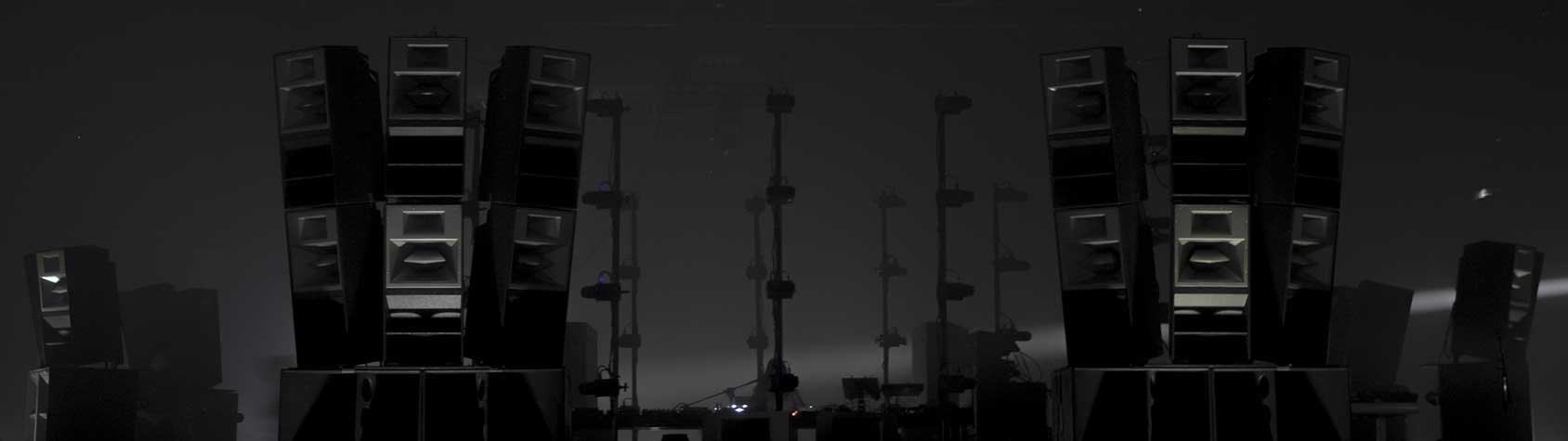
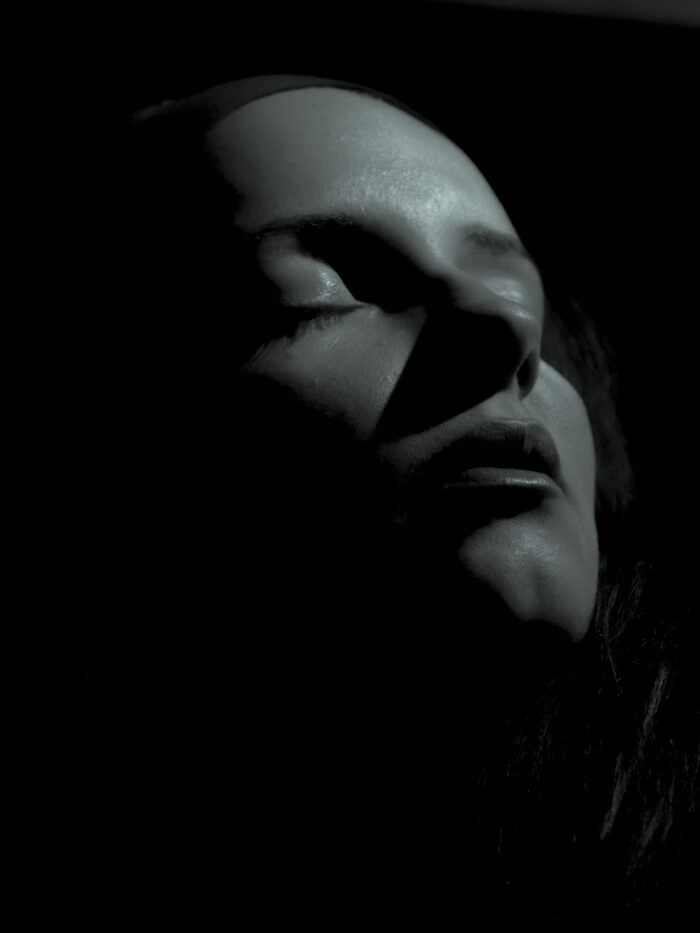
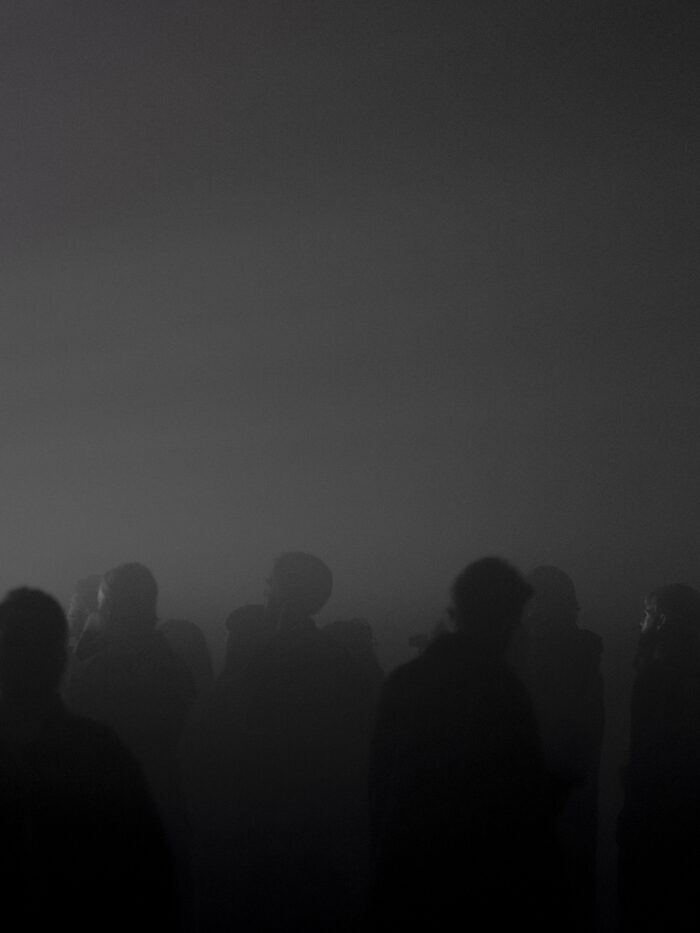
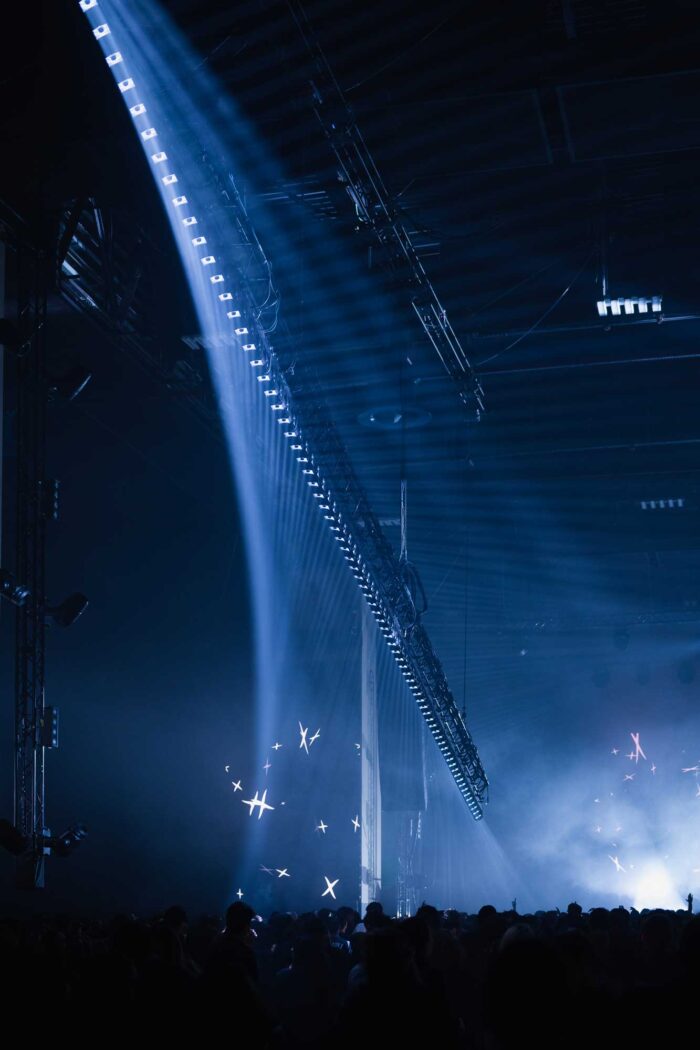
The right chord, the right suggestion of a lyric, witnessing Malibu at C2C Festival felt like being in the right place at the right time, the perfect point of view to witness something simple and sublime. Her set felt at once room-filling and intimate. Eyes closed, a tear on my cheek, I kept returning to the deep resonance in her music. A single beam of light washed over the crowd; strobes beneath the speaker flicked across the front row. Some people standing, some sitting or laying down, a deep attention permeated the audience. Saturday, 1st November, 19:30, Stone Island stage at C2C Festival, a fully committed crowd prepared for the attentive listening Malibu quietly asks for. Onstage, amid the lights, a microphone was in sight: whispers, faint traces of a voice. The music carved out space in the chest, it felt tender, it felt healing. Malibu’s power lies in her simplicity: the depth comes from digging inward, shaping emotive and evocative narratives through introspection.
Barbara describes Vanities as diaristic work, each track beginning from something personal. But it’s diaristic in a way we might not expect. There are almost no concrete narrative markers, barely any lyrics to hold on to. Instead, the personal is splintered, scattered across moods, suggested through titles or quiet fragments of words. Vanities drifts in a dreamlike state, an immersive, breath-held poetry, like writing in your diary right before falling asleep.
The stretch and flow of sounds throughout her set mirrored the album: a stream of consciousness carried by an unsettling gentleness. It’s deeply personal, yet meant for no one to fully decipher. The tracks feel like proof of Malibu’s life, even though she’s never felt compelled to explain herself.
“It’s mostly fragments of things. Sometimes I’ll just record for two hours of signals from a synth. Then I listen back and I pick maybe ten seconds of that to go from, or just whatever chords or notes that just make me feel something and that feel close to my mood. If I have to write words, sometimes I just have the microphone open and I just talk. Sometimes I write more, and pick whatever feels good with the track. It’s put together, I guess, pretty naturally.”
Often, then, a chord just feels right and she doesn’t know why. This says a lot about her instinct-driven approach, which rests on a quiet but assured command of the grammar of production. It’s a rare skill, to move almost unconsciously and still land on something so piercing. Or maybe that’s exactly why it works: the looseness, the lack of mechanical construction, letting emotion pass through unfiltered. Again, a flow of consciousness, and we’re lucky to take a peek inside.
The diaristic quality is evident then in the way memories fold into the music—not as perfect reconstructions but as impressions. Things are remembered through a veil, some details dissolving, others returning with unexpected sharpness. A personal history that doesn’t need to be linear, only honest in its emotional weight.
“There’s no process to Malibu, it feels random, sometimes there are specific events that might inspire something, but that’s nobody’s business but mine.”
Few elements are placed to reconstruct the place where Malibu is coming from, like track names, a way for her to say something without over-explaining, influencing the feel of the track and how to approach it as a listener. In a play with smoke and mirrors, Malibu invites listeners to follow her in dismantling familiarity and rebuilding it into as many realities as needed for it to make sense. Clear narrative drifts away. What remains is our own interpretation. References remain volatile: “Inspiration is hard to pinpoint, sometimes I can see it when others tell me.” And when it comes to visual inputs, she prefers to work in a kind of void, away from aesthetic influence, which usually comes in later.
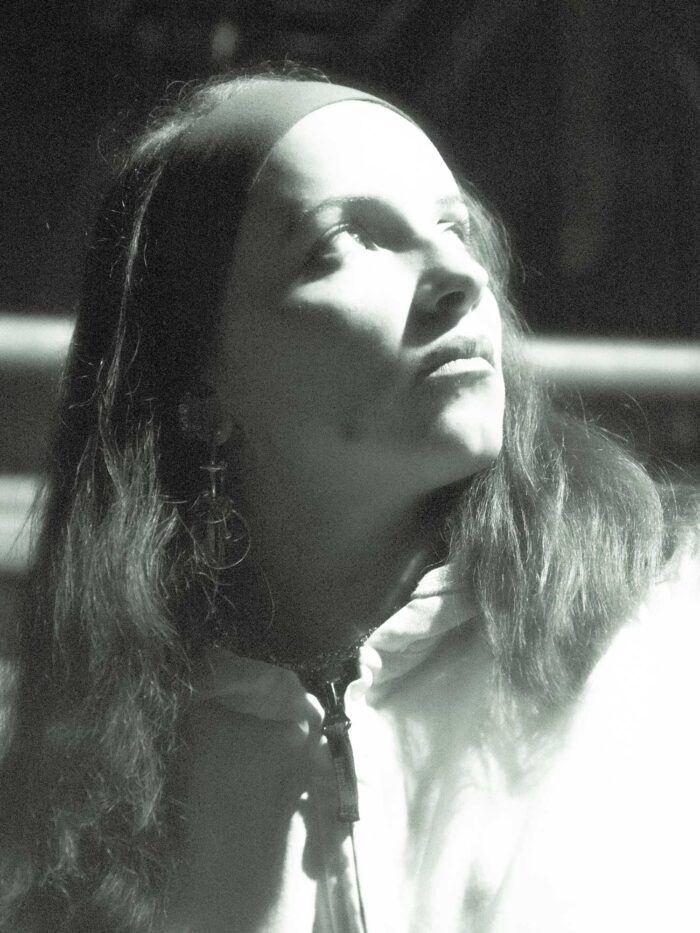
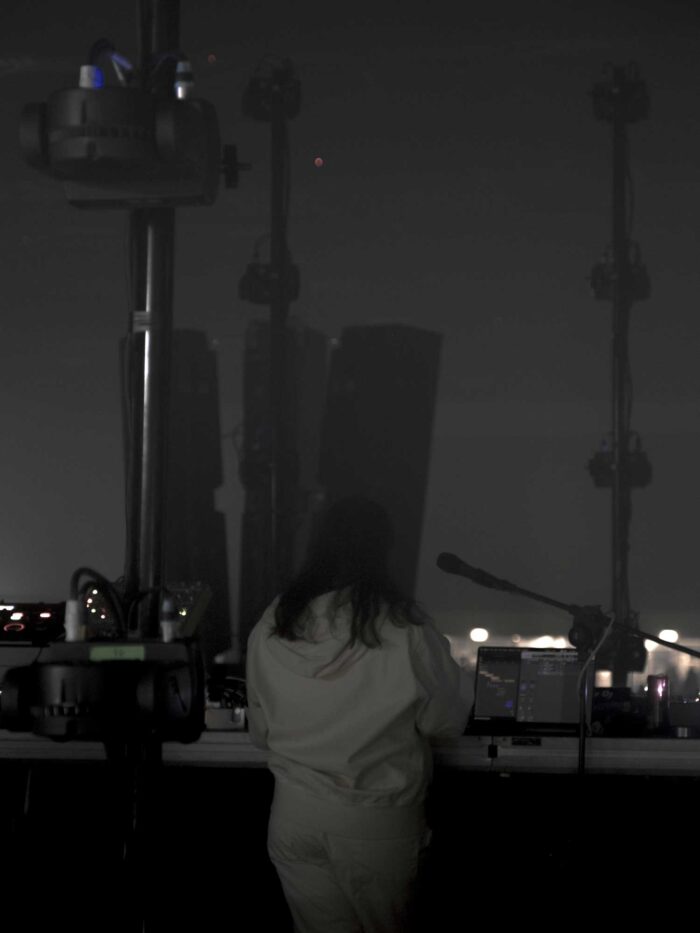
A child of Tumblr, of endless screenshotting, she’s used to shaping her visual world with the same instinctive impulse that guides her sound, so for radio shows or side projects, she prefers making her own images. For Vanities, though, one image stayed with her from the beginning: “I felt excited about one idea from the start, of just being by a window looking out.” She handed everything over to photographer and art director Igor Pjörrt, which became its own kind of exercise, a small surrender of control. Pjörrt’s vision moves within an aesthetic of waiting—human, suspended, a point of pause that invites reflection and self-inspection, an echo of Malibu’s work. Like the album’s contents, the imagery invites a kind of voyeurism. We’re allowed to look into Malibu’s life, even if only from the periphery. She gives us her back, not her face. A partial offering, a sideways entry into her world. “There’s a body but there’s no face. It’s silly but it’s true, especially as a woman, it feels like you have to show your face to sell. So it just felt a bit more interesting to still show me, but not my face. It feels more timeless, relatable.”
There’s a timelessness to Malibu, but there is something that feels highly of today. The cinematic quality to her music makes it feel like it could be the score for everyday life. Talking about movie scores, she said she loves any soundtrack by Thomas Newman. She’s scored one short film, she’d love to do it again, as long as it would be something she feels a connection to, whether that is something authorial, an emotive action thriller like Collateral (2004) or even a Hallmark movie, which she has been obsessed with recently. Her interest in Hallmark movies should not come as a surprise. Genre has never been a constraint for her, and though her practice is undeniably experimental, Malibu’s love for anything pop is threaded throughout her work, especially in her side projects.
One of my personal favorite tracks by Barbara actually comes from one of these secondary aliases, belmont girl. Specifically, is a simply genius rework of a viral clip of Justin Bieber drunkenly singing “Stay,” which she takes to a higher plane by intertwinging it with Flawed Mangoes’ “The Beginning” and a fragmented Oklou sample from “Obvious”. Pieces of Addison Rae, Charlie XCX, Frank Ocean, Rihanna, but also Deadmau5, Pacific Link, Solid Stone, have all gone through the machine of belmont girl. Grabbing pieces of melodies wherever they appear to mean something and working through them quickly. Her pop reworks feel genuine, almost tender—never ironic or detached. In Malibu’s hands, pop is treated with care, with a kind of sincerity that never feels nostalgic or cynical. It should not surprise us if one day she’ll write a pop hit.
“To sample something is to give it another life, they are fragments but they are world building”. Listening to Malibu, whether it’s her tracks or her NTS show “United in Flames,” this approach to fragmentation is a recurring pattern. The narrative she builds is one of a splintered identity, in many ways inextricable from how we consume music as remediated by the digital. Malibu’s music is a composite, pieces that travel through digital pathways and recompose in new ways. Pieces of sounds emerge naturally or are products of deep engagement with one idea, they break off, get stretched, filtered, repurposed.
Where she draws inspiration from is not guided by genre or positioning in the pointless distinction between pop and avantgarde, but rather depends on creative process and needs. “There is a different praxis and processes to how I make music depending on my aliases. Malibu is my main project. DJ Lostboi was an escape from Malibu and still is. I never really work on it, it’s just edits of samples. And so is belmont girl, but that is even more extreme, almost like shitposting. It’s not actually shitposting, but it’s really like automatic writing because it should not take me more than an hour to work on it. Because if it is longer, then I stop working on it because it’s not worth it. It should be very quick and effective. I want it to be efficient. I want it to give me the dopamine of creativity. And that’s what I want to feel. I feel like I am creative, that I’ve done something today. And sometimes that’s good enough. The process is so different with Malibu, which takes much longer. It’s more diaristic.”
Her aliases then reflect her different necessities: DJ Lostboi and belmont girl as spontaneous spark, Malibu as the slow, reflective pulse. Barbara’s intentionality with Malibu, gives that side of production more time to breathe. When I asked her about how it felt to let Vanities go into the world, she said, “It’s not my problem anymore. I don’t care if it touches someone today, or in five years.“
Barbara’s highly intentional approach to production means that we might not see any new Malibu for a while: “We’re too used to seeing things just pop out, there is pressure to release. Sometimes I want to let go of my control and be more automatic. But it will come basically, I just don’t want to force anything. If I have nothing to say, I’d rather say nothing. So, you know, if I have nothing to say for the next five years, well, you won’t have a record. I would never do something I’m not sure about or that I don’t even relate to myself or that I cringe when I listen to. Then it’s not doing it for me. It’s not serving its purpose.”
C2C Festival just announced its next dates, as the twenty-fourth edition of the C2C Festival will take place from Thursday, 29 October to Sunday, 1 November 2026 in Turin.