
Is the Internet a queer space?
A conversation on queerness, cyberspace, and cinema
For sixteen years, the Sicilia Queer Filmfest has been one of the few film festivals in Italy dedicated specifically to queer cinema. Alongside its focus on contemporary audiovisual culture, queer perspectives and identities, the festival has consistently undertaken a work of retrospective discovery—through programs such as this year’s selection on the Philippines, curated by film historian Nick Deocampo—and through encounters with filmmakers little known in Italy, if at all, as in the case of Canadian director Louise Weard, to whom the festival devoted the first European retrospective of her work.
At the same time, it has never renounced a forward-looking perspective, as evidenced by this year’s New Visions Award, won by N’s Last Game by Desirée Alagna (Italy, 2026), an experimental short film that explores new languages and formats, from virtual imagery and video games to algorithmic design.
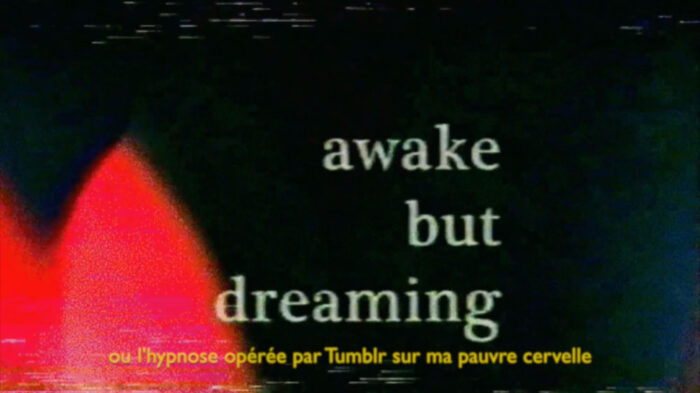
It is perhaps no coincidence that this recognition comes in the same year in which a new screening strand entitled QueerCoreCore, dedicated to the contemporary exploration of the relationship between queerness and the Internet, has enriched the Panorama Queer section. The section featured Awake But Dreaming by Mathieu Morel (Francia, 2020, 4’), Pix by Antonio Da Silva (Portogallo/UK, 2014, 3’), Homunculus by Bonheur Suprême (Francia/Italia, 2025, 17’), Guided Meditation by Desirée Alagna (Italia, 2025, 7’), Things That Won’t Die by Manuela Gutiérrez Arrieta (Spagna, 2022, 14’), The Alignment Problem by Guilherme Peters, Matias Mariani, Roberto Winter (Brasile, 2025, 13’), and New Gods by Loïc Hobi (Svizzera, 2020, 19’).
We spoke with Daniele Ambrosini, curator of the new section.
Carlotta Centonze: Let’s start with the title of the section, QueerCoreCore. What ideas and references does it bring together?
Daniele Ambrosini: The starting point is the idea that, in recent years, the internet has become a creative playground for a growing number of young filmmakers, who use it to reflect on digital identities and what it means to inhabit cyberspace. The program focuses on works entirely rooted in the digital realm, where the physical world remains only a distant point of reference. These films challenge existing categories such as machinima, which emphasizes the use of pre-existing software, and internet cinema, which foregrounds the internet’s role as an archive.
A new term is needed to bring together these works, which share clear affinities while remaining dispersed across different labels, and to place them in continuity with the discourse on alternative identities already developed within queer cinema. This is where the idea of QueerCoreCore comes in: a term for an auteur-driven, experimental form of internet cinema that approaches cyberspace as a space for the exploration of queer identities. The Sicilia Queer Filmfest proved the ideal context in which to introduce this perspective.
What happens when cinema encounters the internet as a queer space?
What I find interesting is whether cinema is entering a space that is already queer—as may happen when exploring online queer communities—or whether it is the filmmakers themselves who are reinterpreting it in this way. After all, cyberspace is boundless and offers endless possibilities for reinterpretation. The films in this program provide identity-based interpretations of these spaces and create an interesting short-circuit within the hierarchies of classical cinema. The director becomes the user, whose point of view is adopted by the viewer, who experiences the film through a theater screen that mirrors the device or camera screen. The result is a viewing experience in which the perspectives of user, director, and viewer converge. One could say that when cinema fully embraces the internet, it enters another world, where the dynamics of the gaze operate according to entirely new logics.
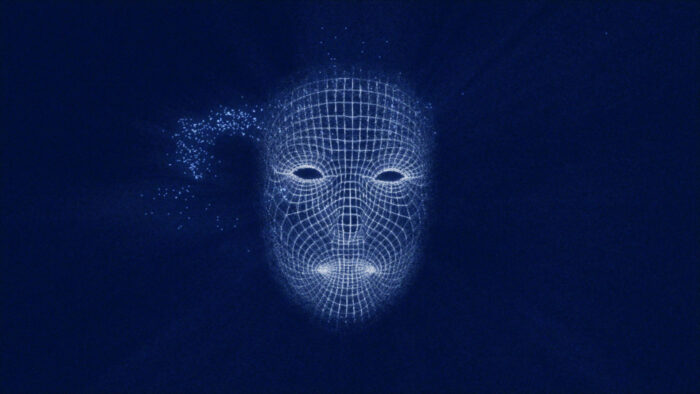
The internet has often functioned as a tool for self-discovery and sexual affirmation. Across the program a recurring thread is the role of images in shaping identity. What emerges from these films about the relationship between images and the construction of the self?
Images play a central role in the construction of the self within queer communities, and it has not always been easy to find authentic role models in traditional media with whom one could identify and in whom one could recognize oneself. From this perspective, the internet offers access to a wide range of representations and self-representations, as well as the possibility of presenting oneself to others however one chooses. Hence my conviction that all online identities are, in a sense, queer identities, insofar as they provide alternatives to the normative identities of the offline world.
In films such as Homunculus by Bonheur Suprême and Guided Meditation by Desirée Alagna, the filmmakers engage with their own image and physicality through avatars, while in Things That Won’t Die by Manuela Gutiérrez Arrieta the director explores the internet’s potential as a personal archive through which to examine the formation of the self. In the opening film, Awake but Dreaming (ou l’hypnose opérée par Tumblr sur ma pauvre cervelle), Mathieu Morel invites us to consider how much our digital consumption—and, by extension, our consumption of images—reveals about us and comes to define us.
These films seem driven not only by a desire to interrogate existing imagery, but also by the urge to create new and alternative images capable of representing the self more fully.
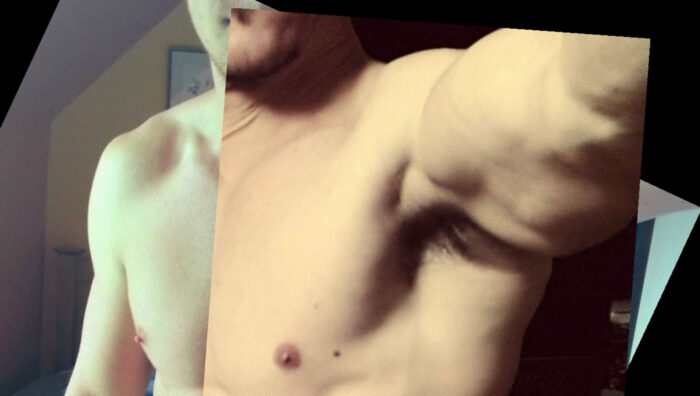
Another central theme is the body. Despite the apparent immateriality of cyberspace, queer bodies are constantly being framed, multiplied, performed, and shared through webcams, selfies, dating apps, and social media. How do the films in the program reflect on the ways queer bodies inhabit online spaces?
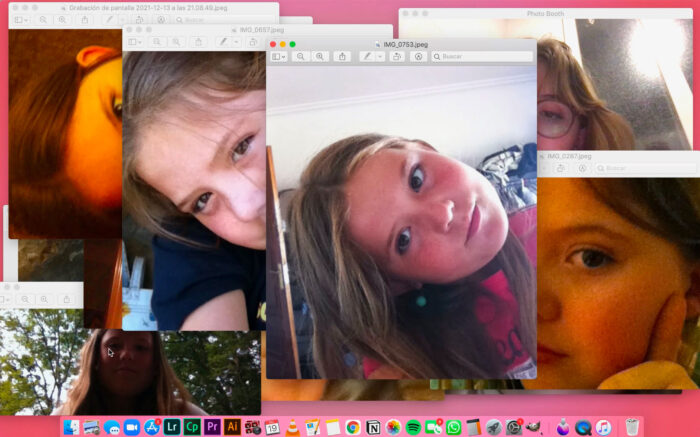
Bodies appear in many different forms throughout these films. Mathieu Morel sees the bodies of others as objects of desire mediated by a screen, whereas in Antonio Da Silva’s Pix, thousands of selfies shown in rapid succession give rise to a new, multifaceted, ever-changing body—almost a digital creature. A similar dynamic can be found in Homunculus, which explores the dissonance between self-representation and external perception, and in Guided Meditation, which suggests that the absence of a physical body—and the abstraction it enables—may be one of the internet’s defining qualities.
Things That Won’t Die, meanwhile, examines the exposure of minors’ bodies online. The final two films, The Alignment Problem by Guilherme Peters, Matias Mariani, Roberto Winter and New Gods by Loïc Hobi, move in the opposite direction, obscuring the human referent altogether and attempting to personify the internet itself.
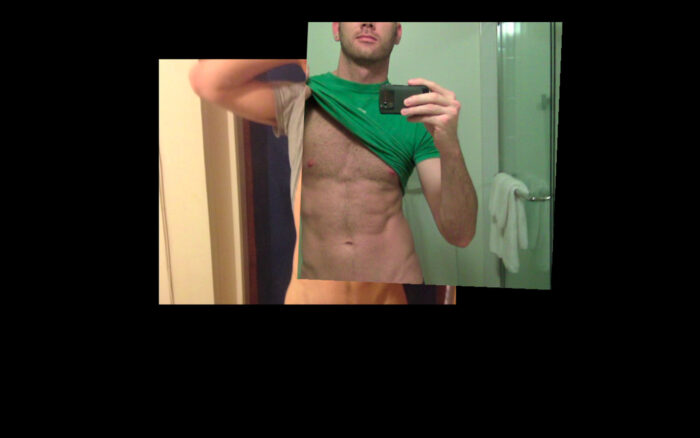
The program also touches on the instability of digital existence: the fragmentation and ephemerality of images, and the fluidity of online identities, which often act as distorted reflections of offline selves. How much of the self remains to be explored within this kind of elusive collective unconscious?
I don’t think there is a single answer to this question, and each of these films responds to it in a different way. Awake but Dreaming is the perfect opening to the programme because it poses the same question to the audience without offering an easy answer. I also believe that each filmmaker expresses a different degree of trust in the internet and its ability either to safeguard individual identities or to foster a broader collective discourse.
This is one of the reasons why the programme concludes with New Gods, a film that begins from the opposite premise: what would happen if the internet had the power to erase an identity forever? The programme therefore presents a wide range of possibilities, but the ways in which we can represent and explore the self online remain virtually limitless. I am convinced that this theme will continue to play a significant role in the cinema of the future.
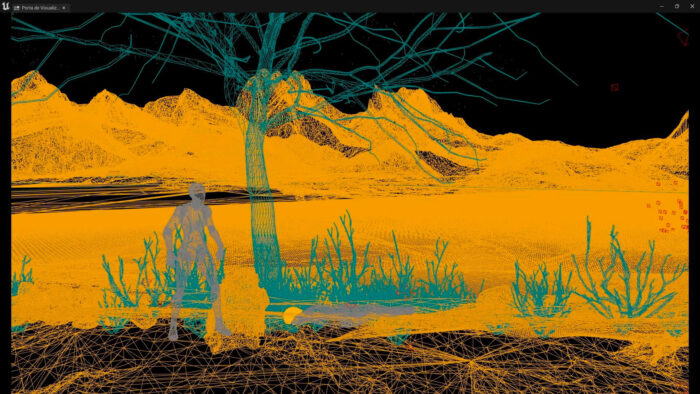
The selection seems to move from the intimate, almost diaristic perspective of the earlier works toward the more detached viewpoint of the later ones, where forms of intelligence beyond the human begin to emerge, overturning the notion of the internet as a user-created space. How does this shift relate to the idea of the internet as a space for freedom, experimentation, and self-exploration?
The internet has the potential to be a space of freedom and self-discovery, but it is also important to approach cyberspace with a critical mindset and reflect on its possible pitfalls. The day before the programme’s screening, the world’s leading search engine, Google, became fully AI-based, marking a significant shift in the future of the web. This is one reason I find it interesting that films such as The Alignment Problem and New Gods present the internet as an AI entity, focusing on the processes underlying technology in relation to humans and the very concept of identity, while never actually using AI in their creative process. This shift from more user-centred films to more critical explorations of technology and cyberspace was a key element in shaping the internal trajectory of the programme.
More broadly, how can cinema explore the rabbit hole of our digital lives without becoming trapped in a purely metalinguistic and self-referential exercise, while still remaining grounded in the material realities of the present?
What could be more contemporary than the internet? By now, the dynamics of the real world are fully embedded, and amplified by, the digital universe, making it is impossible to imagine a digital space entirely free from the socio-economic-political structures of reality. What I find particularly interesting in these films is how these dynamics manifest themselves in very different forms. I am also fascinated by the way images of the real world are always mediated by digital platforms, appearing as small glitches or fragmentary apparitions within a continuous stream of images.
In conclusion, as long as the cinematic portrayal of the internet remains grounded in an honest exploration of the identities that inhabit it—and vice versa—there will always be a fruitful and fascinating exchange between the real and the digital worlds, one that goes beyond a mere stylistic exercise and offers a meaningful perspective on the contemporary world.