
From March 8
Wishing for the end of the war on Iran
On this March 8, while Iran was under attack by Israel and the United States, I found myself reflecting on the long history of Iranian women’s resistance and the struggles they have carried forward for their rights. It was also a moment to wish for the end of war and for liberation from all patriarchal forces.
It is also a moment to retrace the actions of Iranian women along the road to freedom, a road that began long ago. Repeated and accumulated, these actions can blossom within society’s collective body of society, illuminating the path, as each step we take today is connected to the long road walked by the women before us. Many lost their lives for justice and freedom. What we see today—to quote The Shape of Time by George Kubler—is like the light of stars, which becomes visible only years after their death.
Over the past hundred years, Iran has experienced two major revolutions: the Constitutional Revolution of 1906 and the 1979 revolution against the monarchy. In both, women played a fundamental role, yet after victory they found themselves tragically betrayed. After the Constitutional Revolution, women were denied many rights, including those related to marriage, divorce, child custody, and the right to vote. Also after 1979, although women had been a crucial part of the revolution, they not only lost some of the rights they had gained with great effort under the patriarchal monarchy, but also faced the imposition of mandatory veiling (hijab).
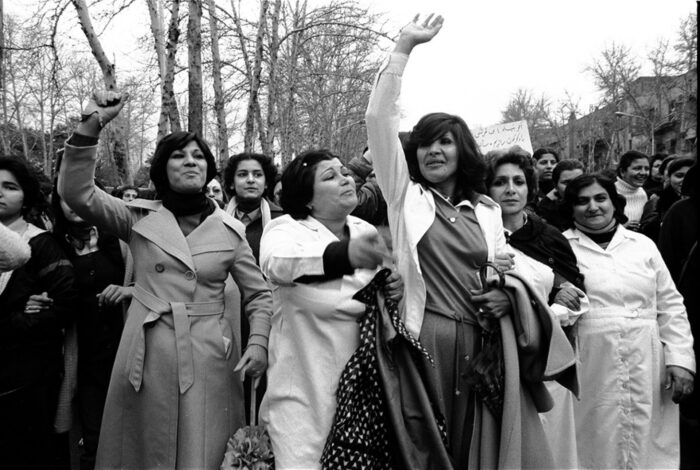
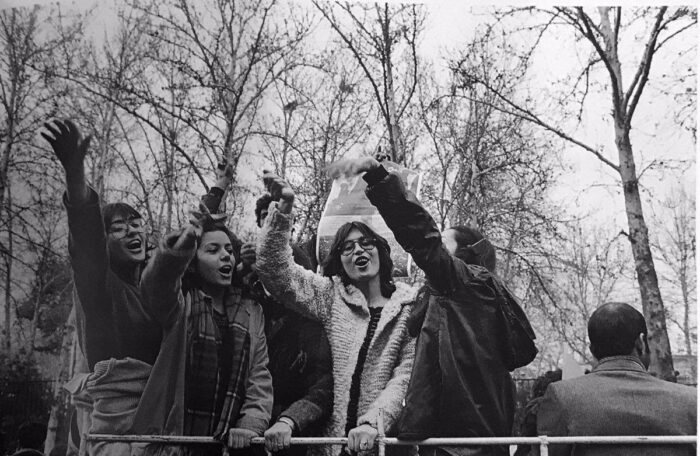
The first women’s protest against this new oppression took place on March 8, 1979, and became a historic and emblematic moment in contemporary Iranian history. Tens of thousands of women participated. Their main slogans were: “We did not make a revolution to go backwards”, and “At the dawn of freedom, we have no freedom.”
The protesters occupied the streets of Tehran for days. The government and religious leaders tried to calm the demonstrations, saying that there would be no force requiring hijab, and for a moment it seemed that the women had won. But in 1981, in the climate of emergency created by the Iran-Iraq war, a decree was introduced that made the veil mandatory in public spaces.
The war, which lasted from 1980 to 1988 and caused immense human and social devastation, also created the conditions for the consolidation of authoritarian power inside the country. Under the rhetoric of national unity and the threat of an external enemy, many forms of civil dissent were suppressed. As in many other historical contexts, war weakened social movements and pushed feminist and democratic struggles to the margins.
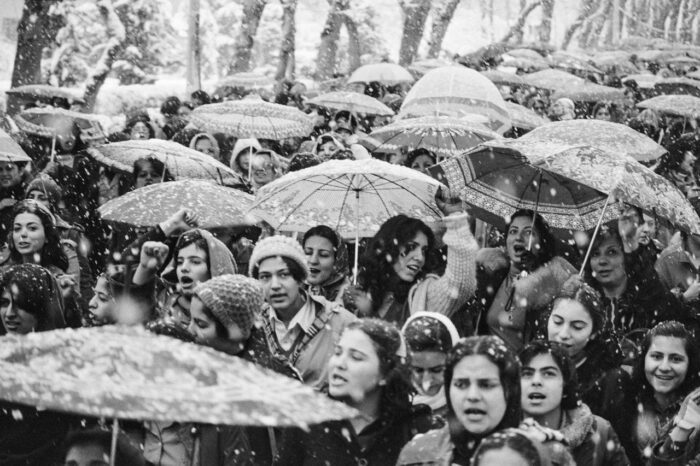
From that moment on, Iranian women continued to resist in different ways. On 21 February 1994, child psychiatrist, academic, and political activist affiliated with the Nation Party of Iran Homa Darabi (1940-1994), as a sign of protest after being dismissed from her position at the university, took off her hijab iin Tajrish square in Tehran and immolated herself by pouring petrol over her head; political activist and member of the Party of the Iranian Nation Parvaneh Eskandari (1939-1998) was assassinated with her husband in their home during the chain murders of Iran (1988-1998).
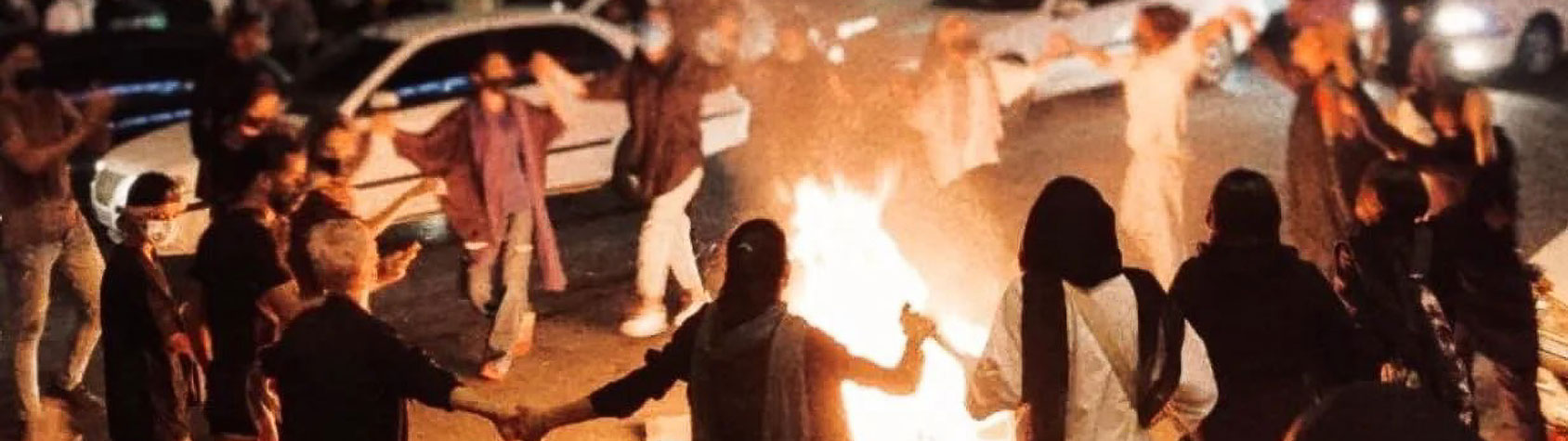
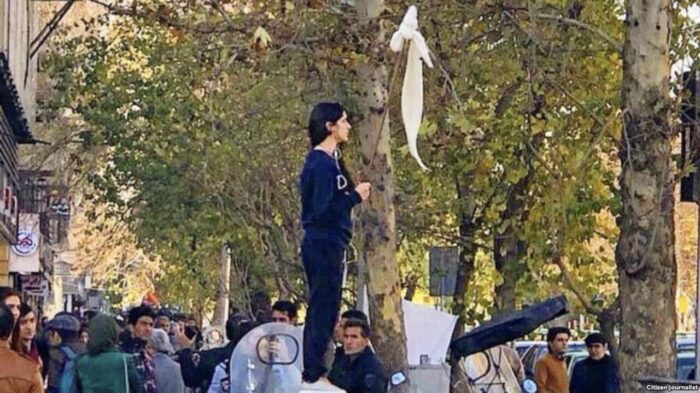
Years later, on 27 December 2017, human rights activist, protester, and women’s rights activist Vida Movahed (born 1985), removed her headscarf and stood on a utility box in Enghelab (Revolution) Street to protest against the mandatory hijab while waving her white headscarf tied to a stick. Although she was immediately arrested, her action became viral and other women later re-enacted her protest and posted photos of their actions on social media, creating the Girls of Enghelab protests. Artist and activist, daughter of Parvaneh and Dariush Forouhar, Parastou Forouhar (born 1962), who has insisted on non-violent resistance and bearing witness through her art for decades, or student activist and political prisoner Leila Hosseinzadeh (born 1991), who spent much of her youth in prison, come to my mind when she said:,“Hearing the horror of executions, I try to dance every day in prison and knit red scarves for the cold days of our resistance…” These are only some of the names from different generations in a long chain of resistance that leads to Jina’s movement in 2022 and its powerful slogan: Jin, Jiyan, Azadî.
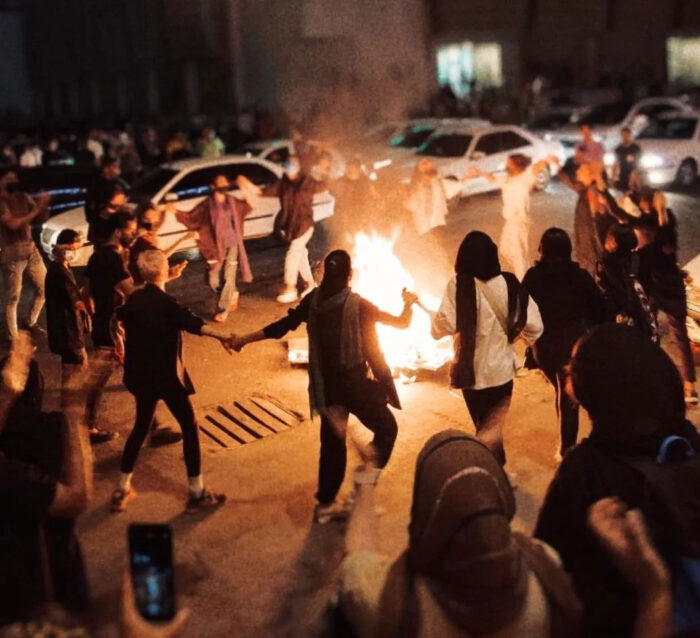
Jina’s movement inspired many comrades all around the world, from our neighbours, Afghan women under the tyranny of the Taliban who came to the streets, to Syrians, Kurds, and Turks, and even in Europe and the United States. Many scholars at that time wrote: “Listen to the voices of a feminist revolution in Iran.”
This social movement managed to eventually dismantle—at least in the major cities—the mandatory hijab, a huge conquest after years of civil disobedience and the loss of many lives. It was about freedom of choice and was often wrongly portrayed in the media as an Islamophobic demand, while in reality many Muslim women believe in wearing the hijab but do not want to impose it on others. Yet Western mainstream media barely reported this change and rarely showed this new image of Iranians in their cities, even though for decades they had portrayed them as living under the burqa.
On this March 8, my thoughts were with all sisters and brothers around the world, with the hope of stopping this imperialist war that once again risks destroying the resistance of the Iranian people and the civil struggles across the region. The Iranian people deserve to decide over their own destiny. We all know too well that bombs, before anything else, strike and weaken feminist struggles. For this reason, solidarity across borders remains essential: the struggles for freedom, justice, and dignity have never belonged to one nation alone, but to all those who refuse oppression and continue to resist together.