
Dominance Refracted
Empty Thrones and the Repetition of Power
The image of the throne has always been more than an object; It is designed to show power. Its height, symmetry, and decoration create distance between the ruler and everyone else. Through its form, authority becomes something we see, admire, and accept. In this way, the throne turns inequality into something that feels natural and even beautiful.
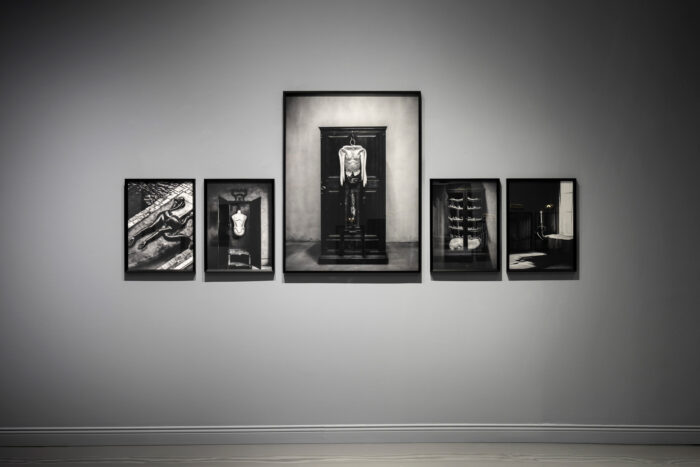
Triarchy is Can Akgümüş’s fourth solo exhibition. It brings together photographs and AI image-based works that look at three forces deeply connected to power: oppression, violence, and dominance. The exhibition is structured in three parts: The Thrones, The Body / The Act, and Black Swan, each exploring how power continues to shape bodies and images even when its symbols appear empty.
Throughout the exhibition, bodies appear fragmented, suspended, or replaced. They are shown in sparse interiors, beds, wardrobes, doorways, and places that feel intimate. Bright light washes out details, while darkness hides form. Power here does not appear as direct force, but as something quiet and internal, shaping how bodies are seen and how they behave.
As the viewer enters the exhibition and approaches the works, they step into an ambivalent environment. The term Triarchy, which refers to power sustained by three forces, turns ideas of sovereignty inward. It reveals how gender, authority, and visibility are shaped through social and cultural norms. The works do not dramatise domination, nor do they offer resolution. Instead, they remain in a quiet tension, where the body already appears shaped by expectations of gender, surveillance, and display. The empty thrones reflect the viewer back to themselves, turning looking into an act of self-confrontation.
The works in the exhibition do not dramatise domination. Instead, they linger in a quiet tension in which the body already appears shaped by norms of gender, surveillance, and display. The vacant thrones leave only the viewer’s reflection, transforming looking into self-confrontation. Power here is not something observed from a safe distance. It is reproduced through the viewer’s presence. In this way, the exhibition shows that power continues not through force alone, but through repetition. What is seen again and again becomes normalised.
Following Judith Butler, power does not shape the body from the outside. Instead, it works through repeated actions and norms that both limit and enable how bodies exist. In Triarchy, the recurring image of the throne presents domination not as a rare or exceptional force, but as something sustained over time through repetition. Power attracts as much as it controls. What remains is a queer presence of power, no longer fixed as rule or command, but open to being reimagined.
The gallery’s cold colour palette becomes part of the exhibition’s meaning. It creates a calm but isolating atmosphere, where grandeur gives way to solitude. The thrones placed in dim light heighten this contradiction. They appear monumental, yet abandoned.
The exhibition also reveals how these works fit into Akgümüş’s broader practice. Working at the intersection of image, memory, and history, he treats photography as a mutable material rather than a fixed document. His work begins with an interest in how visible reality is recorded and reproduced, then expands into an inquiry into the social and mnemonic cycles generated by this repetition. He often disrupts the photographic surface, through collage, exposure experiments, scanning, and other interventions, to test the limits of what an image can hold or reveal.
The works carry an internal spatial logic, a sequence of chambers the viewer moves through as if trespassing a private mythology of rule and ruin. In The Thrones: Rex Inflex (Failking, 2025), a single chair is exiled to a corner, its absence more sovereign than presence. A nearby window allows a thin slice of light to invade the darkness, an aperture through which authority collapses into vulnerability. As elsewhere in Akgümüş’s practice, these manipulations reflect how remembering and forgetting operate both privately and collectively.
The Thrones
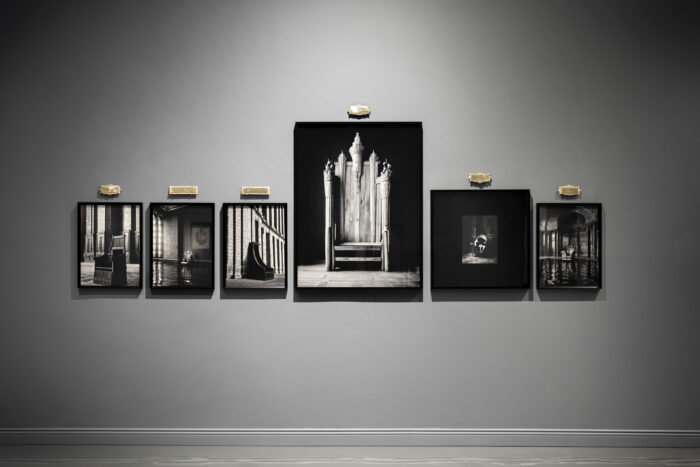
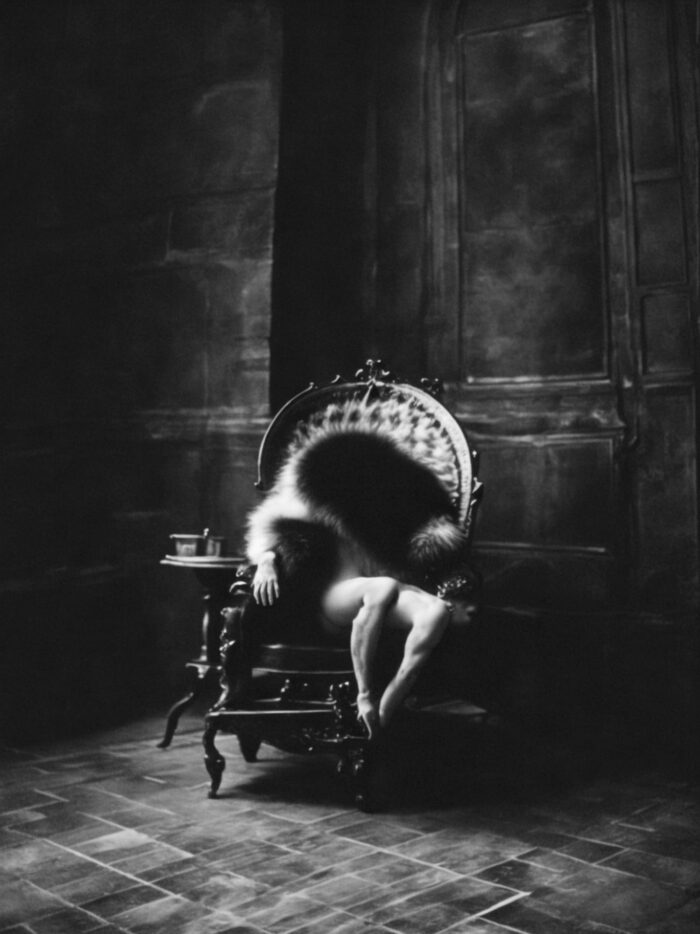
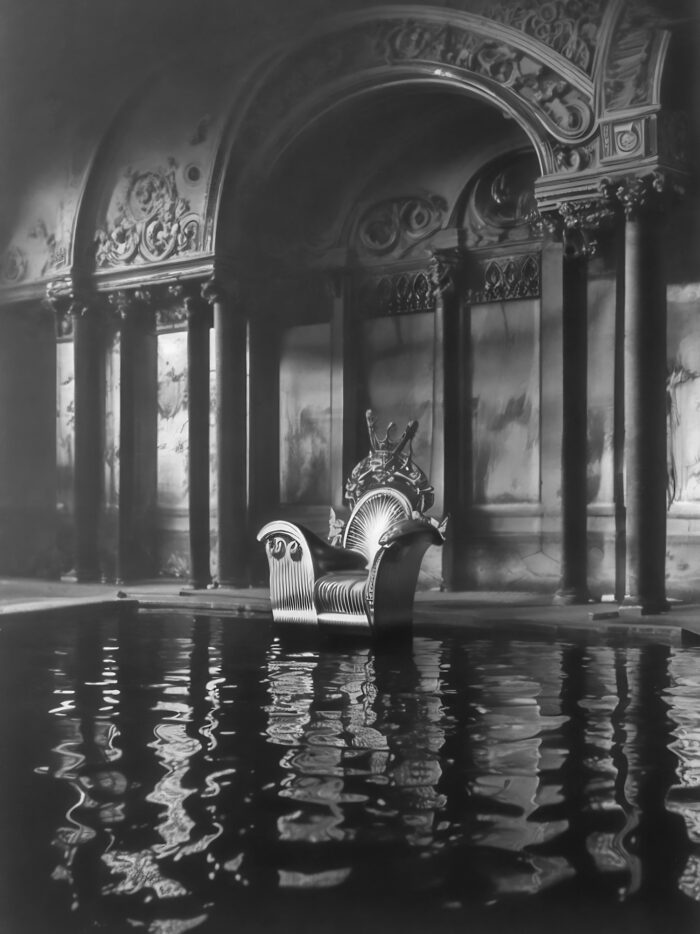
In The Thrones, power is staged as performance: Regina Avium (Birdqueen), Regina Solitudinis (Solitudequeen), Rex Tyrannidis (Tyrannyking). These thrones appear almost spectral, emptied of sovereigns. Their surfaces are worn and damaged, carrying traces of bodies that are no longer there. Absence becomes a form of presence.
At first glance, the viewer is drawn in by the beauty and distance of these images. The compositions are formal and controlled, with strong contrasts between light and shadow. Light moves carefully across surfaces, emphasising detail. Even as the thrones decay, they continue to suggest authority. This recalls Michel Foucault’s idea of power as something that circulates quietly through spaces, bodies, and everyday gestures.
Standing before Regina Libidinis (Lustqueen), desire becomes visible as a political force. The empty throne reflects the viewer’s own impulses—the wish to sit, to rule, to be seen. As Butler reminds us, the body is not simply given. It is shaped by the same norms that limit it. Akgümüş’s images hold this tension, showing both attraction and collapse, command and vulnerability.
The Body, The Act
Triarchy asks what remains of power when its symbols fracture, its rituals falter, and its body dissolves.
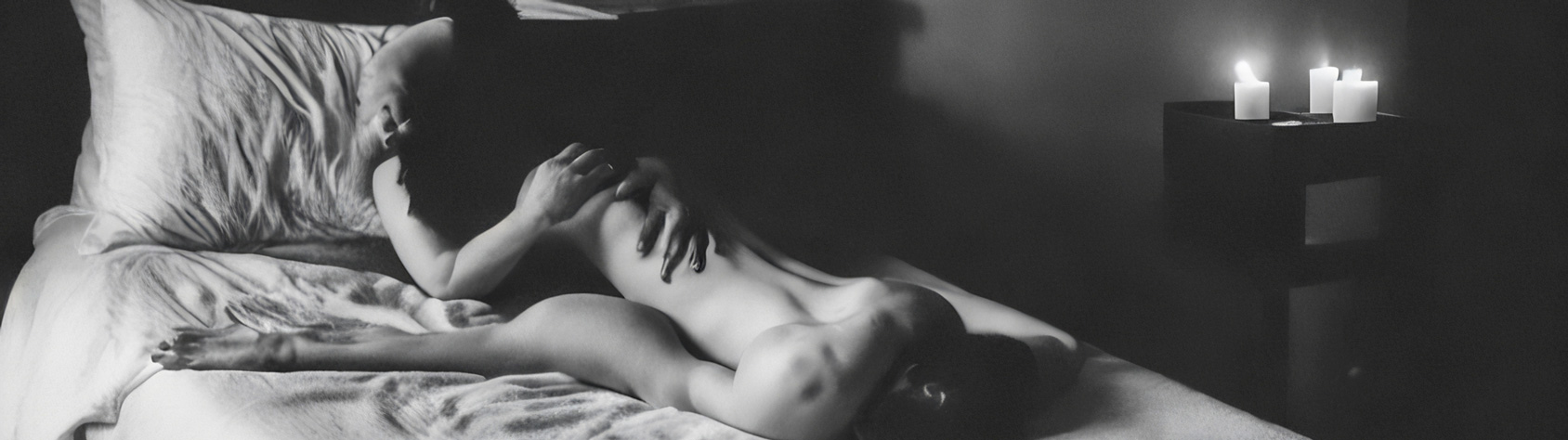
In The Body, The Act II (2025), the body moves between vulnerability and restraint. The figure is naked, crowned, and caught mid-breath. It refers to traditional images of sovereignty while exposing their fragility. These works point to how bodies are shaped by surveillance, belief systems, and historical pressure.
In The Body, The Act IV, parts of the body dissolve into bright overexposure. Light removes detail until only outlines and rhythm remain. This loss becomes productive. Absence turns into a form of expression, and disappearance becomes a quiet act of refusal.
If the thrones acknowledge their emptiness, this does not signal an ending. Instead, it opens space for something else. In their vacancy, a future becomes imaginable, one shaped less by command and more by new forms of relation. Akgümüş’s bodies remain partially visible, allowing incompletion itself to function as resistance.
The Black Swan
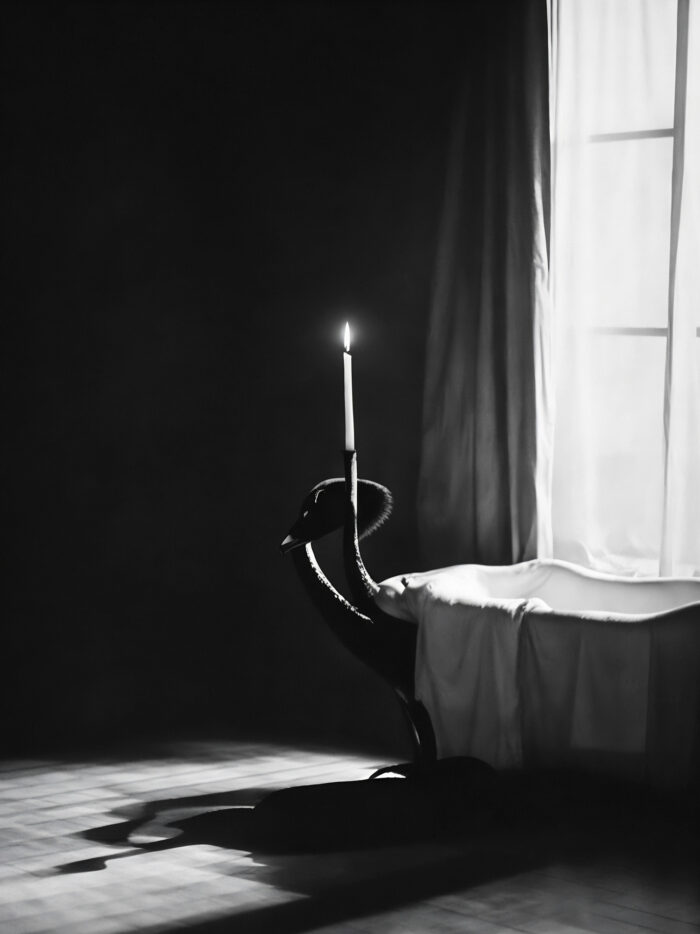
In Black Swan Series V, the creature’s form is only half-visible, emerging from darkness like an afterimage. Its plumage dissolves into the digital; its eye reflects the faint glint of an unseen screen. The work is in between two worlds, the organic and the algorithmic. It connects ancient myths of bodily transformation with contemporary forms of digital reproduction in the post-truth age.
Together, the throne, body, and swan form a structure for understanding power. The throne represents symbols and authority, the body reflects control over life itself, and the swan points to imagination and melancholy. The black feathers absorb light, challenging the idea of purity often linked to the white swan. Imperfection is embraced. Power appears not as stable or complete, but as something fractured and opaque. Artificial intelligence is used both as a tool and a disruption, drawing from large data sources and reshaping them into unstable, resistant images.
The Archive and the Trace
At the centre of Triarchy is the archive, not as a place of preservation, but as something damaged and incomplete. Akgümüş has ground down his own earlier photographic works and texts into pulp, turning personal history into material. The surfaces of the prints show the artist’s presence not as control, but as participation in undoing.
There is a sense of longing in these images. They refuse to accept the world as it is. Drawing on José Esteban Muñoz’s idea of “the not-yet,” they hold open the possibility of different futures. Power is still present, but it is unsettled and reshaped. Even in their quiet, monochrome appearance, the works imagine ways of living together that move away from hierarchy, built instead from fragments and small acts of endurance.
In works such as Buried and Void of Course, this process becomes physical. Pulped paper clings to the images like soil or residue. By breaking down his own photographs, Akgümüş turns memory into matter. Remembering and erasing become part of the same gesture. The grey tones and rough textures feel layered, like history settling over time.
Here, artificial intelligence unsettles photography’s claim to truth, much as the empty throne unsettles sovereignty. Through these processes, Akgümüş transforms autobiography into a form of resistance. The personal becomes political not through direct statements, but through the gradual fading of the self into the image. What remains is a trace, a quiet space where darkness continues to hold meaning. The exhibition’s original triad of oppression, violence, and fear slowly shifts into memory, resistance, and transformation.
Located in the heart of Istanbul, the exhibition engages viewers at a moment of social and political tension. Questions of visibility, power, and queer expression are increasingly difficult within both public debate and contemporary art. Triarchy was on view at Kairos Gallery from 18 October to 22 November 2025 as part of the 18th Istanbul Biennial’s parallel events program.