
Can We Call It Wild?
On the group exhibition “Wild Waters: Dams and Deltas After Modernity” at Framer Framed, Amsterdam
Employed to cool massive AI servers and data centres, irrigate industrial agriculture, sustain global shipping routes, and supply the everyday infrastructures of cities, water has become one of the most intensively managed resources on the planet. Few other environments have been more carefully politicized, engineered, diverted, monetized, legislated, and extracted than the world’s waterways. Can we still refer to a resource that is so structurally extracted as “wild”? As something untamed, untouched, or estranged from our civilization?
If water can still be called that, then wilderness cannot describe the absence of human intervention. It must instead refer to a rupture from the global logic of modernity. In other words, water can be bewildering if we see it as something local. With this, I think of Claudio Magris’ Danube (1989). A defense of the marginal and ephemeral. The book treats the Danube River as a landscape of overlapping histories and inconsistencies, impossible to universalize and display as a geopolitical fact. Magris’ river was an archive of local myths, languages, empires, and forgotten communities. All of which accumulate in a mismatch of local stories. An elegy to a lost subterranean world where meaning shifts according to the histories projected onto it. Far from the global clarity and satellite vision that we, “the citizens of the world,” are used to.
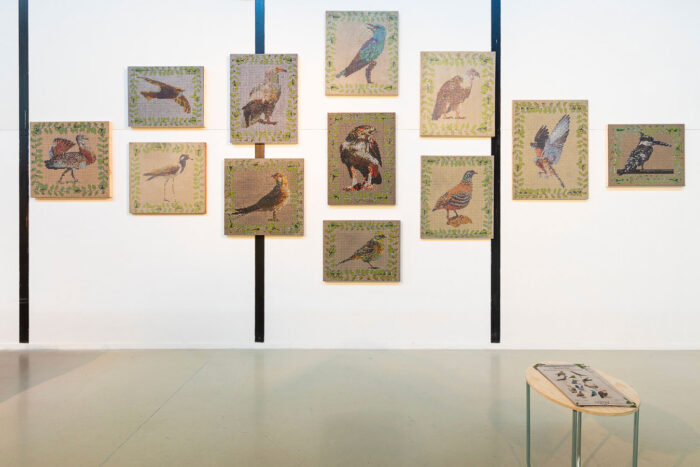
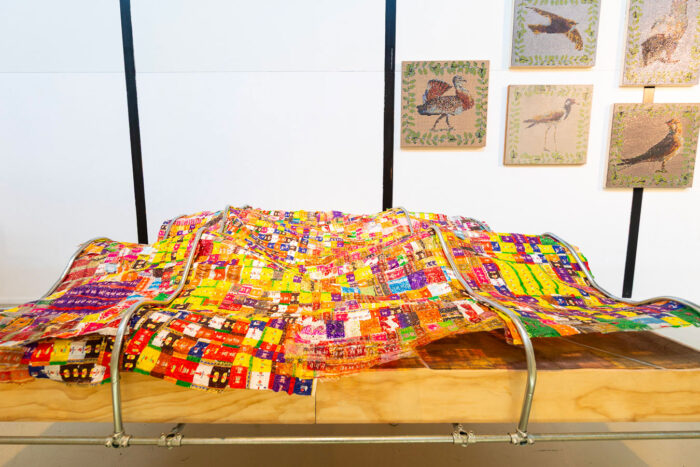
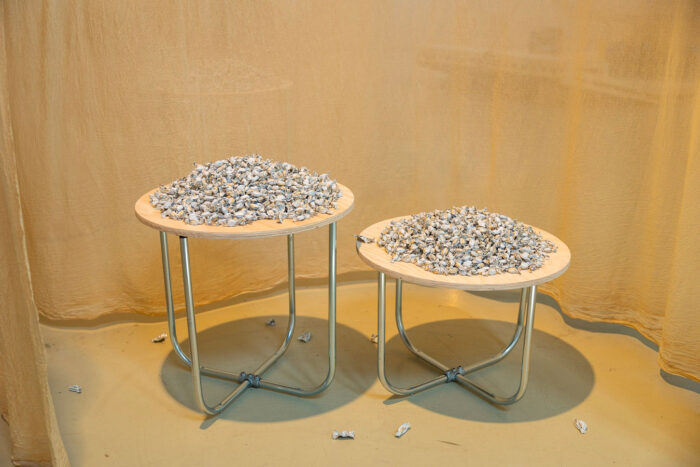
I could not help but think of Magris, of the lamentation over the bewilderingly local, when I first saw Wild Waters: Dams & Deltas After Modernity at Amsterdam’s Framer Framed. The works that followed complicated my understanding of this wilderness I had been questioning. Curated by Àngels Miralda, the show explores local histories and the precarities of water. The discussions range from Dutch water systems, colonial and post-colonial dam projects, water as settler-colonial control, delta ecologies, to resource extraction.
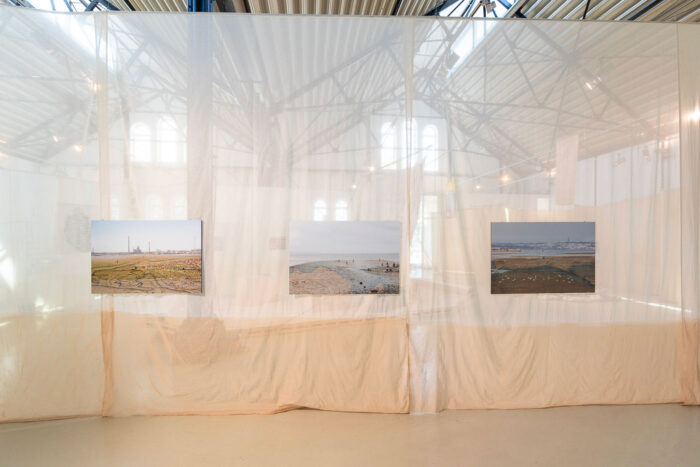
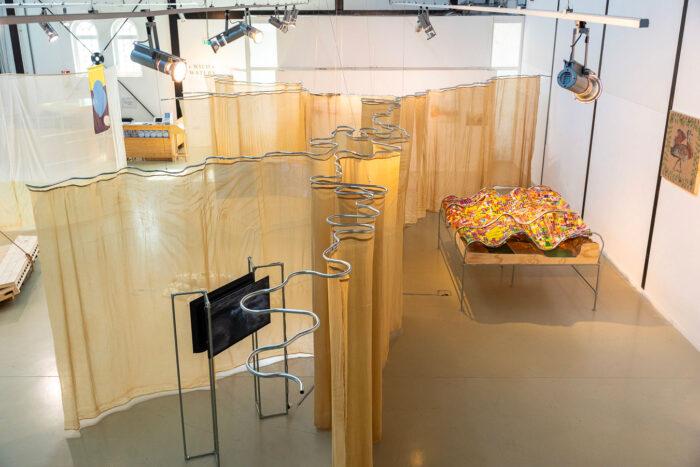
With its broad geographical focus, the exhibition reads as a survey of accounts from eleven artists. Covered here are the Netherlands, Egypt, Libya, Anatolia, Palestine, Bangladesh, Poland, Portugal, Spain, and Iran. The progression from one to another is rather seamless, without grand separations and seen through near-transparent fabric curtains that create subtle but interconnected sections throughout the space. A flow of real-life stories meanders through these breezy paths.
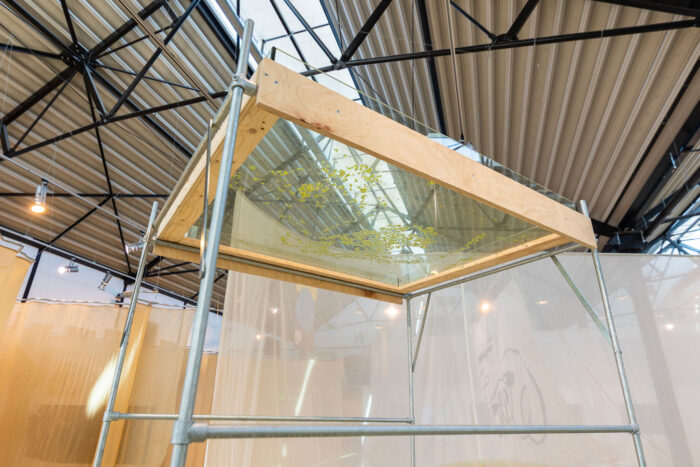
The first work you come across unsettles the familiar waters of the Netherlands—where scientific management and agricultural efficiency have long been celebrated as triumphs of modernity. Suzette Bousema’s Duckweed (2023) revisits these engineered landscapes through a pool of local canal water. Elevated above eye level, the pool shows an eerily gradual accumulation of harm beneath the water surface by conceptually shifting the human gaze to see the water’s surface from beneath. We see algal blooms that feed on fertiliser runoff, oxygen-starved canals, and the fragile lifeforms that struggle for survival in nearly anaerobic conditions.
This oversight highlights the level of control that humans have over water distribution, content, and management in the Netherlands, which continues in the next work. Giovanni Giaretta’s Scores Floating in Debris (2026) turns toward water as a sculpture. His filming of the Earth Simulations Laboratory of the Faculty of Geosciences at Utrecht University shows artificial wave patterns whose seductive movements are entangled with the complex and expensive machinery behind them. Whether intentional or not, this voyeurism carries an important discussion on the notion of “a laboratory” in general. I cannot help but notice science’s fetishization of natural phenomena, whose detached reality reveals a self-congratulatory impulse behind its heavy machinery. Contamination, observation, and occupation are modernity’s rule of conduct, but for the benefit of whom?
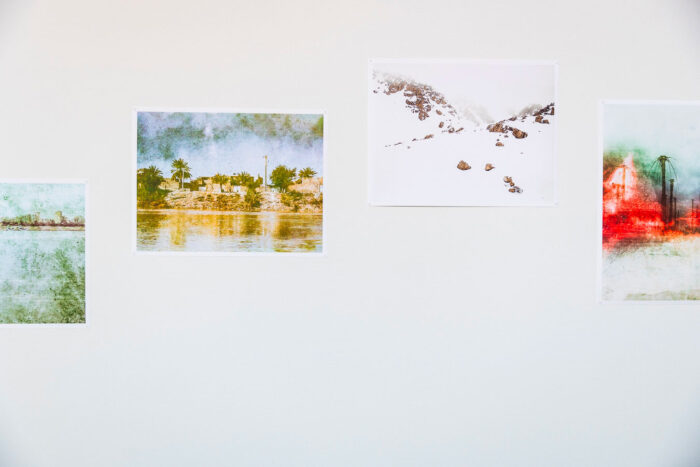
From this, the exhibition moves into the grand dams built across regions shaped by colonial and post‑colonial power. In Egypt, Libya, and Anatolia, dams rise as symbols of progress while simultaneously erasing ancient settlements, displacing communities, and destabilising entire ecosystems. These dams represent aging infrastructures that still preside over new contemporary realities unimaginable to their architects.
Dams, namely, have long served as humanity’s most imposing attempt to shape the behavior of water, transforming its rhythms and destinations into structured control. Abdo Zin Eldin documents the myths, rituals, and daily life of communities along the Nile Valley after the construction of the Aswan High Dam. Zin Eldin’s اروُّكاص (Sakkoura) (2026) marks the dam as a necessary evil. It is a consequence of politics that resulted in a wager for independent political survival in a cold war environment that no longer exists. In its stead comes a country with limited resources and a rapidly expanding population. The availability of water depends on a person’s access to resources that allow them to invest in localized electric pumps and beat out the poorer neighbor.
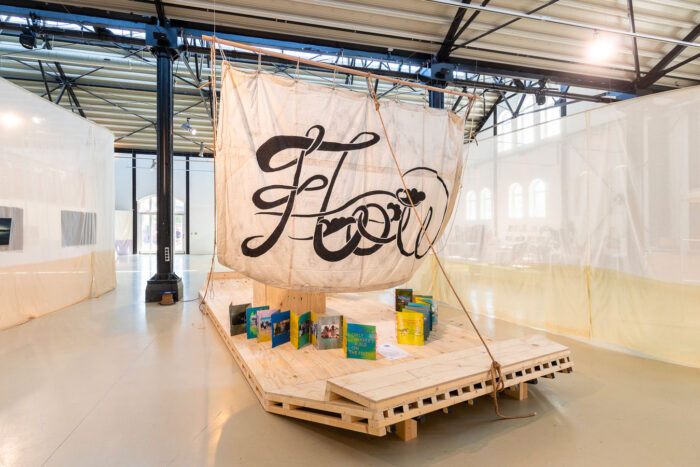
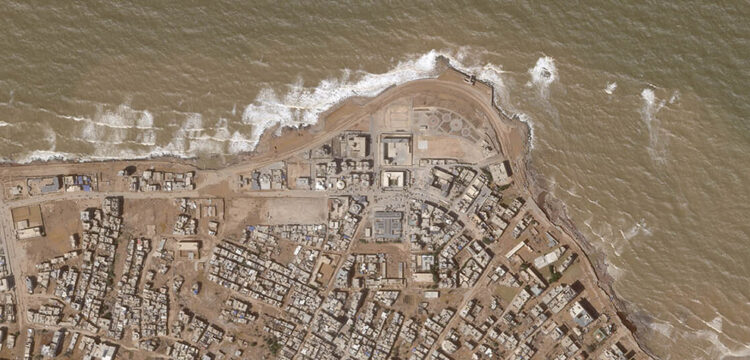
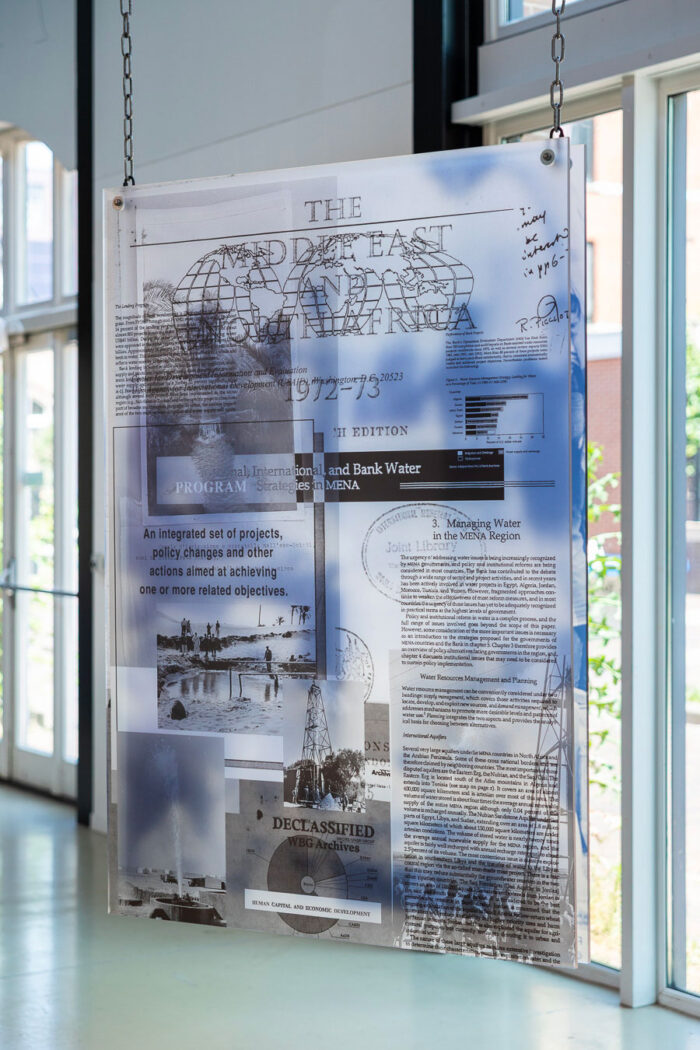
On the other hand, Adelita Husni-Bey’s Like a Flood – Composites (2026) exposes photo archives of Italian colonial engineering in Libya that created long-term ecological fragility. By pairing colonial archives with the rhetoric of today’s global institutions, she reveals a continuum of power in which colonial fantasies persist as developmental policy. The disastrous consequences of which were the collapse of the two multipurpose embankment dams in the 2023 Wadi Derna disaster.
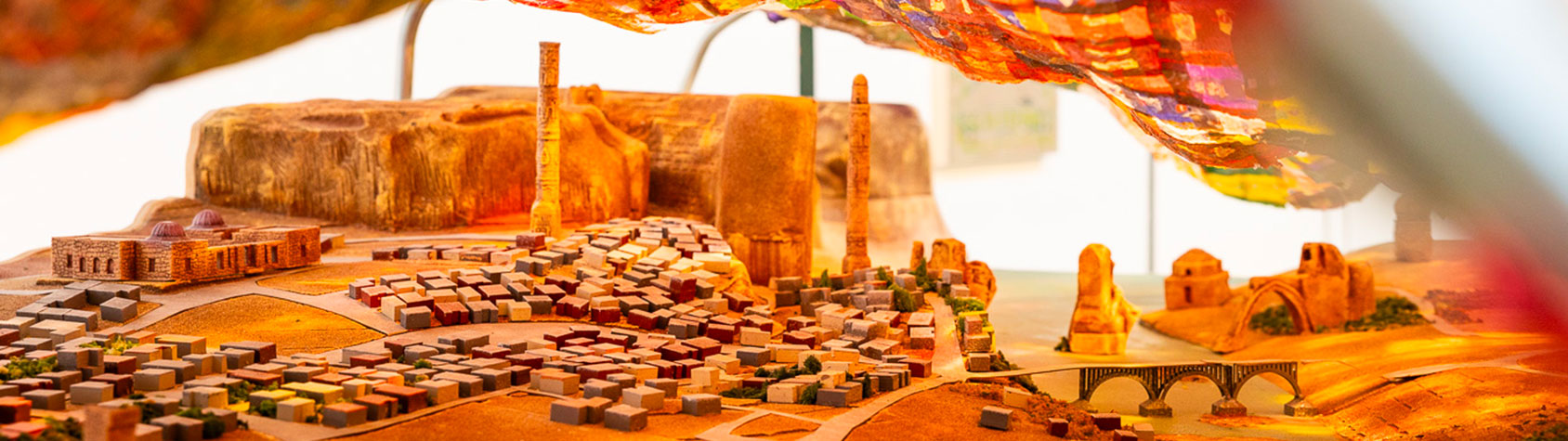
The five works by Suat Öğüt’s archive cultural, ecological, and political devastation produced by Turkey’s Southeast Anatolia Project, focusing on the submergence of Hasankeyf and the wider Tigris Basin under the Ilısu Dam. The multi-year research, video, sculpture, maquettes, and mosaics document a 12,000‑year-old settlement, hundreds of villages, archaeological sites, and fragile ecologies. All erased under the pretense of modernization.
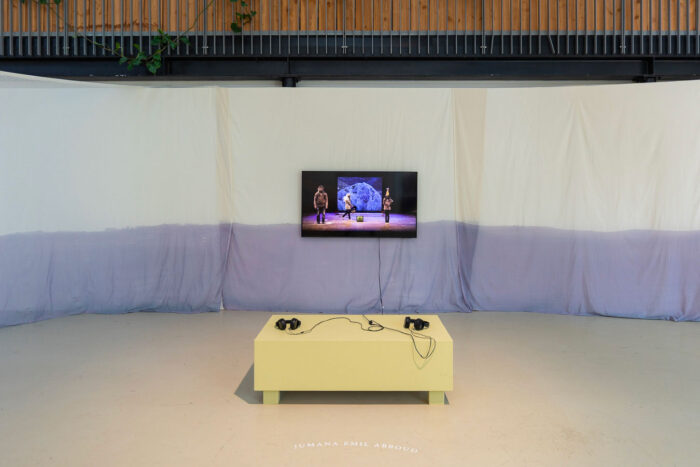
The abuse of water for settler-colonial purposes cannot be separated from Palestine. In a video work by Jumana Emil Abboud in which children act out folktales that emerge from springs, wells, and watering holes—demarcating Palestine as a land “from the river to the sea.”
In the subsequent section on mythology and contemporary deltas, the exhibition shapes a path from active projects in Polish rivers in the works of Ewa Ciepelewska and Agnieszka Brzezanska, to monsoon-flooded Bangladeshi villages in the work of Ashfika Rahman, and through the Iberian deltas of the Ebro and Tajo rivers in the works of Anna Moreno and Eunice Pais. The exhibition ends in the river Karun with a medium format photographic series by Morteza Soorani, whose waters empty into the Persian Gulf, an area currently under siege in the endless pursuit of energy resources.
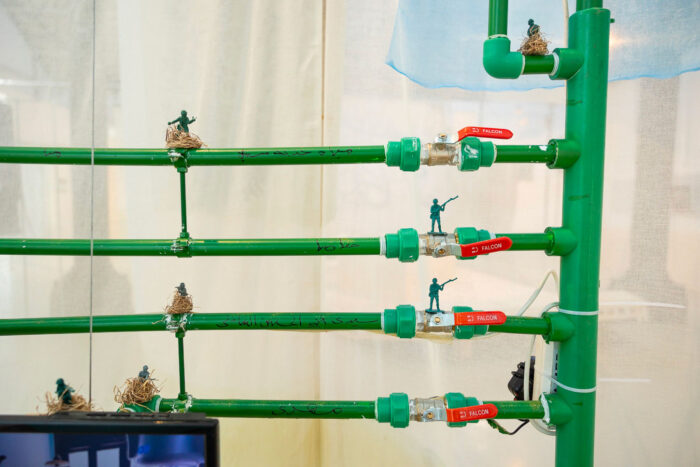
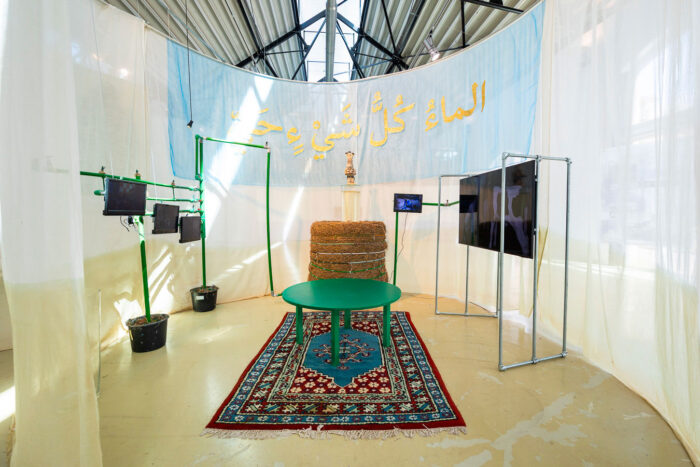
The answer to my initial question had certainly become more complicated. It is not a simple yes-or-no ordeal whether there is a local, “wild,” world left out there. Magris’ Danube was never wild because it was contained within the local stories, but because it was a repository with no discernment between one story and another; a confluence of peripheral and forgotten histories.
To live after modernity, as Wild Waters implies, also means to live with the traumas of our communities and environments. There is no return to an untouched past, simply because such a world can never truly be separate from the past it inherited. The exhibition poses its stakes on a global scale. Although the argument, compellingly enough, is the exact opposite. The paradox works here since the exhibition’s globality serves as an argument against it. The vast geographies covered in the exhibition pose the same irreducibility as that captured by Magris. It creates a magically untamed planetary multiplicity of local histories.