
Birds Reworks
Spectromorphosis, textures, and themed refractions in the four new tracks from Sam Sala’s new limited-edition release
In November 2025, Sam Sala’s debut solo album, Diathomee, introduced a radical investigation into sonic materiality on these pages. A few months later, the Italian producer and percussionist’s trajectory shifts from lacustrine archaeology to a gritty, unyielding urban ecology with Birds Reworks. The new release materializes as an ultra-limited vinyl art edition of only 20 hand-finished copies, each featuring unique, one-off artwork created using spray paint and mixed techniques.
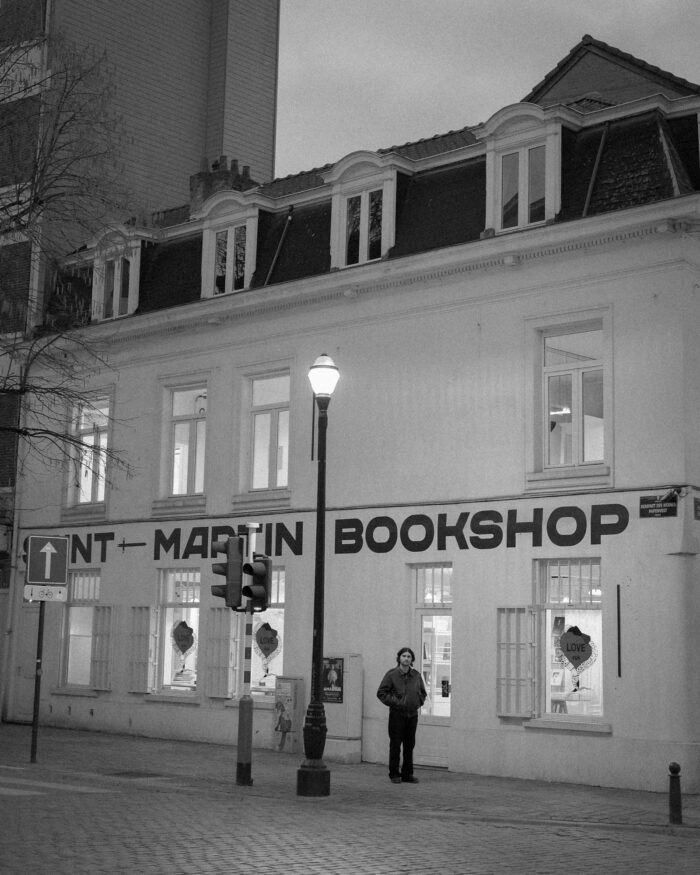
This operation stems from a precise geographical and disciplinary cross-pollination with Brussels’ Saint-Martin Bookshop. Highly regarded as an independent cultural reference point, the venue is a sanctuary for rare publications, art books, and underground printed matter. With Birds Reworks, the Brussels-based platform makes its official debut into musical production, effectively expanding its long-standing engagement with visual culture into sound-based practices.
At the core of the EP is a molecular dissection of Birds from Diathomee, the track is isolated and re-segmented into four distinct reworks, acting as thresholds of acoustic decay and spectral transmutation.
It’s Magic opens with panning noise and glitches. A brief quote of the original version of Birds then interplays with cavernous sub-frequencies layered with various atmospheric interventions.
Birds Fly is its counterpart, grounded in an industrial rhythm that intertwines with spectral sparks. The drone and topline then form a pulsating groove until the very end of the track.
They Disappear opens on a similar note, but this time with an already formed pattern and a distorted, bit-reduced stab line as a guiding melody, followed by a mid-range complementary line.
Or Mysteriously Die is once more oriented in the higher region of the spectrum: the field recordings of birds tie together a metallic rhythmical pattern processed with granular reverberations.
Birds Reworks expands on the palette of Sala’s previous release with a more aggressive touch and growling post-production, narrating a more precise and concise landscape on a sonic level by reducing the “melodic” gestures to small themes. The artwork well represents the minimalistic approach by maximizing the texture of the bichromatic color palette. The true nature of the operation is made evident through the dialogue, these reworks, and the physical format. Trying to listen to this new batch from Sala more as media archaeology rather than fully formed compositions helped me in getting into a sound that is simultaneously fragile and forceful, precise and chaotic.
The Black Sign: Aldo Tambellini and Urban Avian Invasions
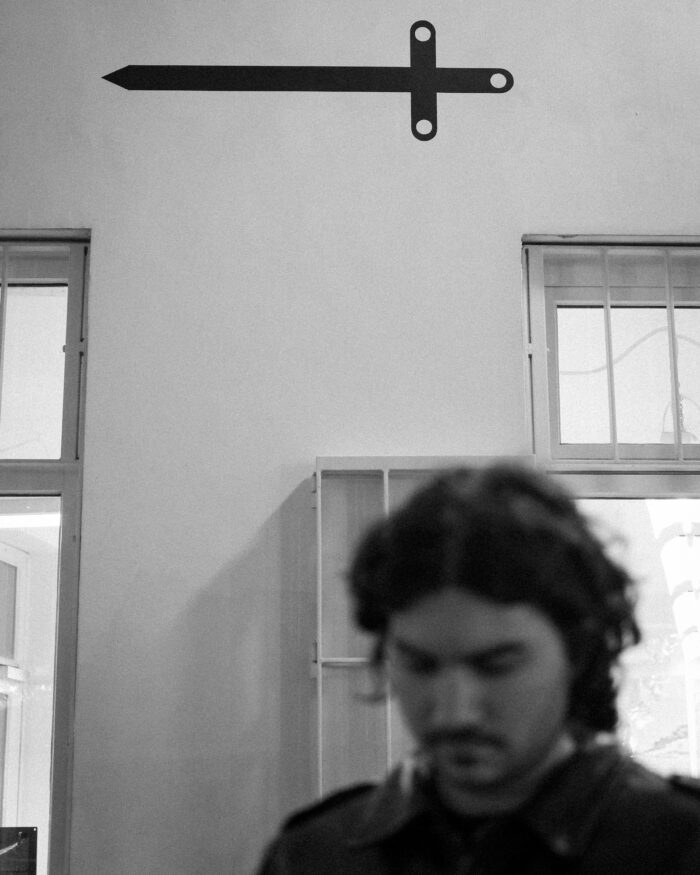
The conceptual backbone of the EP lies in the friction between phoné, graphic signs, and the legacy of the historical avant-garde. Developed with the official acknowledgment of the Aldo Tambellini Art Foundation. The four track titles are directly derived from Listen – Selected Poems 1946–2016, a publication that heavily informs Sala’s creative process. To this theoretical layer, a raw environmental element is playing a key role, tied directly to Sala’s relocation to Belgium. The creative process was violently disrupted and inspired by the massive presence of crows in the city of Brussels—aggressive, loud, and impossible to ignore. These avian encounters became the project’s visual and conceptual framework. This obsession did not only dictate the chaotic, spray-painted artwork of the 20 physical records, but also birthed an accompanying photographic zine documenting the city’s crows. Conceived as a tangible extension of the sonic release, the zine is designed to materialize the friction between urban space and animal behavior.
Lorenzo Saini: How did the physical impact of relocating to Brussels translate from a psychological shock into a specific sonic and timbral choice? How do you merge the chaotic, unpredictable behavior of urban animals like the crows populating the city with the meticulous control you can have in DAWs’ and hardware’s modern grid based sequencers?
Sam Sala: Brussels is a city I’ve known for eight years, so the move wasn’t a shock in the traditional sense—but settling there permanently brought a new kind of attention. The crows were a constant presence: loud, unpredictable, weirdly intelligent. That combination of harshness and strange beauty ended up being the emotional core of the project. The crow became almost a compositional model. Their calls have internal logic but it’s opaque, emergent—you can’t predict the next move, and yet there’s nothing random about it. That mirrored the way I naturally work: my creative process is very intuitive, gesture-based, driven by impulse rather than planning. So instead of fighting that tendency, I leaned into it fully. In BIRDS REWORKS there’s no BPM, no grid—or rather, the grid exists only as an internal listening reference, something felt rather than imposed. The structure is there, but it breathes, it drifts.
Giving physical format to a recording is obviously a strong sign of actual presence for volatile media like sound. In a completely digitalized music market, what does the act of hand-painting 20 unique covers represent for you? Is it an act of resistance, or media archaeology?
Neither, really—or maybe both, without the ideology. It comes from the same place as the music itself: my process is deeply physical, instinctive, material. Working with my hands isn’t a statement against the digital market, it’s just the only approach that feels coherent with how I make things. Seriality would contradict everything the project is about.
I think of myself a bit like a gardener. A gardener has methods, tools, knowledge—but the work is always hands-on, always direct, and every cut is specific to that plant, that moment. You can’t apply the same gesture twice and expect the same result. Hand-painting twenty covers works the same way: twenty different gestures, twenty different moments of presence. No two are the same because I genuinely can’t repeat myself—and I wouldn’t want to. The vinyl becomes an extension of that same interior exploration: something that happened once, left a mark, and can’t be undone.
If there’s resistance in it, it’s quiet. It’s not about refusing digital—I work with DAWs, I embrace technology. It’s more about refusing the logic of infinite reproduction when what you’re trying to express is fundamentally singular.
How do you technically translate Tambellini’s experimental cinema into modern sound-processing techniques? Is there any musical processing that can directly translate the so-called “electro-optical violence/ environment”? Have you composed any of these tracks while watching his movies as if you were live scoring them?
At this stage, Tambellini is above all an inspirational figure—and the connection is less about directly translating his visual language into specific processing techniques, and more about sharing a fundamental approach. The hands-on, uncompromising, deeply physical way he worked resonates strongly with how I think about sound. The track titles themselves are fragments extracted from one of his poems—that felt like the most honest form of tribute I could offer at this stage. The idea of a proper live scoring or a systematic sonic translation of his films is something I haven’t explored yet, but it’s absolutely a direction that feels natural.
When you dissect a pre-existing track like Birds, is there an exact moment a sound should dissolve into noise, do you try to maintain the original core of the sound or are you in search of extreme digital artefacts? Have you created any particular effect chain to use throughout the EP?
The process was quite organic. It started as a single thirty-minute piece—a long, continuous arc—and only later found its shape as four distinct acts. That division wasn’t arbitrary: each act contains fragments, bites of the original Birds recording, and the work was really about isolating those moments, letting them breathe and hit differently when separated from the whole.
There wasn’t a precise threshold for when a sound should dissolve into noise—it was more about intention than technique. From the very beginning I knew I wanted to go somewhere harder, more direct, more aggressive. The sonic palette reflects that: cutting textures, a monolithic heaviness that borrows from doom and sludge, layered with dark ambient and corrosive elements. Eerie atmospheres that don’t resolve gently but push through to something more abrasive. So the original core of Birds is still there—but buried, recontextualized, almost unrecognizable at times. Which felt right.
Since sampling is quite central in the process of “re-arranging” a track, and each and any sampler creates slightly different computational results: which sampler did you use?
I started from the original Birds files, listening through and selecting the moments I wanted to emphasize—fragments that already had something interesting in them. From those slices, the process began: stretching, resampling, and resampling again—layering that until the source became something else entirely. It’s almost like a physical act of erosion.
The sampler I used was Simpler in Ableton—nothing exotic. And as with the rest of the project, nothing is on a grid, nothing is locked to a BPM. That’s a deliberate choice—gestural, instinctive, the opposite of technical precision. The character doesn’t come from the instrument, it comes from the repetition of the gesture. Each pass through the resampling process adds its own artifacts, its own degradation. That accumulation is the texture.
Credits
Written + Produced by Sam Sala
Co-Produced by Saint-Martin Bookshop (Brussels, Belgium)
Artistic Mentor: Matteo Gualeni (Missing Ear)
Mixed and mastered by C.O.S.A. (Milan, Italy)
Creative Direction by Ten Years Later Studio
Hand-painted artworks by Sam Sala
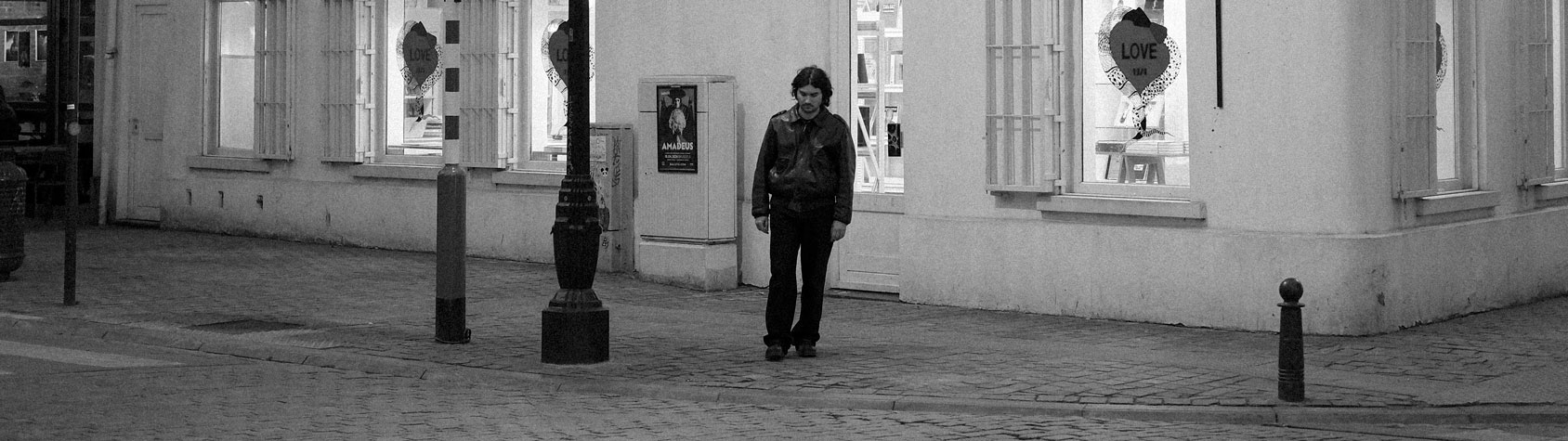
Portraits by Io Hendrickx
Management by Sara Castiglioni
©️ Courtesy of the Aldo Tambellini Art Foundation