
Big, Green, Inflated
What’s big, green, and incredibly valuable?
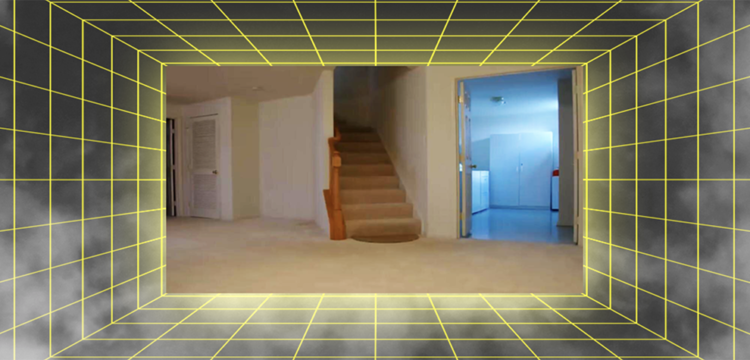
Alex Da Corte’s Kermit the Frog, Even first crossed my purview when promotional materials for Art Basel Paris 2025 began to circulate. The visuals showed the piece in the bright white galleries of the Fridericianum in Kassel, where it was presented in 2024. Henchmen dressed in humanoid Kermit “flesh” propped up the balloon’s body with vertical sticks—a meticulous recreation of the 1991 Macy’s Thanksgiving Day Parade Kermit float to which the work refers.
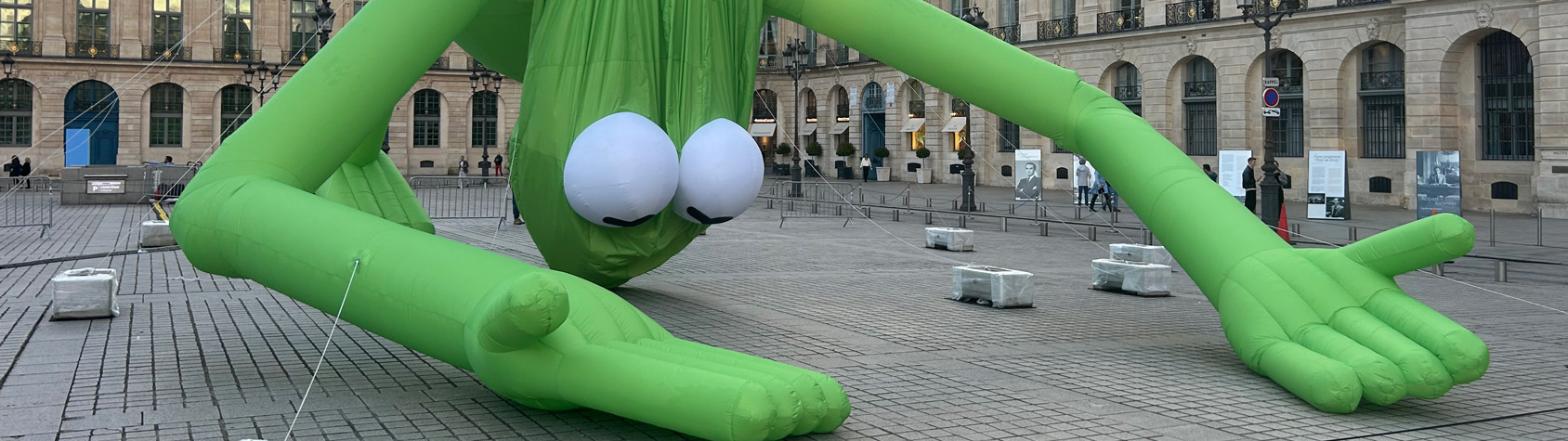
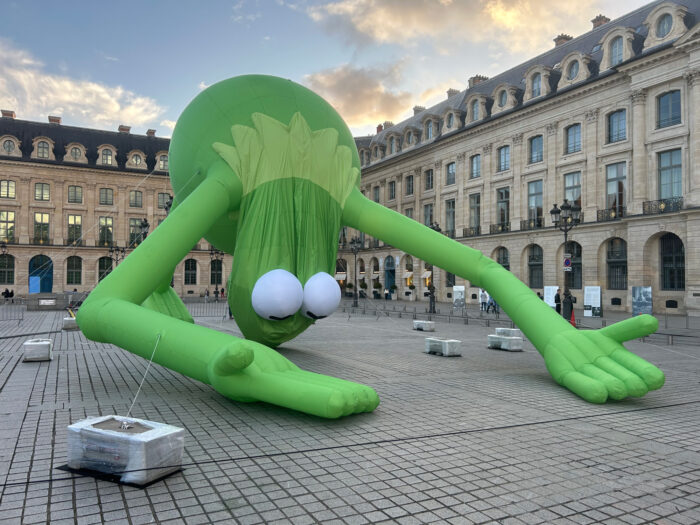
In Da Corte’s version, Kermit expands until he appears to occupy the entire room’s volume: no more, no less. Press images emphasized this absurdity in form but also concealed a detail that became unmistakable once the frog reappeared in Paris. When the sculpture was installed at nearly 20 meters tall in the Place Vendôme for Art Basel, onlookers quickly noticed what the press shots had discreetly omitted: Da Corte’s Kermit has an asshole, pointed skyward, positioned in one of Paris’s most iconic public squares.
The feature is easily rationalized as an inflation point, though it inevitably evokes Paul McCarthy’s Tree, which appeared in the same plaza nearly a decade earlier in 2014. McCarthy’s controversial anal-plug-as-Christmas-tree was an almost too-perfect counterpoint: big, green, inflated, and defiantly out of place in the Place Vendôme.
In 2014, Tree was first presented as a Christmas tree and second—far more obviously—as a butt plug, a reading McCarthy openly affirmed. The sculpture’s massive, green innuendo scandalized Paris; vigilantes eventually severed its air supply. Within days, the city awoke to find the work fully deflated, a collapsed carcass like a massive green puddle, in the square. McCarthy chose not to reinflate it. Butt-plug sales in Paris reportedly spiked during the controversy—proof, perhaps, that shock attracts the eye and the wallet alike. It’s tempting to dismiss Tree as gauche provocation, an inflatable that deserved the fate it met. Yet Da Corte’s Kermit is equally ripe for challenge.
At least McCarthy’s vulgarity points somewhere: toward shame, sex, taboo, the body, and the limits of public acceptability. Kermit’s vulgarity, by contrast, emerges from a tangled relationship between market logic and a Dadaist frame.
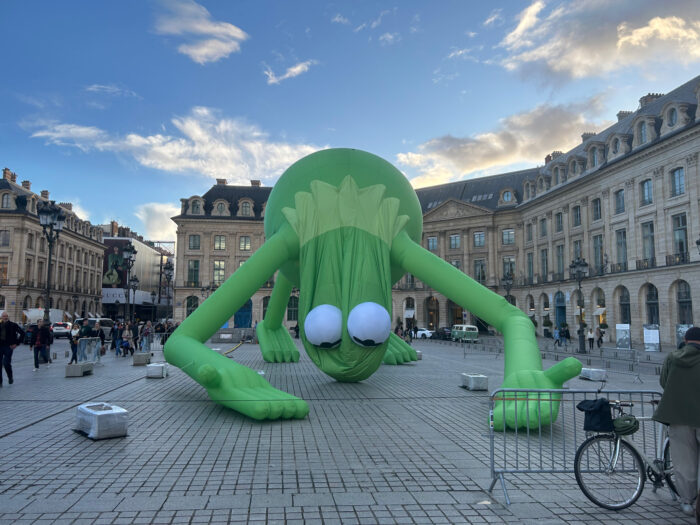
Kermit the Frog, Even has been on tour for years. Premiered at Art Basel Cities in Buenos Aires in 2018, then shown in Kassel, and now in Paris, it revisits the moment in 1991 when the Kermit parade balloon malfunctioned and its head burst due to a tear. With his green head held low, the handlers dragged it onward. In an interview with Art Basel, Da Corte remarked on the peculiar melancholy of the event: “What’s interesting—and necessary—in the work is the performers offering a reminder of the charade: their only task is to keep smiling and keep it moving. You don’t know who’ll be watching, but we can’t show on our faces the terror in our minds if we know the balloon is failing.” The sadness of that image registers—but the sadness alone cannot bear the entire interpretive weight of the work.
Early in 1991, the heirs of Muppets creator Jim Henson had sued Disney over its right to use Kermit and friends in their advertising, entertainment materials, and one 3D movie that already had millions invested in it. It even triggered a public apology from Disney in which the Los Angeles Times remarks, “It isn’t clear from the language whether Disney was apologizing for its unlicensed use of the Muppets or for its portrayal of Henson’s five children as greedy heirs trying to capitalize on their father’s legacy. A Disney spokesman declined to elaborate.” Nevertheless, when Disney acquired the rights to the muppets in 2004, it came at a $75 million price tag.
These figures underscore the central fact: Kermit, Miss Piggy, Gonzo, and their Muppet friends are economically powerful precisely because their familiarity commands attention. Were the Muppets IP valued today—impossible under Disney’s current ownership—the figure would almost certainly exceed its early-2000s price many times over.
So within the context of Art Basel, where it seems that everything—even public art—can and should be calibrated for circulation and eventual sale, Da Corte’s Kermit becomes a perfect metaphor. It is a sculpture that is immediately legible to the frequenters of an Art Basel fair. But that instant, family-friendly recognizability feels less like a provocation and more a ploy for eyes in an attention economy. Here is a replication of Kermit, funny childhood friend, lover of Miss Piggy, the image of which can, if under the right circumstances, can easily be evaluated and assessed for an approximate market value.
McCarthy’s Tree, by contrast, resists that ease. Acting like a sculptural Rubin vase, it can at once be a butt plug, yet also an abstracted evergreen. Interpretation slides freely between forms. It recalls Magritte’s ceci n’est pas une pipe and, more pointedly within this realm of genital fixation, Duchamp’s Fountain. Tree draws from Dada’s legacy: brandless, smooth, readymade, lodged in public space like a dare while McCarthy stands back, letting the reaction become the real performance.
Da Corte’s title, nodding to Duchamp’s The Bride Stripped Bare by Her Bachelors, Even, forces Kermit within the Dadaist frame. Yet that gesture falters when confronted with the corporate saturation of the character itself and the commercial ecosystem surrounding the commission. Dada emerged from the senselessness of World War I, a movement born of cataclysm and disillusionment. In its publications, the manicule—that pointing hand—functioned as accusation, urgency. Kermit, despite its Dadaist citation, lacks that pointedness. It gestures toward melancholy but points nowhere.
Whenever a contemporary artist invokes Dada—tossing a quotidian object into an art context and calling it absurd—the same question arises: Is the image being invoked because its message must circulate in a moment of political or existential stress? Or is it being put on blast because it’s easily digestible, shock-inducing, and primed for virality? These are not the same ambition, though they can share an aesthetic shell.
In their execution, each sculpture reveals the cultural conditions that make it legible. Tree, although definitely culpable of using the risqué as a shock tactic, exposed collective anxieties about sexuality, public space, and propriety. Kermit exposes the appetite for familiarity, nostalgia, and market-friendly spectacle. Both are referential works, but they occupy different spheres: one probes societal nerves, the other reflects commercial imperatives.
In the days leading up to Art Basel, images circulated of the frog’s deflated form—a bright green skin collapsed on the ground. In that flat mass, missing its third dimension, it was hard not to think of McCarthy’s Tree rising again. But when Kermit finally inflated into view, the disappointment was immediate: the image was simply too easy. It was tame, familiar. It was fun—but what if that’s all it is? Public art that leans too heavily on the family-friendly drifts uncomfortably close to marketing, not artistic urgency.
Perhaps if something big and green were destined to be “popped” in the Place Vendôme, maybe it shouldn’t have been Tree.