
Armed With Their Truth
Michael Armitage’s textural stitches alongside Amar Kanwar’s cinematic tribunal
From 29 March 2026 to 10 January 2027, Palazzo Grassi presents Michael Armitage The Promise of Change in dialogue with Co-Travellersby Amar Kanwar. The exhibition is curated by Jean-Marie Gallais, director of the Pinault Collection Paris/Venice.
The terminology surrounding postcolonial studies and decolonial activism is increasingly used in everyday language, often in an clichéd manner and even stripped of its critical significance. In his illuminating work Against Decolonisation: Taking African Agency Seriously (2022), the philosopher and professor Olúfẹ́mi O. Táíwò highlights this vague or symbolic aspect of decolonisation, often linked to the rhetorical realms of language and the commodification of “cultural branding” and identity: to be effective, decolonisation must address the real world and thus the realms of the economy, institutions and power. Táíwò does not oppose historical decolonisation—that is the end of colonialism—but he cautions against a simplistic interpretation of it and instead identifies a broader problem of structural impact. In this sense, within the specific cultural and exhibition context, a tension can be identified between representation—the so-called “stated intentions” (i.e. the inclusion of non-Western artists) and transformation, namely the actual material conditions relating to power relations within the art system.
Exhibitions featuring artists under the banner of decolonisation occupy an ambiguous and “risky” space: they represent an important opportunity for visibility and for redefining artistic canons, challenging the Eurocentrism of art history; on the other hand, however, they risk reproducing the very power dynamics they claim to criticise: many “Western” cultural institutions, galleries, biennials or foundations continue to hold decision-making control (i.e. the selection of artists), over the curatorial narrative, and over the economic circulation of works—even though entities such as the Jeddah Biennial in Saudi Arabia, the India Art Fair or the Kochi-Muziris Bienniale in India are becoming increasingly visible and active.
Following Táíwò’s conceptual proposal, one can speak of “elite capture,” that is, how academic, political and cultural circles can appropriate decolonizing discourse and radical ideas, stripping them of their transformative potential and without engaging in a genuine redistribution of power or resources.
By operating within contemporary decolonial discourse and interests, the risk for many exhibition institutions is therefore precisely that of functioning more as mechanisms of symbolic inclusion than as instruments of concrete, structural transformation.
If, therefore, as Táíwò argues, the crux of the matter lies in devising concrete solutions and fostering a genuinely critical debate, Palazzo Grassi’s recent proposal could serve as a testing ground for gauging its actual transformative potential.
The Pinault Collection presents a wide-ranging and diverse project at Palazzo Grassi, brought together by a curatorial vision that is explicitly decentralised from “Western” formulas—which appears to be in line with the ethos of the 2026 Art Biennale—in favour of a decolonising perspective, attuned to global and vernacular aesthetics: the exhibition bringing together Michael Armitage’s The Promise of Change and Amar Kanwar’s Co-travellers, open from 29 March 2026 to 10 January 2027, is an invitation suspended between harsh reality and a dreamlike mirage, between chaos, meditation and political structure. Furthermore, the exhibition project (curated by Jean-Marie Gallais) continues at the Punta della Dogana venue, bringing together Lorna Simpson’s Third Person and Paulo Nazareth’s Algebra (curated by Emma Lavigne) to conclude the dialogue between the four major monographic exhibitions.
Kenya and India: both former British colonies (having gained independence in 1963 and 1947 respectively) with very different paths to liberation from colonial rule, yet with similar consequences of decolonisation linked for instance to the challenges of nation-building, internal tensions (ethnic and religious) and a complex economic development. The exhibition spaces at Palazzo Grassi are almost entirely devoted to the prolific output of the Anglo-Kenyan artist Michael Armitage—with over 150 works—whilst the Indian artist Amar Kanwar contributes to an intense and immersive concluding section of the exhibition, featuring engaging and fragmented audiovisual narratives.
Based between Kenya and Indonesia, Michael Armitage “adeptly thematizes the European perspective and the associated exoticism of regarding the ‘other’ while simultaneously heightening our awareness of the repercussions and legacy of colonial attitudes, particularly in the context of our own aesthetic preferences and viewing habits.” Armitage deconstructs the European colonial gaze from which he draws inspiration, almost as if practising a form of reverse appropriation: the exhibition captions remind us of the artist’s inspirations, ranging from Francisco de Goya, Édouard Manet, and Paul Gauguin to Senegalese filmmaker Ousmane Sembène, Kenyan painter Meek Gichugu, and Ugandan artist Peter Mulindwa. His work offers a critique of the colonising and appropriative lens through which art education systems operate, challenging the appalling association of East African art with the term “naïve” or “primitive.”
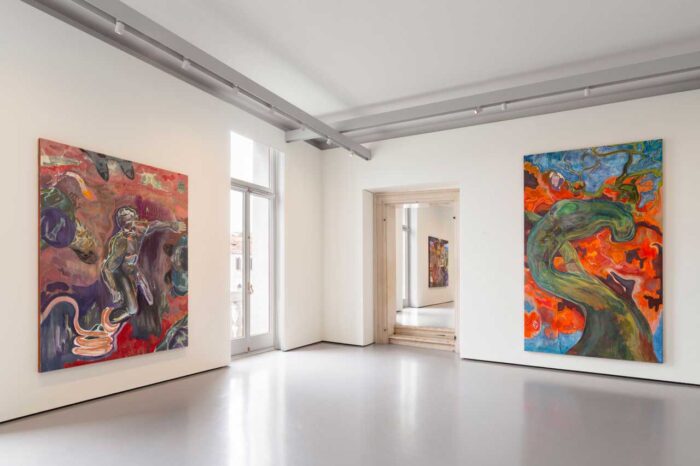
Politics is not always a thematic choice, but rather an intrinsic dimension of social life—part of prejudice, control, power and people— and is therefore inevitable in art, as Armitage argues: “Not having a cultural hierarchy is liberating.”
These are some of the Promises that Armitage paints onto lubugo, the “bark cloth” made from the Mutuba tree. This natural fibre is a handcrafted product historically used by the Baganda people (Uganda) in ceremonial and funerary contexts—and recognised by UNESCO as part of the intangible cultural heritage. The choice of a canvas—unfortunately too little known—is no accident, but represents a profoundly symbolic and commitment project for the artist: lubugo is not only a sustainable and regenerative painting medium, but also serves as an emblem of identity, signifying a renunciation (if not a boycott) of the “classic” canvas of European tradition and an expression of Armitage’s Afro-diasporic roots.
The decade-long use of this material, which spreads from Africa to Asia, from the Americas to the Pacific, bears a strong post-colonial imprint and, in addition to its ideological significance, it has a profound impact on the composition of the artist’s large-scale oil paintings: the taut, lightweight surface is almost reminiscent of tanned leather and is enriched with unique textures, such as tears, holes, creases and creating actual “stitches” in the fabric whose origin remains unclear—whether they were planned during the preliminary or the sketching phase—yet they tend to follow the visual narrative in a more or less linear fashion.
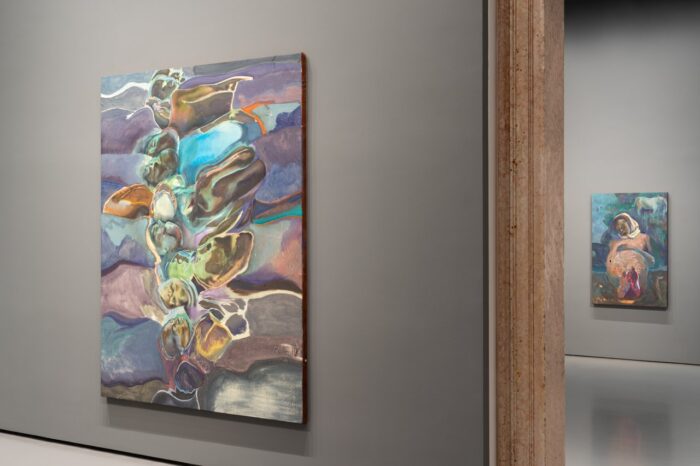
From the outset of his practice, Armitage demonstrates a deep engagement with historical memory, a concern powerfully articulated in Necklacing (2016): the title refers to the form of summary execution practised in South Africa during the apartheid era, which the artist witnessed as a child. In the large painting a figure runs from an enraged crowd armed with torches, while wearing a tyre around his neck: the colours and contours are blurred, as if the scene was enveloped in a dreamlike atmosphere tinged with an unsettling warmth.
Armitage’s work exposes the structural violence that has shaped contemporary borders, reflecting a postcolonial approach that goes beyond a mere struggle against “Western colonialism.” In Nyayo (2017) he depicts torture methods used by Daniel arap Moi’s regime (President of Kenya between 1978 and 2002) such as bringing snakes into prison cells to extract confessions from the opponents. The term “Nyayo” meaning “footprint” or “steps” in swahili, refers to the dominant political philosophy of “following in the footsteps” of the predecessor, the Nyayoism ideology based on the three fundamental pillar of Amani, Upendo na Umoja (peace, love and unity) to promote continuity, loyalty and respect for authority.
Finally, a reflection on the post-independence African landscape, governed by corrupt regimes, a paradoxical, colourful and polluted environment where human and animals coexist: in Dandora – Xala, Musicians (2022), the largest open-air dump in Nairobi, Armitage depicts nourishment and poison, a group of xalam players (a traditional West African instrument) directly inspired by a sequence from Xala (1975) by the Senegalese director Ousmane Sembène.
The layered and scratched works dynamically tackle the harshest tangles of contemporary society, by overturning power dynamics and the European eroticising gaze (as in Nyali Beach Boys, #mydressmychoice, the touching Raft I e II or Europa) in a continuous interweaving of hallucinatory visions and rigorous documentation, between the personal and the mystical, a magical realism composed of key testimonies on the oppressive dynamics of power and the political struggle against repression and social injustices (as in The Promise of Change).
Armitage’s and Kanwar’s poetics share a sense of humanity in the face of the violence of everyday life, and a spirit of resistance against political, social and environmental conflicts—and can be read through a critical lens with regard to colonial and postcolonial legacies.
As India gained independence in 1947 and, from the “socialism that did not want to be socialist” of the first government of Paṇḍit Jawaharlal Nehru (1889-1964), the political landscape rapidly approached the present day, increasingly characterised by the majority of right-wing or ultra-right-wing parties remaining in ministerial office (and sometimes reawakening the ancient vigour of Gandhian voluntarism). However, it is not the state institution or national authority alone the main agent of social change. On the contrary, there is a “rebellious India,” as historian Tim Harper (2024) points out: from the role of freedom fighters (such as the revolutionary act of Bhagat Singh in 1931) to the more recent protests for minority rights (such as the Shaheen Bagh sit-in in December 2019), a long history of subversive struggles has been marginalised or controlled by the mainstream narrative of the history of the Indian subcontinent.
Starting with the intellectual movements for Indian independence, the arts and visual culture have radically aligned themselves with political ideology through spontaneous movements in the orbit of the anti-colonial effort; [1] as sociologist Partha Chatterjee (1947) claims: “‘Western universalism’ no less than ‘Oriental exceptionalism’ can be shown to be only a particular form of a richer, more diverse, and differentiated conceptualization of a new universal idea. This might allow us the possibility not only to think of new forms of the modern community (…) but, much more decisively, to think of new forms of the modern state (…) The project then is to claim for us, the once-colonized, our freedom of imagination” (Kapur 2020: 341).
Today, Amar Kanwar (1964) is one of the most distinctive voices in contemporary art, deeply rooted in the post-colonial history of the Indian subcontinent. A filmmaker, visual artist—and activist, he has progressively pushed the language of documentary beyond traditional boundaries, towards the model of multimedia installation. Kanwar explores themes of the politics of power, the violence of conflict and borders, and collective justice—both social and ecological—through a multi-layered dialogue of installations as living archives, as poetic, personal, and political devices.
At the end of the 1980s (1982-1987), Kanwar is studying at the Department of History (Ramjas College) and at the Mass Communication Research Centre (Jamia Millia Islamia) in Delhi. Halfway through his educational journey, precisely in 1984, he is an indirect witness to two events that would forever mark his personal and creative trajectory: the violent assassination of Indira Gandhi, followed by more violence against the Sikh community, quickly followed by the environmental disaster in Bhopal—triggered by the leak of approximately 40 tonnes of toxic substances from the pesticide plant of the large US multinational Union Carbide Corporation.
After his initial foray into the world of filmmaking, he decides to devote himself to research on health and safety in the mining area of Madhya Pradesh at the People’s Science Institute (1988). In the early 1990s, he returns to documentary filmmaking and video art with a new artistic awareness and political consciousness: he joins public campaigns, collects evidence, testimonies and fragments of marginalised stories, and is invited to festivals, exhibitions and community spaces in India and around the world.
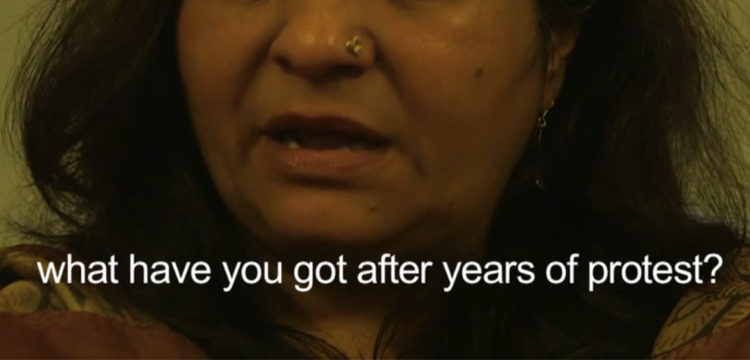
This led to works such as Lal Hara Lehrake (1992), about the assassination of Shankar Guha Niyogi (leader of the workers’ and trade union collective Chattisgarh Mukti Morcha), the trilogy comprising A Season Outside (1997), A Night of Prophecy (2002) and To Remember (2003), which explores how people might “arm themselves with their own truth”: a poetic diary that reflects on violence and borders, as fault lines within culture and between peoples; or The Lightning Testimonies (2007), dedicated to the raw testimonies of women who have been raped in conflict zones.
Kanwar investigates the border as both a physical and imaginary line, a barrier that separates geographical spaces and heterotopic places, creating veritable theatres of power: in A Season Outside, he reflects on the only land border between India and Pakistan, the Wagah Border, a prime example of spectacular rituality and a border outpost unique in the world, a place of memory of violence and resistance, a representation of the exemplary systematic nature of performative nationalism.
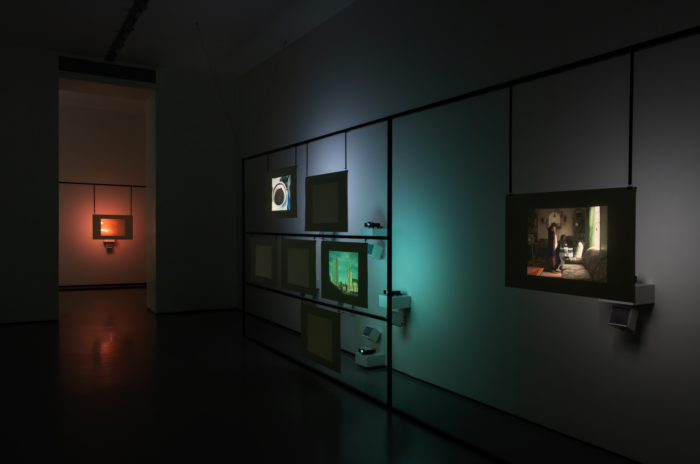
At the end of the visit of Palazzo Grassi, the public encounters Kanwar’s two multimedia, multi-channel installations, created almost twenty years apart. The Torn First Pages (2004–2008) and The Peacock’s Graveyard (2023) invite the viewer to cross a “liquid threshold”; they are a “poetic and political meditation on human nature” and on the “consequences of our species’ arrogance,” a final contemplative pause. The Torn First Pages recounts the struggle for democracy in Burma through archival documents translated into video form, taking the shape of a tribute to Ko Than Htay, a bookseller who used to tear out the first page of every volume put on sale, removing the declarations imposed by the military dictatorship. Kanwar draws inspiration from this seemingly small yet profoundly radical act—a quiet, consistent form of daily resistance: the installation, composed of six projections, unfolds in a non-linear, evocative, and fragmented manner, layering voices and music over calls for justice. The Torn First Pages is a fragile and fragmented archive, a visual court of inquiry that challenges the dominant narratives of history and restores a voice to marginalised stories.
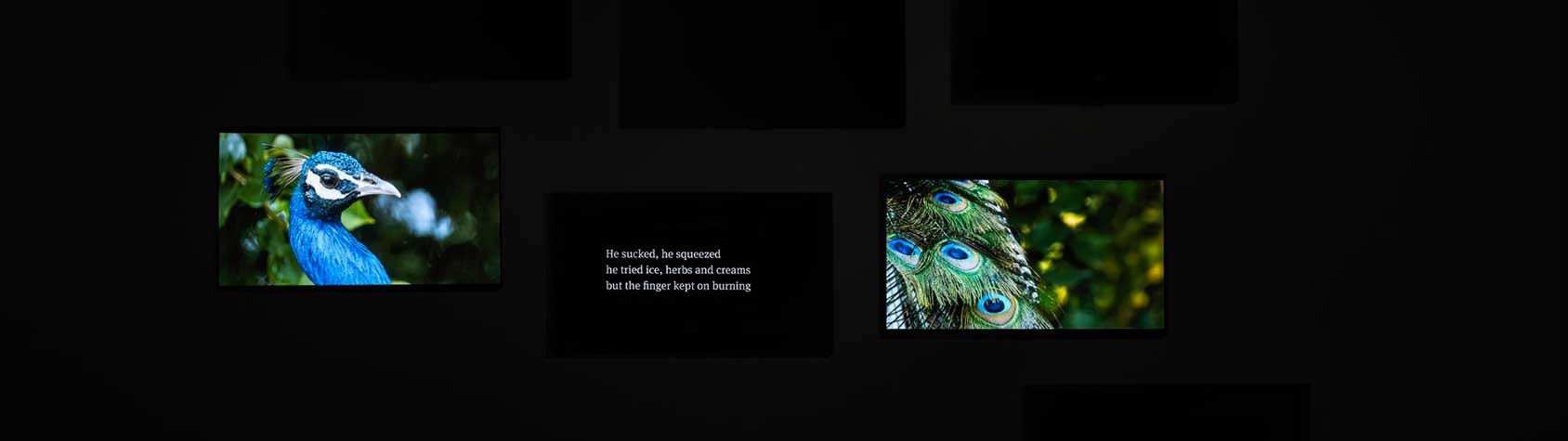
Finally, like visual haiku coordinated by an organic motion, in the seven projections of The Peacock’s Graveyard, photographs and texts emerge and disappear seamlessly, without any hierarchy. The screening room is shrouded in darkness and traversed by almost invisible screens. A piano theme that continuously crescendos and accelerates is the sole chosen soundtrack, whilst the poetic texts and essential, natural forms recount five short stories—akin to fairy tales or parables—that invite us to rethink our relationship with the world. The exhibition thus culminates in impermanence, in a rarefied and contemplative dimension that eludes both the spectacle of the media and institutional neutralisation, a cinematic tribunal as he points out: ”Imagine the simultaneous vision of a multiple time. Of a banal time, of a hyperbolic time, of an orphan time. A time that unexpectedly skids away from under your feet and runs far off. A time parallel and coexistent in two geographical memories. One that sinks roots, the other like a wisp of smoke attached to a body and forever in its trail. Imagine a time as full of silences as of words. Imagine the slow accumulation of time. Moment after moment. Evidence after evidence. Imagine poetry formally presented as evidence in a future war crimes tribunal.”
Olúfẹ́mi Táíwò invites us to shift our focus from a mere symbolic critique of the colonial past to the active construction of fairer institutions, global cooperation and material transformations. From this perspective, the exhibition at Palazzo Grassi by Amar Kanwar and Michael Armitage suggests viewing the works not merely as aesthetic or cultural artefacts, but as potential tools for critical reflection on the real world: this is an (unpressured) invitationion to consider the value of decolonial art not only in its representation, but in its potential to have a tangible impact on the social and economic structures that still define our inequalities.
Perhaps, should exhibitions of this kind continue to circulate while resisting both the dynamics of “elite capture” and the imperative urge to “decolonize everything,” in the future we might eventually be able to visit an exhibition without the habitual impulse to frame artists such as Amrita Sher-Gil as the “Indian Frida Kahlo,” Maqbool Fida Husain as the “Indian Picasso” or George Lilanga as the “African Picasso.”
[1] From the pre-partition socio-political and cultural awakening of the Bengali Renaissance (Bānlāra nabajāgaraṇa), the boycott of the Swadeshi movement (both economic and then artistic), in the mid-1950s the involvement of All India Progressive Writers’ Association (PWA) and the Progressive Artist Group (PAG), towards the avant-garde and anti-institutional sentiment of the late 1970s and contemporary “multi-modernism” which reorganises the North-South, local and regional-global, individual-collective hierarchies, generating new tensions.
References
Harper, T., (2019). Underground Asia: Global Revolutionaries and the Overthrow of Europe’s Empires in the East, Allen Lane.
Kapur, G. (2020). When was Modernism. Essays on Contemporary Cultural Practice in India, New Delhi: Tulika Books.
Lippard, L. R. (1984). Trojan Horses: Activist Art and Power, in Wallis B. et al. (eds.), Art after Modernism: Rethinking Representation, New York: New Museum of Contemporary Art, pp. 341-358.
Sunderason, S., (2020). Partisan Aesthetics. Modern Art and India’s Long Decolonization, California: Stanford University Press.
Sunderason, S., “The Aesthetics of Decolonization in South Asia”, Oxford Research Encyclopedia of Asian History, University of Amsterdam, 20 June 2022.
Taiwo, O. (2022). Against Decolonisation: Taking African Agency Seriously, London: Hurst & Company.